FAITH IN INDONESIA

FAITH IN INDONESIA
The shape of the world a generation from now will be influenced far more by how we communicate the values of our society to others than by military or diplomatic superiority. William Fulbright, 1964

Thursday, January 26, 2023

WHEN PRAM MET MAX THE WORLD AWOKE


How an Australian freed an unfinished nation’s history  


Our relationships with Indonesia are usually measured through stories of terror and disaster, aid and trade, rarely anything that’s cerebral.  

That’s been corrected by academic Max Lane (left)  revealing the richness of Indonesian literature, first through translations and now with fine detail in Indonesia out of Exile (Penguin) - how one persecuted writer killed a dictatorship.

In 1980 Lane was a mid-level diplomat in the Jakarta Embassy with exemplary language skills.  These led him to the covertly published Bumi Manusia (This Earth of Mankind) and its three sequels - the Buru Quartet.

The books are set when Dutch power was declining and told through the growth of Minke, the son of an elite Javanese family. The character was based on the life of pioneering journalist Tirto Adhi Soerjo (1880 – 1918)

Lane met the author Pramoedya Ananta Toer (Pram) just out of an island prison and offered to translate.

When Ambassador Rawdon Dalrymple heard a staffer had tapped into Indonesia’s culture he could have praised the initiative and expanded the project to develop relationships.

But diplomacy was driven by fear. Pram’s books were banned. Lane was ordered out.

Shame became gain. ‘(Dalrymple) did us a great favour,’ Lane recalls. Back in Australia he could negotiate with Penguin.  Publisher Brian Johns reportedly said it was the best decision he’d ever made. News of the expulsion promoted the book and Lane’s career as an activist writer.

He became founding editor of the Inside Indonesia magazine and later an academic with ‘a long commitment to trying to familiarise the Australian community with Asia, and especially Indonesia.’

He’s currently Visiting Senior Fellow at Singapore’s Yusof Ishak Institute of Southeast Asian Studies and lives in Yogyakarta.  

Now he tells the inside story of how - for more than three decades - a repressive regime controlled the way history was learned: Ban the books, maltreat authors and teach lies.

Indonesia has never won a Nobel Prize.  The closest moment came with the nomination of the novels of Pram who spent 14 years in jail, first under the Dutch colonialists, then the Orde Baru (New Order) of autocrat General Soeharto, whose regime was supported by Australia and the US.

In his youth Pram (1925 - 2006) wielded a typewriter in the revolution which created modern Indonesia.  After the 1965 coup his crime was to be a teller of tales about the struggles for national identity divorced from the military version.

The redactors could have countered with stronger stories but flunked the challenge and turned to brutality. Pram and 13,000 other creatives and intellectuals were transported to the wild and remote island of Buru.

Here among barbaric guards, disease, hard labour and malnutrition Pram composed his works, smuggling the pages out to friends in Jakarta, often through church visitors.


 Indonesia out of Exile tells of the Hasta Mitra (Hands of Friendship) trio of Pram, publisher Joesoef Isak and journo Hasjim Rachman.  Google their names, admire their courage.

The former political prisoners risked further jail to get what one US reviewer called the ‘Indonesian Iliad’ into the people’s hands.

When Lane’s translation was in UK, Singapore and Australian bookshops where it made the Top Ten Bestsellers list, it couldn’t be openly bought in Indonesia, yet 10,000 copies changed hands in two weeks.

Pram was ahead of his time by creating a cast of strong women like Nyai Ontosoroh the uneducated concubine of a Dutch planter who runs the business, and their daughter Annelies.  She marries Minke in an Islamic ceremony unrecognized by colonial law.

Lane writes that the women’s characters have ‘been forged out of their resistance to their oppression as women’. They inspired Lane’s wife Faiza Mardzoeki to take her play They Call Me Nyai Ontosoroh to Holland.  

This Earth of Mankind has been published in 33 countries. For most buyers, it’s been their first encounter with Indonesian literature – or the country outside tourist brochures.

Overseas readers got to understand the rising emotions and actions of colonized people demanding their rights to live their lives, their way.

Book ban laws were scrapped in 2010. In 2019 a three-hour Indonesian movie Bumi Manusia, excited nationalists and romantics, though not cinephiles.

The word ‘Indonesia’ never appears in 1,500 pages of text.


UNSW Professor David Reeve writes that Lane’s book ‘explains how and why Indonesia is as it is today and how it might become what Pramoedya hoped.’ That was ‘Indonesian national awakening’ yet the word ‘Indonesia’ never appears in 1,500 pages of text.

Writes Lane: ‘(The Hasta Mitra trio’s)  love for Indonesia was the love of a generation who saw the new national community being created. The secret of Bumi Manusia is that Indonesia is not present in/ on this earth of mankind.’

Canberra focuses on Indonesia through the economy, resources and security.  But Lane puts his money on the people, the ‘real internationalisation’ of Bumi Manusia and Pram becoming a household name:

Lane doesn’t strut his considerable achievements across half a century.  But if his vision proves right, all credit to a reflective Australian for promoting a prophet admired by the world when without honour in his own country.  

##

 First published in The Interpreter, 23 January 2023: https://www.lowyinstitute.org/the-interpreter/how-australian-freed-unfinished-nation-s-history#msdynttrid=Hm8hmUXboj4eJmWfMIKW4OzKi1Ln_rkZu5Eawv06QQQ

Tuesday, January 10, 2023

SEEING BALI SENSITIVELY

 The searcher who cared and shared


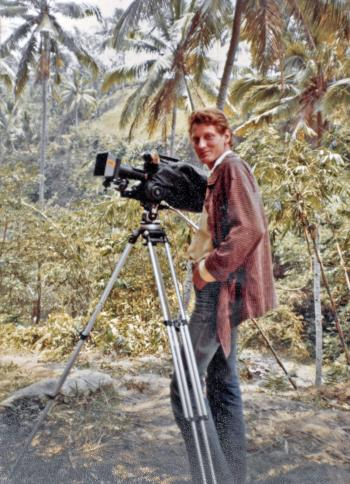
John Darling making Lempad of Bali


Through special visas Sandiago Uno wants access to the wallets of ‘digital nomads’, Gen Zedders with laptops in their backpacks and access to flawless Wi-Fi.


The Tourism Minister thinks that once among Bali’s palms and paddy they’ll spend their overseas earnings on local services. Whether they’ll leave any positive legacy like earlier visitors is another matter. 


Before Bali was transformed from a relaxed, magical and accepting culture to a money machine driven by outside investors, footloose creatives had embraced the island’s rich spirituality. One was Australian John Darling, a young man with a fine education and assured career.


Despite these advantages he didn’t have much idea of what he wanted to do and where to go.  His university lecturer reportedly told him he’d make ‘a far greater contribution by increasing Australian understanding of Indonesia through living and researching Bali and other areas of the archipelago’.


As so often happens to open-minded seekers, the purpose found him and it came with a rare culture, an exotic environment and a cine camera.


Now thanks to admirers of his thoughtful films we have a tribute to a contemplator who came to know Bali better than most, accepted what he’d found, and sought to share.


John Darling, an Australian filmmaker in Bali, is a collection of 21 essays assembled by Australasian academics Graeme MacRae and Anton Lucas.  There are photos and a few poems:


‘In the mountains / I saw a river/ running rapid

For Buddha /a deep pool / ripples / out from centre


In a quiet place / a fat frog/ croaks content

Trapping his needs / from a flying world.


John seemed a most unlikely member of the Bali Lovers League. He was born in Melbourne in 1946 and raised among the elite. His father James Darling was headmaster at Geelong Grammar, one of Australia’s most prestigious schools. 


His son’s paved path was heading straight to an academic career, but capricious fate added turns. After uni John lost his way; mates suggested Indonesia, a puzzling land to most Australians.


He disembarked in Jakarta, slowly headed east, and then into Bali where serendipity intervened.


According to the book revelation came one dawn in a paddy where he met I Gusti Nyoman Lempad the famous Balinese sculptor and artist, then aged 108. He squatted and smoked with a restive Aussie 84 years younger, ‘seeking a place in which to develop my obscure talents.’  


These required celluloid and a mate with technical knowledge. That was to be Lorne Blair, a filmmaker from the UK who became internationally famous for his TV series Ring of Fire, an Indonesian Odyssey made with his brother Lawrence.


Lempad died in 1978 and so began a prolonged set of elaborate funeral rituals which the two outsiders filmed. Because John was an accepted member of the community and by now could speak Balinese he had open access to all preparations for the cremation.


Forty-three years later and online, Lempad of Bali has lost little across the decades. It could have been an ethnographic exercise of limited interest outside social anthropology courses, but it was made as a story of interest to all.  


That ability to make serious cinema accessible helped the producers win the Documentary Award at the Asian Film Festival, and set John’s future not just as a director but also lecturer, writer and poet.


I worked with him on one film and found him introspective – yet engaging. Some saw him as ‘shy and very cerebral … a latter-day Romantic poet.’


Others report a funny man with ‘good manners’, and a ‘dashing dandyish figure.’  Toby Miller, a student who became a friend and is now teaches cultural-studies writes;


‘Despite his fame Johnny needed a lot of care – and was himself full of caring love. He was vulnerable and strong in equal parts.’


John’s later films shown on mainstream television internationally included Bali Hash, Slow Boat from Surabaya, Master of the Shadow and Bali Triptych, described as


Equally memorable was Below the Wind telling of the Sama Bajo, the sea nomads of South Sulawesi.


John’s final work when he was sick with a genetic disease that took his life in 2012 was The Healing of Bali after the 2002 Kuta night club blasts which killed 202. There was a rush of journalists to the island. Other camera crews focused on the terrorists. John’s production concentrates on the survivors and how they are coping with the horror.


There’s no foreign voice-over. The people speak for themselves. The grief is raw.  The viewer is there.


David Hanan, an Australian film-studies lecturer writes that a major theme of the film ‘is the lack of discrimination, indeed the underlying warmth of the religiously tolerant Balinese people – including those most impacted by the events – towards local Muslim residents.’


Reviewer David Reeve concluded: ‘This film is about the healing of Indonesia too, and indeed the world. It is expertly crafted and I pay tribute to the power of the film and its expertise.’


His widow and co-producer Sara offers a moving account of the shoot and this tribute:


‘John was a peaceful man who promoted harmony. He related to everyone, from priests to farmers. His films have helped make Indonesia accessible to the world, particularly Australians who so frequently distrust and misunderstand their northern neighbour.’


Digital nomads need this worthy book to appreciate their second home.  So do all spellbound by Bali, striving - like John – to see if they fit.  And if so, how and why.


Disclosure:  The author is one of the contributors.


First published in Indonesia Expat Ed 292 January 2023: https://web.facebook.com/photo/?fbid=659611166026631&set=pb.100059332612855.-2207520000.


Wednesday, December 21, 2022

MALANG PREPARES


Season’s Fearings


Will it be safe for Christians this Saturday night in Indonesia?  The signs of the festive season used to be plastic mistletoe and corflute Santas in shopping malls.  Now in East Java’s second biggest city it’s armoured cars outside churches.

The angular steel of the ugly green Bushmaster lookalikes clashes with the soft white curves of Our Mary of Mt Carmel towering behind. The Catholic Cathedral has ample space to park war machines because it’s on the crossroads of Ijen Boulevard, the most spacious and richest end of Malang.

The idea is that displays of weaponry deter terrorists – provided they go for big targets.

Yet plenty of lesser-guarded places of worship remain in the metropolis (pop 850,000) which boasts it’s green, smart and accepting – a quality hard to measure, though with a streetscape to impress.

Within 100 metres of the major Protestant church is the Great Mosque of Malang and on the other side of the town square the Catholic Sacred Heart of Jesus.

All the churches are neo-gothic, built more than a century ago and dominating their locales.  During the Second World War, the Japanese occupiers used them to store food and armaments, but they escaped serious damage. 

In July 1947 returning Dutch troops drove into the hilltown to quell militant revolutionaries  who ran a scorched-earth retreat, fire-bombing colonial-era buildings including the Town Hall.  The churches weren’t touched.

Malang fancies itself as different.  When the local authority tried to promote tourism this year by advertising halal (allowed for Muslims) food outlets, huge banners appeared – including on the Town Hall wall - with the slogan in English Malang Tolerant City Not Halal City.


No authorisation but the professional and costly signs carried images of the national flag and were probably made by Jaringan Islam Liberal (JIL). The Liberal Islamic Network champions inter-faith events and has a history of pouncing on hints of division.

Seven years ago hundreds of posters appeared overnight on pillars and trees with the message which translated as:  ‘Good Muslims do not greet Christians with Happy Christmas or celebrate the New Year.’ 

Within two hours they’d all gone, ripped down by JIL members alerted on social media.


Other cities haven’t been so willing to bash bigotry with such speed and vigour, though they’ve been targets of hate since the Republic pronounced itself a democracy early this century.

Eight churches in other centres were bombed with coordinated assaults on Christmas Eve 2000.  In May 2018 a family wearing explosive vests targeted three churches in the East Java capital of Surabaya. 

They were reportedly aligned with the Jamaah Ansharut Daulah (Helpers of the State Congregation) a terrorist cell linked to the Islamic State of Iraq and Syria (ISIS).

Concerned Malang residents of all faiths occasionally gather to support the Deklarasi Malang Berdoa (the Declaration of Prayer for Malang) hoping their initiative will spread. Some killers haven’t been deterred. On Palm Sunday last year suicide bombers hit a church in Makassar.

The Malang church guardians this Christmas should know who among the multitude might have evil intentions. 

Intelligence reports aren’t always reliable.  Recent outrages have surprised security agencies arguing ‘lone wolf’ attacks are unpredictable.  The term is a misnomer – wolves are pack animals and terrorists have links that can be giveaways.

Fortunately fanatics are few and aren’t the brightest glow-worms in the gloom of religious bigotry. Otherwise, they’d notice the church protectors spend more time dozing in the cloisters than eyeballing crowds.

If the bombers could muster enough courage to confront superstitions they’d walk with confidence into the places of worship by looking like the people they want to murder and maim.  But dressing like a kaffir (unbeliever) is ironically hateful to those who specialise in hate.

In a culture where sorcery stays strong, the credulous fear close contact with other religions means they’ll get infected and inadvertently commit the sin of apostasy.

On Java where 88 per cent follow Islam, the differences are easy to spot.  Christian women wear knee-length skirts, the men in suits and ties. They clutch Bibles, walk as couples or families and go bareheaded.

Moslems worship most days often in their everyday gear.  On holy Fridays the men wear sarongs and walk to mosques in all-male groups carrying prayer mats.

The more inflexible like the released Bali bomber Umar Patek, show bruised foreheads as marks of piety. The women cover everything in black bar eyes, though this garb is rare.

Wahhabism, an austere version of Islam imported from Saudi Arabia, has reportedly been encouraging dress codes and funding the widespread building of new mosques. 

Not all are happy with what Goenawan Mohamad,  the founder/ editor of Tempo news magazine labels the ‘Arabisation of Indonesia’, undermining his nation’s traditional coexistence with other creeds.

 Islam Nusantara is a home-grown moderate alternative to the rigid Middle East interpretation of Islam.

Although it’s reported that Indonesians are becoming more religiously conservative, the claim’s difficult to quantify.  Polls are useless because the sample sizes are usually minuscule and taken in Jakarta. 

About 75 per cent of Muslim women in Indonesia wear the headscarf according to Human Rights Watch which blames intimidation by schools and zealots; it was only five per cent in the late 1990s. Whether this is more about fashion than godliness is a contentious debate.

Like Christianity, Islam is split into factions.  The largest, boasting a membership of at least 40 million, is Nahdlatul Ulama  (Revival of the Scholars).

NU seems to have a grip on Malang; in the past, its members have been bloody and brutal, but now it’s pushing moderation and inclusiveness, though still anti-Gay.

This week some of its unarmed cadres will patrol streets protecting the smaller churches.  We’ll soon know whether such a piecemeal approach will ensure Christmas doesn’t go with a bang.  Moderates of all callings will pray so.

(The writer lives in Malang.)

First published in Pearls & Irritations, 21 December 2022:https://johnmenadue.com/seasons-fearings/


##


Saturday, December 17, 2022

REVEALING AND RESPECTING CULTURAL DIFFERENCES

 The darling buds of Bali        


Bali is so unlike the rest of Indonesia it seems unmoored from the archipelago.


Before the island was scarred by terrorism and corrupted by commerce it lured foreign adventurers enchanted by the rich spirituality, creating a mystic aura and a pestilence of clichés.  Paradise, abode of peace, island of the gods …


Dutch colonial era artist pioneers included Hollander Rudolf Bonnet (1895-1978) and German Walter Spies (1895 - 1942). Later came Australians like Donald Friend (1950-89) who spent the last two decades of his life painting on the island.  


The work of these creators has been recognised in biographies and art collections. 

Now comes John Darling, an Australian filmmaker in Bali (Monash University Publishing).


This tribute to Bali’s auteur and poet is a 21-essay festschrift edited by Australasian academics, Graeme MacRae and Anton Lucas. An Indonesian translation is expected next year.  It’s enhanced with photos and poems:


the eyes

create the paths 

before us

we travel slowly

taking by-ways

pursuing images …

evening visions of red-eyed infinity

return reversed in dawn’s embrace.


Darling was born in Melbourne in 1946, the only son of an establishment family. His father, later Sir James Darling and ABC chair, was head of Geelong Grammar School.


The lad’s road seemed set as a historian, but after graduating his compass failed.  It was suggested he try Indonesia, a land few Australians knew and fewer understood. Darling wandered across Java to Bali. On a dawn stroll he met I Gusti Nyoman Lempad.


One was a respected and prolific Balinese sculptor and artist, then aged 108. The other a 24-year old drifter from faraway, “seeking a place in which to develop my obscure talents.” They couldn’t share language, yet they connected.


The lost and disgruntled still head to Bali for something they can’t identify, but the Darling days are gone.  Expectations are no longer coloured by ethnographic research but by fantasy romance in Eat, Pray, Love.


So this book is about a place that was, and a time when nomads were curiosities, not ATMs.  Although focusing on one man, it also tells of Bali’s transition from a hippie hideout to a luxury location fit for the G20 suits.


In and around the 60s and early 70s Bali drew surfers to the beaches, intellectuals to the hills and both to magic mushrooms. Ubud became a ‘crossroads of culture’.


At that intersection stood a searcher with no clear plan or purpose, recalls writer Bruce Carpenter, author of a most insightful chapter.  Both men were “refugees of the international youth movement that had filled our generation with naive dreams of blazing new paths and paradigms.”


When Lempad died in 1978 Darling, now fluent in Balinese and close to the family, produced and co-directed with the late British filmmaker Lorne Blair the old man’s spectacular cremation.


 Lempad of Bali won the Documentary Award at the Asian Film Festival. It remains a masterpiece and founded Darling’s reputation.  Watch on YouTube.

For the next 17, years he was known as a filmmaker, poet and lecturer. But a hereditary blood disease forced him to Australia for treatment; he died in 2014, aged 68.


At the funeral Ubud royal Tjokorda Gde Mahatma Putra Kerthyasa said the only outsiders who could live locally were those who loved the island for what it was – not for what they could get out of it.


“John was a man who lived his truth and spoke it.  He didn’t choose an easy life in Bali, he chose a Balinese life. He is remembered … as one of the few foreign custodians of Balinese culture who didn’t take – but shared.”


Darling’s films include Bali Hash, Slow Boat from Surabaya, Master of the Shadow and Bali Triptych.


Veteran Australian broadcaster Phillip Adams (not in the book, but should have been) described Triptych as “one of the most elegant, scholarly and beautifully made documentary series … when you see Darling's loving, luscious, literate films, you'll understand why.”

Darling’s first wife Diana writes: “His films made his poetry visible.” 

Despite applause and acceptance, Darling said that at times he felt like “a bit of a maverick … isolated and an outsider.’ One friend remembers a ‘somewhat other-worldly fellow.”

The late Made Wijaya writes about a “giant ego” and narcissist “in a nice, not a nasty way”, whatever that means. This chapter adds little.

We all see others differently; individuals are complex and facts morph into myths, but disparate recalls confuse. They should have been clarified or cut.

Similarly, pointless anecdotes and lists of names like a club register.  These tarnish finer offerings, such as a pensive analysis by anthropologist E Douglas Lewis.

Fortunately, editor MacRae’s clear writing steers readers back on the road to ponder his subject’s physical and cerebral journey. 


Darling was sick and in Canberra in 2002 when Jemaah Islamiyah fundamentalists bombed a Bali night club killing 202 including 88 Australians and 38 Indonesians.  


Despite his illness, within ten days he was back on the island with his wife Sara as co-producer. Crews from mainstream TV channels focused on the terrorists. The couple’s self-funded Healing of Bali lets victims tell their stories alongside reflections of faith leaders.


Sara addresses her late husband as “an amazing dreamer and wonderful storyteller … through your films, poetry, art, and love of life.”


His accessible interpretations of our northern neighbour’s values make them clearer, hopefully helping those Australians who think differences are threats.  This book should help keep Darling’s legacy alive, help outsiders better appreciate Indonesia and marvel at the work of its creative citizens.


 Disclosure:  The author is one of the contributors.

First published in Antara 15 December 2022: https://en.antaranews.com/news/265675/the-darling-buds-of-bali


ONE CITY SINKS; ANOTHER FOLLOWS


A tale of two cities     


Jakarta:   Credit The Jakarta Post


Jakarta is sinking up to 28 cm every year. This isn’t a lab model of climate change – it’s Ridgey Didge.  Sceptics should visit, see the future and sound alarms.

For Australians in Fremantle, Darwin, Cairns and other coastal towns listed as at risk from rising seas, the response of authorities in Indonesia’s capital has been a DO NOT guide.

With 10.6 million people plus the weight of their homes, offices, factories and roads, Jakarta is facing a double-whammy: It’s often swamped by the rising ocean while sinking into the mud of the Ciliwung Estuary.

Major districts will soon be unliveable.  About 40 per cent of the 700 square kilometre metropolis is below sea level turning streets into waterways every wet season.

 Indonesian President Joko ‘Jokowi’ Widodo is a can-do guy. His solution is to shift the capital 1,300 km to the north, call it Nusantara (the old name for the archipelago) and fill with two million bureaucrats by 2045.

This proposed city is on the underpopulated island of Borneo.  So far it’s little more than one man’s mega-fantasy, a rival to Naypyidaw in Myanmar (2005), Islamabad in Pakistan (1960) and Brasilia in Brazil (1960).

Queensland University planner Dr Dorina Pojani,  has tagged these grandiose schemes as ‘great planning disasters …dreary, overpowering, underserviced, wasteful and unaffordable. In short, they are extremely expensive mistakes.’

Nusantara is currently just a toll road snaking into the jungles of East Kalimantan Province.  However deep its boosters drill, the foundations of US $34 billion to support the concept have yet to be found.

 Widodo’s six predecessors occasionally glanced at a new city model, but he’s the first to put keys in the ignition, wanting to drive through a Candi Bentar (traditional split gateway) by late 2024.

That’s when his second five-year term as leader of the world’s fourth-largest nation ends. The Constitution says a decade’s enough, so his successor will have the job of keeping the Cats dozing and cranes rising. 

Even though underwriters have been wooed with tax holidays they’re playing hard to find.

In January 2020 Maritime Affairs and Investment Coordinating Minister Luhut Panjaitan trumpeted the Japanese SoftBank Corporation had $40 billion ready.  The company didn’t confirm but sent staff to take a look.

This March it said it was ‘passing on the project’.  To understand the huge impact of that short statement, change the first vowel.

Luhut forgot the rule of no spats when wooing money, blaming SoftBank’s indifference on a share price slump. The response was blunt: ‘Return of interest’.

Others noticed. This month the US Bloomberg business website reported: ‘Not one foreign party—state-backed or private—has entered into a binding contract to fund the project.’

Tough bankers expect budgets to blow on greenfield constructions as unforeseen problems arise, so pad loan agreements. Unfortunately, in Indonesia the expansion will be gross, inflated by corruption.

The Republic ranks 96 out of 180 nations investigated by Transparency International.  That’s an improvement – it was placed 102 the previous year. Failure to take this evil seriously worries ethical foreign funders. Several countries, including Australia, have laws for citizens who bribe overseas to be prosecuted in their homeland.

The best chance of shifting Jakarta came during the economic boom of the 1970s and 80s.  The population was half today’s and awash with dollars shoring up capitalism against the feared Red Wave supposedly rolling south from the Vietnam War.

Avarice intervened. By the time citizens got fed up with President Soeharto’s kleptocracy and indifference to civil rights, the 1998 Asian financial crisis was already embedded.

After 32 years Soeharto quit. He died a decade later.  Ironically the estimated sum of public money he allegedly stole is equal to the budget for Nusantara.

This century Jakarta has grown fatter, uglier and more polluted. Solutions driven more by panic than reason have included banning regional citizens from migrating to the capital – a doomed hope in an open city.

Next came sea walls built in 2002.  Five years later the worst storm in recent history smashed the concrete.  The Java Sea inrush drowned 80, washed away traffic and ruined thousands of homes.  The bill topped US $332 million.

Never again, said the residents, but to no effect. Flooding’s now an annual event with warnings in place till next February, stressing yet again the sense in shifting.

In 2019 Widodo said he’d found the perfect place and set about funding grand PR and advisory committees galore. One includes UAE President Mohammad bin Zayed Al Nahyan and former UK PM Tony Blair.

The chainsaws started growling this July, so your correspondent asked if backers were in place.  Matey media flacks who’d earlier offered swags of facts and ‘artists’ impressions’ of the splendid new palace in the ‘green, smart city’ started slamming doors and ignoring calls.

Other journos were spotting the same red flags.  Academics publishing overseas raised questions about consultation with locals, damage to the environment and the emergence of a ‘land mafia’ buying big and rigging prices.

Seemingly unfazed Widodo continues to say all’s well. On 2 December he told a forum of CEOs in Jakarta that ‘to my surprise, the first market survey (of Nusantara) was already over-subscribed up to 25 times … I want to focus on investment, not depending on the state budget.’

Widodo can be enigmatic and some subtleties may have been lost in translation, 
but if the President has watertight contracts tucked into his sarong he’d be naming names and sums with the same energy he’s using to sell ‘the pride of the nation’.
 
If Indonesians believe the new city will be a goer they’d be asking about compensation for movers, the cost of relocating and a thousand other questions. 
They don’t, suggesting Nusantara has only one true believer.
 
Meanwhile, the sea rises, the rain falls and Jakarta sinks. If it’s on your bucket list, fly soon.
 
First published in Michael West Media 17 December 2022: 
 https://michaelwest.com.au/tale-of-two-cities-jakarta-is-sinking-while-funding-for-new-capital-yet-to-surface/

Friday, December 16, 2022

NO APPLAUSE FOR NEW LAWS

            One law for us, another for them?


Certificates, please.                                    Photo credit BBC

It seems Indonesia’s new bonk-ban laws are discriminatory and racist.  Bad news if you believe legal systems should be impartial, but good tidings for ‘bule’ (white skin foreigners).  So sayeth a governor.

The national parliament in Jakarta this month unanimously passed a law with 624 articles across 37 chapters, an overdue clean-up of the century-old criminal code left over from the Dutch colonial era.

The section banning sex outside marriage has aroused concern and ridicule; implementation will be impossible; easier to prohibit gravity.

But the new laws go beyond the bedroom into newsrooms and places where people talk, write, blog, vlog and tell the world their thoughts and pains. That’s all part of being a democracy.  Indonesia claims to be a member.

But should a free-speech exerciser defame (whatever that means), the President, his ministers, the five-point national ideology of Pancasila and just about anyone claiming VIP status, then the clink beckons.  There’s no defence of truth.

 Likewise with blasphemy, encouraging apostasy, treason and publishing fake news or anything which creates disturbance or community unrest. Which is what the new laws have done already.

Article 424 covers the sale and supply of alcohol. Indonesian celebrity lawyer Hotman Paris commented: ‘The article doesn't make sense, there’s no legal reason and it must be removed from the face of this earth.’

A woman who’s had an abortion faces up to four years in jail. A section on ‘indecent acts’ could target non-heterosexuals.  However, there’s a positive – death sentences can be turned to life imprisonment if the offender behaves well for a decade and shows remorse.  Take note, USA.

At first, it was said the new laws applied to everyone in the Muslim-majority country. Then Governor Wayan Koster assured foreigners in Bali they’re exempt.

This is a curious pledge akin to the Northern Territory Chief Minister Natasha Fyles telling visiting US troops on rotation from Oregon (which has de-criminalised much drug taking) that they can ignore Australian laws.

Former mathematician Koster is a member of the Republic’s most powerful political party.  As Governor of Bali, one of Indonesia’s 38 provinces, his words should carry clout.

But he isn’t a national legislator (though he was for 14 years), legal academic, public prosecutor or top cop, positions which might strengthen his assurance.

So when he says ‘there’ll be no checking on marital status … at any tourism accommodation,’ can foreign unmarrieds who share the same bed rest easy?  Maybe not.

Koster suggests the police will only sniff for locals, but no one will know till the laws are exercised three years hence.

Much of the international media has focused on the sexy bits, but Human Rights Watch researcher Andreas Harsono takes a drone view of the political landscape:

‘The laws are a setback for already declining religious freedom in Indonesia and could be misused to target certain individuals.

“The danger of oppressive laws is not that they’ll be broadly applied, it’s that they provide avenues for selective enforcement, endangering sexual, religious and ethnic minorities… providing an avenue for extortion.’

At a media conference the US ambassador to Indonesia, Sung Kim shifted the debate to the boardroom, foreseeing a ‘negative impact on the investment climate.’

Speaking bluntly is risky in a nation sensitive to outsiders’ opinions, as the UN resident coordinator in Jakarta, Valerie Julliand, discovered.

Her office stated several laws ‘contravene Indonesia's international legal obligations with respect to human rights.

"Some articles have the potential to criminalise journalistic work… Others would discriminate against, or have a discriminatory impact on, women, girls, boys and sexual minorities.

‘The code could also affect reproductive and privacy rights and exacerbate gender-based violence based on sexual orientation and identity.’

Ironically, Indonesia has been a member of the UN Human Rights Council for the past two years.  Its role ends this month.

Indonesian academic Moch Faisal Karim claimed his country’s human rights advocacy at the UN ‘is often inconsistent and half-hearted.’  He wrote this before the new law so may escape censure.

The Foreign Ministry summoned Julliand for a dressing down, saying the UN should ‘have consulted with the government before airing its misgivings.’

Sung Kim didn’t get called to explain, but he’s been told to butt out by the country’s peak Islamic body the Majelis Ulama Indonesia (Islamic Scholars’ Council).

 Deputy Chair Anwar Abbas said the Ambassador’s statement ‘had the quality of taking sides and a threatening tone. The US appears to have an ambition of forcing or pressuring Indonesia to provide space for LGBT practices and sex outside of marriage.

‘If the US insists on pushing through this position and view, then the MUI explicitly declares: Go to hell with US aid and investment which damages the nation's religion and culture.’

Then the cruncher dismaying those hoping that advancing humanity’s universal needs could overtake insularity: ‘We want to live with our own identity, not with the identity of other people or nations.’

Indonesia is constitutionally secular, but 88 per cent of the population follows Islam.  The new laws appear to be appeasing ultra-conservatives hostile to ‘liberal Western values’, than ensuring justice and protecting the rights of all.

Melbourne University law Professor Tim Lindsey writes that many provisions are ‘dangerously vague and wide in their scope … empower(ing) the state at the expense of citizens.

‘This deeply flawed new criminal code is likely to meet with stiff opposition from lawyers and activists, including protests, even though the new code bans ‘unannounced demonstrations.’ It’s inevitable it will end up in the Constitutional Court’.

In the meantime best wear a wedding band in Bali, only talk about the weather and keep the Governor’s number on speed dial.

##

 First published in Pearls & Irritations, 16 December 2022:https://johnmenadue.com/one-law-for-us-another-for-them/