FAITH IN INDONESIA

FAITH IN INDONESIA
The shape of the world a generation from now will be influenced far more by how we communicate the values of our society to others than by military or diplomatic superiority. William Fulbright, 1964
Showing posts with label Joko Widodo. Show all posts

Friday, February 09, 2024

THE YEAR OF VOTING FEARFULLY

 COMING SOON - D(ECISION) DAY


Image:  MWM

Tis the season to be electing: In 2024  four billion will pick leaders in the US, India, South Africa and 70 others. Among the first is Indonesia. Duncan Graham is there.

A week to go. Exhaustion is obvious and frustration rising after the fifth and final TV debate on Sunday, long on rhetoric, brief on implementation, negligible on costing.  Much was incontestable, like support for the disabled and better maternal care.

On Valentine's Day Indonesians are set to select who'll run the world's third-largest democracy from a field of three candidates and their sidekicks.  Our deeply religious neighbour is technically secular but has more Muslims than any other nation.

So far there’s been no reported violence. This could change if the hoaxes take root and hates grow.

Indonesians like to think they control their emotions. Not always. In 1965 an army-organised genocide took half a million lives. Riots in 1974, 84, 94 and 99 killed thousands. The English word ‘amok’ comes from the region.

Cashiered former general Prabowo Subianto, a hard-right, my-destiny candidate and the man most likely to light the fuse if he loses, said earlier:

“Indonesians can very quickly turn to violence. (It’s) something we would like to address, to control, and to manage. But it is there: fighting between families … villages …tribes …ethnic groups, and finally fighting between religions.”

The ring of fire isn’t confined to volcanic eruptions.

Who are the voters?

Academic research estimates that 60 per cent of the 204 million eligible voters are in the 17–39 age demographic.

The campaign has revealed separate sets of millennials and Gen Zs.  The thoughtful ones are real but invisible to the politicians who want their votes, though not their questions.

The other mob is imagined: Calcified by shock media images the candidates see gadget-crazed narcissists, careless about the direction of their nation so easily distracted with bread and circuses.


They get served trite slogans and cartoons (the speciality of Prabowo’s campaign ), plus K-Pop from supporters of former Jakarta Governor Dr Anies Baswedan.  He benefits, but being an academic denies personal involvement in such base tactics. Running a Republic requires gravitas.

One corny stunt involved choppering a sizeable white shirt above Jakarta’s Hotel Indonesia roundabout, supposedly implying former Central Java Governor Ganjar Pranowo has broad shoulders to carry the load. It looked like a heavenly Hills Hoist.

The torrent of money suggests donors expect handsome rewards for their investments. Presidents can appoint ministers from outside politics. At a rough count, Prabowo is outspending his competitors two to one. As in Australia figures are fuzzy.

Contempt for customers is bad for business and representative government, but hey - who cares?  Snatch their vote, then shove ‘em back in steerage for five more years.

But teens grow up.

Indonesian education is in a bad way, but it’s been worse.  The internet has demolished school walls and excited curiosity. Kids are discovering the history road they’ve been led down is potholed with missing facts.  Like ours and the frontier wars.

Most want the forests and rivers saved and cleansed but few polis do green - they prefer smokestacks. Respondents to a uni survey last year sought declaration of a climate emergency; sixty per cent thought the government hadn't handled the crisis properly.

Nothing happened.

Problems with the ump

Hopes for intelligent policy debate haven’t been helped by Indonesia’s Electoral Commission (Komisi Pemilihan Umum KPU) an agency with a grubby past.  In 2005 its chair, Monash Uni-educated  Dr Nazaruddin Sjamsuddin, was whacked with huge fines and seven years in jail for taking bribes.

The KPU presently smells fresh, extra important because it's staging an event far more complex than anything attempted by Canberra.   In the 2019  poll 7.4 million election workers were employed. Around 500 reportedly died from stress-related sicknesses.

Politics is a blood sport;  the KPU, fearful of reputational assaults, sought friendly chats. Questions in its TV debates came from ponderous academics and mostly men, not bristly journos.

The public wants gladiators, but adrenalin drains away through a 30-minute prelude of prayers, the national anthem, the KPU song (Choose for Indonesia), handshakes and formulaic speeches.  The candidates’  times are truncated, their canvas contained.

When the piles and fart-cure commercials (metaphors too apt to ignore) shown in the breaks are more credible than the candidates’ pledges of clean government, it’s clear the stench is ineradicable without extreme surgery.  That doctor’s not on-call.

Graft stinks as pungently as it did a decade ago when new President Joko ‘Jokowi’ Widodo promised a fix. It’s repelling the ethical investors his regime yearns to lure: The latest Corruption Perception Index elbowed Indonesia down from 110 to 115 out of 180 countries measured.

Economy up - and down

Left-wing academic and Australian author Max Lane reckons Indonesian politics isn't based on economic or social divides but on how the show has been staged: "Governance built around dynastic power, cronyism, and a right to rule presumed by members of the New Order elite.”  

That was the 1966 - 1998 autocracy of General Soeharto. Although repressive the economy expanded at an average of 7.1 per cent. Then came democracy and growth crashed to 5.2 per cent.

“This is an irony or paradox, that in an era when political freedom was much curtailed, the economy grew at a rapid clip, while poverty levels fell away much more quickly than in the democratic era,” said ANU economist Dr Hal Hill. An awkward truth - dictators can get things done.

There’s been a flurry of vote buying. Days out from the election Jokowi, whose son Gibran Rakabuming is Prabowo’s VP pick,  announced welfare payments for the poor (a cohort larger than the population of Australia), plus wage rises for soldiers and civil servants.

More subtle are the social media finger salutes supposed to send secret messages of support but look more like an Aussie F*** Off signal.  Promises get pencilled on face wipes.  

Prabowo’s idea to give 83 million school kids free milk is already sour.  There aren’t enough dairy cows in the tropical nation, and lactose intolerance is widespread.

Clown-of-the-month award (gender studies) goes to VP hopeful Mohammad Mahfud Mahmodin (Mahfud MD) blaming women for men’s corruption, reviving the New Order’s State Ibuism.

This specified women's duties as breeder, feeder, scrubber and carer. If the kids go off the rails it's  Mum's fault, added Mahfud.  The Legal and Security Minister later ‘clarified’ his comments.  By then modern couples had gone elsewhere.

The polls are sus because sample sizes are too small, but suggest no one candidate getting more than half the votes.  If right there’ll be a run-off on 26 June.

Australians should rest easy with either of the former governors winning, though much will depend on the new foreign minister.  Anies has assured his neighbours -  “no risk”.

Indonesian democracy is already wounded. Elections are “considered neither free nor fair, (because) many other prerequisites … such as freedom of speech and association are absent” reports the Economist Intelligence Unit. 

A Prabowo win will put democracy out of its misery.


Duncan Graham has an MPhil degree, a Walkley Award, two Human Rights Commission awards and other prizes for his radio, TV and print journalism in Australia. He lives in East Java.


First published in Michael West Media, 8 February 2024: https://michaelwest.com.au/indonesia-elections-jokowi-favourites/

Sunday, January 29, 2023

MOTHER KNOWS BEST- SHE SAYS


King-maker queen could call our neighbour’s pres


Credit: PDIP

Indonesia is a republic, though that’s hard to believe when a queen will decide who’s likely to be the next President of the world’s third largest democracy. Megawati Soekarnoputri 76, the daughter of first President Soekarno is head of the nation’s leading political party, now celebrating its golden jubilee.

The lady could hardly have been better named. Her Dad called his kids after elements of the weather with ‘mega’ meaning ‘cloud goddess’ in Sanskrit..  He didn’t imagine a megalomaniac.

She runs the poll-leader Indonesian Democratic Party of Struggle (PDIP) with such authority she can name her party’s candidate for next year’s general election without getting members’ votes. She told celebrants at the party’s big bash this month: ‘People are waiting for (the candidate’s name) … but it’s my business’.  

Nine years ago she hand-picked the then Jakarta Governor Joko ‘Jokowi’ Widodo who won two five-year terms by beating authoritarian Prabowo Subianto.  Instead of ignoring his rival, Widodo made him Defence Minister, giving him a platform for another shot at the top job.

 ‘We have very different political systems,’ said Penny Wong.. We have very different views about how our political system should operate. And we have different interests. But we need to seek to manage those differences.’

That’s Australia’s Foreign Minister  talking about far-away China.  No editing needed to use the same speech about the nation next door.

With the official allocation of parties’ positions complete and VOTE ME banners appearing, Indonesian electors are tucking their sarongs ready for a robust 12-month campaign climaxing early next year.

The last one in 2019 was a killer – literally.   Around 500 officials and helpers among the seven million recruits died of exhaustion during the world’s biggest one-day election.

The show then turned American with riots in major towns causing six deaths and 200 wounded.

The violence was launched by supporters of failed candidate Prabowo Subianto, 71, whose wacky speeches about a ‘Ghost Fleet’ invasion make Trump sound balanced.

The disgraced former general linked to human rights abuses says he’ll stand again hoping to lure uncaring voters wanting a tough-talk leader.  He’d be bad news for Australia.

The president is elected by direct vote.  No compulsion; last time the turnout was 81 per cent of the 187 million registered voters – minimum age 17.

Indonesia has  a bicameral parliament. The major authority is the 575-member People’s Representative Council (DPR) elected through proportional representation.  The PDI-P holds 128 seats but has put other parties under its brolly to gain control.

Much will bewilder outsiders as 17 parties claim they’re driven by care for the nation’s poor.  All assert piety to snare the Muslim vote. There’s no sharp left-right divide as in the US and Australia. Some researchers claim parties merge ‘to share the spoils of office, rather than by ideological or policy differentiation.’ 

Indonesia says it’s a secular democracy. That doesn’t mean it’s authentic.  The US Government-funded Freedom House scores it a ‘partly free’ 59.  Finland hits high with 100. Australia ranks 95.

Indonesia’s place will assuredly slip, shoved by fresh laws curbing freedom of speech; bad-mouth the president and ministers at your peril.  There’s no defence of truth.

Indonesia started dancing with democracy in 1945 when the anti-West Soekarno proclaimed independence from Dutch rule. The new Republic was a ‘liberal democracy.’  By 1959 the President, who had nine known wives and at least a dozen offspring, decided hubby knows best and squabbling legislators needed a firm hand.

‘Guided democracy’ ran till the 1965 coup launched the Orde Baru (New Order) US-backed despotic rule of General Soeharto, one of the world’s top kleptocrats..  

When forced out by student protests in 1998, The Guardian reported that Soeharto, ‘regarded as a bulwark against communism in Asia, stole as much as $35bn from his impoverished country during his three decades in power.’

This wealth was built on ‘ruthless repression, cronyism and manipulation of the world's rival superpowers.’ Much remains embedded in the culture. Last year Transparency International measured Indonesian corruption at 96/180.

A survey by the Indonesian think-tank CSIS showed voters’ contempt starts with the cops, then cascades to the legislature, judiciary, political parties and public officials.  

Soeharto’s Golkar Party won all elections till 1999 perhaps because public servants were compelled to support. In 2014 the presidency was captured by  Widodo, humble Mr Everyman with no links to the army or the elite.

He was reluctantly endorsed by the nation’s slightly left, totally nationalist PDI-P. Megawati should be seeking the most meritorious replacement for Widodo, constitutionally barred from restanding. But her ambition is to keep the family in power by putting her daughter Puan Maharani, 49 on the Palace stage.  


The election will be on Valentine’s Day next year.  That’s not an omen for love twixt the public and imperious Puan. No-one dare tell Mamma Mega, and fifth president (2001-04), that the times they are a-changin. A third of the 274 million population was born this century and probably assumes Orde Baru is a new gaming app.

Parties shop around for crowd-pulling candidates, who in turn seek parties with the most cash.  That’s the PDI-P. Hot tip: Should Puan retreat watch for Central Java governor Ganjar Pranowo who’s into domestic issues.                                                                               Credit: DPR

Then comes the former Governor of Jakarta Dr Anies Baswedan. Another possible is the West Java Governor and architect Ridwan Kamil.

Both are US-educated cosmopolitans who know Australia.  In past interviews with this correspondent they’ve applied the ‘warm relationships’ template. Unless there’s a crisis don’t expect specific policies beyond increasing trade.  

The last real Ozophile was sixth president (2004 -14) Susilo Bambang Yudhoyono. We liked the man and his wife Ani so much we bugged their phones and got caught.  

Former Canadian PM Pierre Trudeau once said living alongside the US is like sleeping with an elephant. In our case it’s a big-horned buffalo, normally tranquil but can speedily turn cranky. Best learn its moods, or as FM Wong suggests, ‘manage differences’.

The campaign will be robust and raucous.  Bank on vile slurs involving faiths and wild claims about Australia’s US links and villainous plans. A favourite at the moment are war predictions over ownership of Australia’s Ashmore Reef, an uninhabited sand spit and nature reserve used by traditional fishers.

To Indonesians we’re a granary and stock-yard, distrusted, insignificant,  unwelcoming  and weird.  Every new Australian PM dashes to Jakarta with a clutch of clichés about importance.  

Don’t expect the next president to reciprocate, or our mainstream media to keep you informed. The ABC has regular  programmes on China, India and the US, but not next door.

Copy from Washington doesn’t need translating.

First published in Michael West Media 29 January 2023: https://michaelwest.com.au/indonesia-to-elect-a-new-president-but-a-queen-will-decide-the-leading-candidate/


Monday, November 08, 2021

NO JOKE, PAK JOKO


                                  Indonesia’s Augean task


 Rate of deforestation in Indonesia overtakes Brazil — Kaltimber

Photo - Kaltimber


Indonesia went to the COP26 climate summit with an impressive set of tasks for the next three decades. The list is broad, ambitious and admirable.  Unfortunately, the jobs won’t get done without the vision and force of a leader like the late Singapore PM Lee Kwan Yew.


Joko Widodo isn’t that man.  The Indonesian President has the numbers and just enough time (election in 2024) to start cleaning the Augean Stables, deep in the excrement of corruption and maladministration. Sadly Widodo is no Hercules – and his reforms are already being challenged from within.

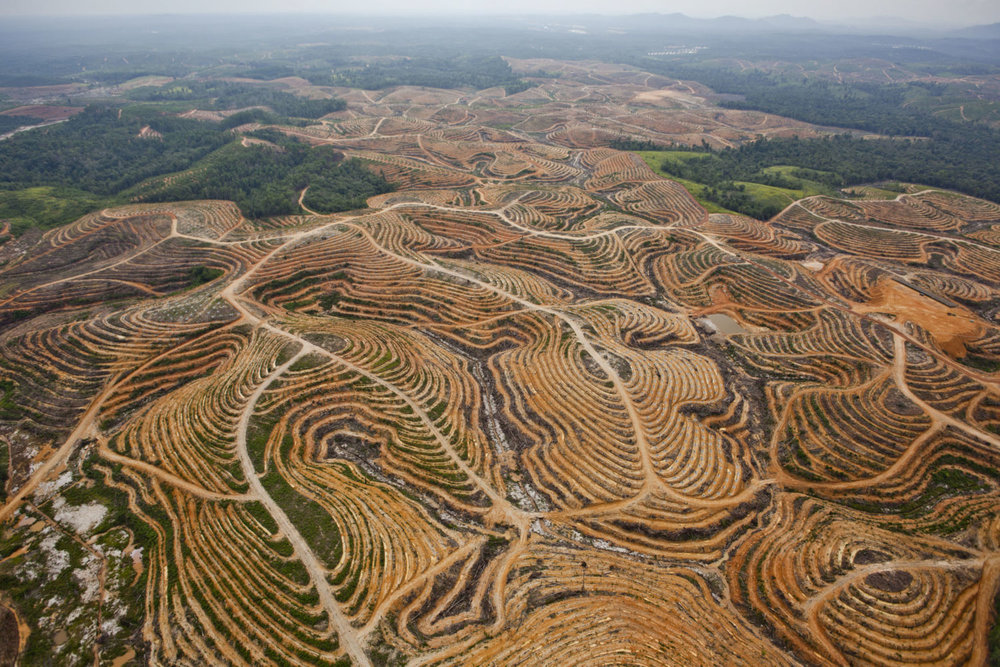
Indonesia is particularly vulnerable to sea levels rising with beach and estuary settlements 14 times more exposed than previously realised according to some research.  Apart from pollution the nation’s most infamous contribution to world warming is forest clearing for palm oil plantations in provinces like Kalimantan on Borneo Island.

Widodo told COP26 that Indonesia was already preventing worsening climate change by replanting three million hectares of cleared land.


‘The rate of deforestation has declined significantly, the lowest in the last 20 years,’ he said. ‘Forest fires also declined by 82 per cent in 2020. We’ve also started rehabilitating 600,000 hectares of mangrove forests by 2024, the largest area in the world’.

At first, it seemed reform was real when Indonesia joined 127 other nations in a pledge to end deforestation by 2030.  But before Widodo had returned to Jakarta the plan – and the President’s credibility - had been put through the wood chipper by Environment and Forestry Minister Siti Nurbaya Bakar.

(Ironically, her name translates as ‘burn’.  The former career bureaucrat is not in Widodo’s ruling party, but coalition member National Democrats.)

‘Forcing Indonesia to zero deforestation in 2030 is clearly inappropriate and unfair’, Bakar said on Twitter. ‘The massive development of (Widodo’s) era must not stop in the name of carbon emissions or the name of deforestation.’

Kiki Taufik, head of Greenpeace’s Indonesian forests campaign, said Bakar’s statement was ‘completely at odds with the declaration’.

It’s the sugar season in East Java.  Day and night eight-tonne trucks carrying top-heavy loads of cane grind their way along pot-holed and congested roads from field to factory. On every incline, they belch fumes so thick headlights can’t penetrate.


Indonesia has rules covering exhaust emissions, and occasionally the police run checks.  Truckies know the testing locations and take Jalan tikus - literally ‘rat roads’ but meaning rural tracks to avoid the cops.


There’s nothing exceptional about this behaviour. Indonesians are skilled in avoidance – not by confrontation but by agreeing and then ignoring. Politicians flick aside rules, protocols and conventions in a way that make their Canberra counterparts look amateur.


On paper, the world’s number ten top polluter with 615 million tonnes annually of CO2 (China outclasses all with more than ten billion) claims it’s trying to recreate a clean and cooler planet with policies locked into law.

There’s even that most foul phrase banned Down Under – carbon tax. The levy is Rp 30,000 (AUD 2.80) per tonne of emitted CO2, which critics claim is too tiny to deter polluters. The figure proposed before the big end of town hit the phones was Rp 75,000.  The EU rate is Euros 62.45(AUD 97 a tonne.)

Within 18 years the sale of petrol-powered motorbikes is supposed to stop.  Indonesia has around 112 million of the beasties so the dream of going renewable is electric.  Cars will follow a decade later, but so far no mention of heavy transport.


Curiously the pedelecs dashing across Europe and now the US have barely reached Indonesia.  The bikes, mainly imported from China, are often half the cost of those sold in Australia, though few buyers, probably for cultural reasons. Bicycles are for the poor or sport-crazies.  Pedalers are peripheral.


The volts needed to power the two and four-wheelers currently comes from burning

fossil fuels – 40 per cent oil, 24 per cent natural gas and around 30 per cent coal.


In the early years of second president Soeharto’s rule (1965-98), building dams was all the go.  There are now 30 hydroelectric plants and eleven geothermals, but together these meet only six per cent of the nation’s needs.


Within this decade there’ll have to be a massive rejig of the economy for Widodo to be remembered as a reformer.   Farewell smokestacks and LPG imports, so no ‘gas-fired recovery’. 


Instead a welcome to solar arrays delivering 42 per cent of power.  There’s not enough suitable space for square kilometres of collectors, and smog often smothers the sun.  Undersea cables from Australia may have to deliver, though that’s not stated.


Oil wells are going dry, so a nation once self-sufficient now imports.  To cut costs the state-owned power provider Perusahaan Listrik Negara is turning to coal despite a pledge to start weaning consumers off carbon.


Greenpeace - Coal Barge in Indonesia

Image - Greenpeace

The archipelago has huge reserves and has become the world’s top exporter of thermal coal - making a fortune supplying to China in place of the black stuff banned from Australia. The mines belong to a few oligarchs unlikely to easily abandon their businesses by 2055 as proposed.


How to change the formula?  The Indonesian Way is nuclear with the first fission in 2045.  The archipelago embraces the Ring of Fire and is one of the world’s most unstable regions.  Last year the country was shaken by 22 quakes magnitude six or above, 214 between five and six and 11,000 at lower levels.


Where the reactors will be built, how locals will be induced to accept radioactivity in their region, and how the technicians will be trained are like The Australian Way, matters for appendices which are yet to be written.


To date, Indonesia has largely ignored solar technology.  The glistening panels which smother Australian rooves are seldom seen even as hot-water providers.  Although units are available there’s been no real push to market except in Bali which is more open to Australian influences.


PLN is still trying to decide how to regulate domestic feeds into the grid, and what to pay for surplus electricity.


Unless there’s a massive community attitude shift and Widodo gets tough on enforcing policies, truck fumes will still be fogging highways in 2060 and the mosquito hordes of piston-engine motorbikes will continue to make motoring hell.

First published in Pearls & Irritations, 8 November2021:

https://johnmenadue.com/indonesia-short-of-the-ability-and-will-to-fight-climate-change/