FAITH IN INDONESIA

FAITH IN INDONESIA
The shape of the world a generation from now will be influenced far more by how we communicate the values of our society to others than by military or diplomatic superiority. William Fulbright, 1964
Showing posts with label Nusantara. Show all posts

Monday, December 04, 2023

THE CITY THAT NEVER KEEPS

 REVENGE OF THE JUNGLE LOOMS


Indonesia’s biggest-ever civil engineering project deep in Borneo’s equatorial jungle should supposedly address a serious  social and environmental problem.  

Now it’s under threat. So is President Joko ‘Jokowi’ Widodo’s can-do reputation and national pride.

The need to take the weight off stinking, sinking Jakarta is real and pressing.  But Jokowi’s relocation solution is economically flawed, environmentally dangerous and probably doomed. Good idea, lousy planning,  bad place.

The 250,000-hectare construction site of the Republic’s new Ibu Kota (capital) Nusantara (IKN) is the president’s conceit.  The name is  old Javanese for the archipelago.

The provisional budget is US$35 billion. Ironically this is the sum allegedly stolen from the nation’s public purse by second president Soeharto during his 32-year kleptocracy (1966-98).  The money has never been recovered.

Indonesia already owes China more than US$22 billion for earlier infrastructure programmes.

Work on IKN is being driven using domestic funds needed for health, education and other national services. The maximum ‘public investment’ is 20 per cent.

After 18 months of crowing optimism Jokowi has now confessed he’s drawn no international investors.  Without their cash  the creek supplying contractors and 10,000 workers now on site will run dry.  

Then the fecund vines will strangle the half-built pillars, choke the drains and smother all that’s human-made - the fate of Java’s Buddhist and Hindu temples abandoned five centuries ago when Islam arrived.

That’s the prediction and hope of Saiduani Nyuk (right) head of the Kalimantan Indigenous People’s Alliance (AMAN)  representing 77 communities claiming they’re threatened by the development.


‘There’s no clarity or communication, but plenty of intimidation.’ he told Michael West Media. ‘The money isn’t there and it probably won’t be found because the government is in debt.’

All signals for IKN looked green when Japan’s Softbank reportedly talked of a US$100 billion loan. That road hit a dead end in March 2022.

A reported 130 lenders from Singapore, South Korea, Japan, Malaysia and the UAE have looked  - and done U-turns, wondering how to make a buck on grandeur.

If any Australian or other Western bankers have been escorted through the site’s mud to imagine money trees flowering,   their presence hasn’t been noticed.

Their fears would include having to grease palms  and fall foul of local and Australian law. Graft runs rife in Indonesia, now even allegedly infecting the government’s Corruption Eradication Commission watchdog.

The theory endorsed by Saiduani and others is that potential investors will keep wallets closed until  the 14 February Presidential election results are finalised.  

After two five-year terms the popular Jokowi is constitutionally barred from staying on. While the three top candidates for his job say they’ll maintain their predecessor’s dream.

If Jokowi can’t raise the funds, what chance will his less enthusiastic successors have?

On a trip to the US in November  Jokowi (who graduated in forestry) said Nusantara will be ‘a smart forest city concept, a modern and environmentally friendly city' with  70 per cent of land in ‘green areas, which is envisioned to be a heterogeneous forest emulating a rainforest.'

This is how it was before bulldozers and chainsaws arrived last century in a Jakarta-driven burst of 'development.'

First stage inauguration is scheduled for National Day (17 August) next year with around 60,000 government employees moving in during the following months.  Eventually two million are expected, a fifth of Jakarta’s population.

Capitals created by fiat have a poor success rate particularly when the shift is far into another climate and culture.

Sometimes it's better to build a new place down the road.  Like Malaysia’s judicial capital Putrajaya, 36 km from Kuala Lumpur which remains the nation's commercial hub.

Egypt’s ’New Administrative Capital’ has reportedly already over-run and under-delivered on its US$50 billion budget.  It can't attract loans or residents.

It’s accessible by road, while East Kalimantan can only be reached by air or sea from Java, making the higher cost of living another deterrent.

Jakarta defines overcrowding.  The Jabodetabet zone around the current capital has more people than Australia.

But it's the political, economic, manufacturing and power centre of the world's fourth most populous nation, and accessible from anywhere in Java.

Nusantara is more than a three-hour grind from the scruffy entry-point Samarinda, through  an environmentalist’s horror trip of oil palm plantations.  
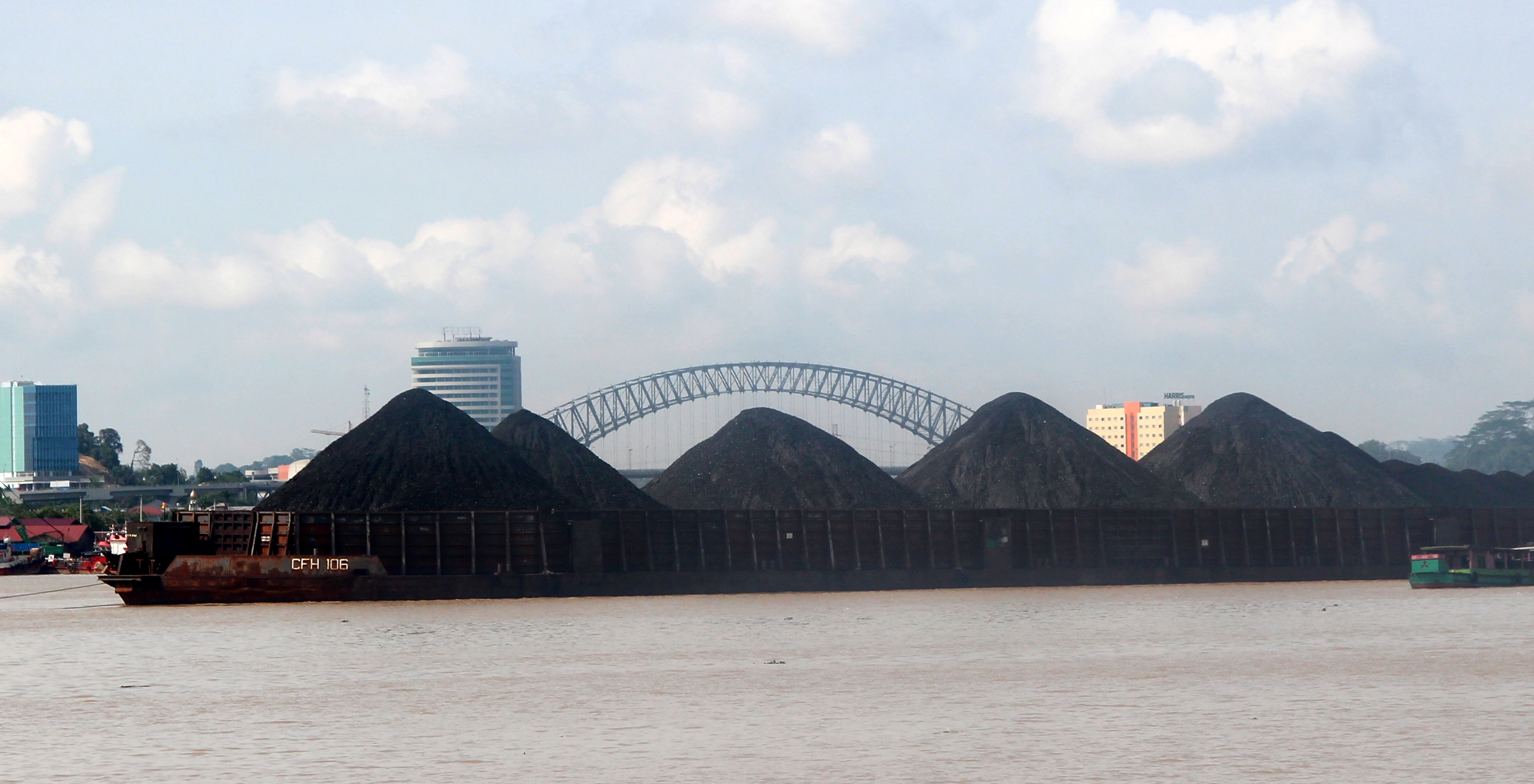


The next nightmare for the climate-conscious is the 1,000 km long Mahakam River carrying convoys of over-laden barges of thermal coal supplying much of the world's needs.

IKN starts with Ground Zero, incautiously named by someone who forgot 9/11.

The bland visitors’ display is marred by stench from clogged public toilets and broken walkways. Disabled unwelcome. ‘Green and modern’ doesn’t include health and safety.

These are more than nit-picks. If there’s no attention to detail now, how will it look later?

The work is mainly earth-moving. Jakarta-style dust is choking from the  trucks bashing the roads to rubble.

That's provided they can keep moving.  Queues park on the roads outside dry bowsers. At one closed station 85 trucks stood idle  Locals say diesel droughts have been a  problem for years, yet refined palm oil can be used as a bio-fuel.

Construction is patchy, though a dam across the Sepaku River is well ahead to the distress of around 300 local villagers.

'We don't know what's happening', said Sibukdin (on pillion), leader of the indigenous Suku Balik people.   


'People from IKN tell us to leave the land we've owned for centuries and challenge them in court if unhappy. But costs are high and the government always wins.'

So the villagers are pushing their plight internationally  hoping caring countries will tell IKN to leave them alone.

Earlier this year activist Hairudin Alexander from AMAN  presented the Sepaku concerns to a UN Human Rights session in Geneva on the Rights of Indigenous Peoples.

He told the committee that forced removal would destroy the  ethnic group’s identity.  Their language and culture is separate from the general Dayak population.

Opposition to the new city by environmental and social organisations has also been ignored. Likewise requests by this writer for briefings and interviews.

Academics have been getting the same treatment according to Mulawarman University anthropologist Martinus Nanang.

‘My colleagues and I asked for all reports and surveys but we’ve never seen them,’ he said. ‘We fear many decisions are being made without research.

‘They’re afraid of the reaction by global environmentalists.’  

IKN is a solo show. An Australian-led research team claimed: ‘Everyone acknowledged the project was political.’


A Melbourne University paper reported that  ‘Democracy won’t be making the move to Indonesia’s new capital’. 

‘Removing genuine public participation ensures (IKN) … will not be a city for all Indonesians. Instead, it looks like (it)  will serve the interests of political and business elites and the people who back them.’

IKN boss and former banker Bambang Susantono claimed 13 UN agencies have expressed support. Maybe, but they're not the elusive foreign investors Jokowi has failed to snare.

His desperation showed this month when he reportedly  said the project was open to local investors, as though they’d been excluded.

After trumpeting a 'number' of keen domestics he strangely added that if locals show no interest, the Government will seek overseas investors - a search which has been underway since Softbank said ‘no’.

'I have ordered the Head of the IKN Authority to restrain investors from abroad and give them a chance.'

No need for  government-ordered restraint - the capitalists are doing that themselves.


First published in Michael West Media, 4 December 2023:  https://michaelwest.com.au/revenge-of-the-jungle-indonesias-new-capital-unloved-and-unfunded/

Friday, March 25, 2022

A TALE OF TWO CITIES


                              Keep calm and carry on 

 Blak-blakan Luhut Usai Namanya Masuk Pandora Papers, Simak!

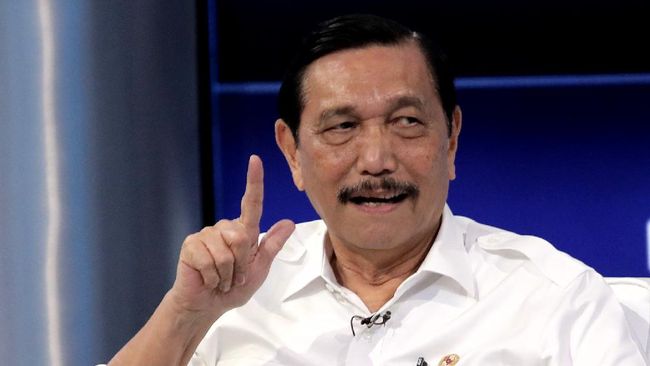
  Luhut Pandjaitan                                            Credit: CNBC Indonesia

There’ll be few Valentine’s Day greetings and faux flower mall displays in Indonesia two years hence. That’s not because Muslim scholars will again warn followers not to celebrate ‘values that are considered to be against the Islamic Sharia.’

The key reason to forget pink hearts and rose bouquets is that Wednesday 14 February 2024 will be presidential Election Day in the world’s third-largest democracy.  Voting isn’t compulsory but past turnouts have been high – 70 per cent in 2014 and 83 per cent in 2019.

The 2019 campaign was brutal.  So was the election. Voters push a nail through the name and photo on the ballot paper to record their vote.  At the count, officials hold up each slip to show it’s valid. More than 220 election officers reportedly died and almost 1,500 fell ill from stress. Riots following the result led to at least six deaths and hundreds injured.

After second president Soeharto spent 32 years in office, the Constitution was changed restricting a president to two five-year terms, meaning Joko ‘Jokowi’ Widodo will have to retire and head back to Solo.

In his Central Java hometown he ran a furniture business before being propelled into the nation’s top job with a humble guy-like-us profile. He wasn’t a retired general or an oligarch asserting the divine right to rule through dubious links to the long-abolished Sultanates.

There’s now a drive to change the Constitution and allow Jokowi and wife Iriana three more years in Jakarta’s Istana Merdeka (Freedom Palace).  The motives are impure, laundered with raggedy reasoning about jobs still to be done and time needed to recover from the pandemic.

 Indicator Politic Indonesia researcher Bawono Kumoro argues people and parties who’ve benefited from having Widodo in power ‘feel anxious that their position of comfort will be undermined when Widodo's leadership comes to an end.’

Particularly twitchy is the Islamic Partai Kebangkitan Bangsa (National Awakening Party).  Although it scored only 58 seats in the 575 seat Dewan Perwakilan Rakyat (People's Representative Council) it holds four key portfolios, including Trade and Manpower.

Without bothering to reveal examinable data, PKB General Chairperson Muhaimin Iskandar said social media agrees with his postpone proposal as does the Golkar Party (85 seats) and the National Mandate Party (44 seats).  The two parties have yet to confirm.

The rest - 388 seats across nine parties - are saying ‘no delay’, or waiting till the wind blows a new mood from the electorate.

Particularly worrying is another wild claim, this time from Coordinating Minister for Maritime Affairs and Investment Luhut Pandjaitan.  His insistence that keeping the Prez in office is backed by 110 million social media box-tickers has been ridiculed as impossible. 

The former general had a business partnership with Widodo and is widely considered his éminence grise.  The 74-year old’s statements are becoming increasingly incoherent and widely mocked.

The urgers face an uphill climb.  An IPI survey last December appeared to show around two of every three respondents want the 2024 elections to go ahead even if Covid still thrives.

Former The Jakarta Post editor Endy Bayuni has no time for taking the electorate’s pulse.  He calls the shilly-shallying ‘subversion’:

‘That is not too strong a word to describe the current attempt by some political leaders to extend the terms of the government, both of the President and the legislature, beyond 2024. Whatever pretext they use in advancing their argument, they are subverting the democratic political processes. And that is nothing less than treason.’

The president is revealing little – but his party secretary-general Hasto Kristiyanto reportedly said a postponement would create a crisis. Yet voters can appreciate ‘the infrastructure president’ wanting to leave a concrete legacy. 

That’s the new national capital Nusantara in the province of Kalimantan 2,000 km north of Jakarta, on Borneo the largest island in Asia shared with Malaysia and Brunei. This month Widodo appointed Bambang Susantono head of the Archipelago Capital Authority for five years. The civil engineer and economist has a PhD in infrastructure planning from UC Berkeley. 


 Indonesia's new capital Nusantara sparks controversy | Financial Times

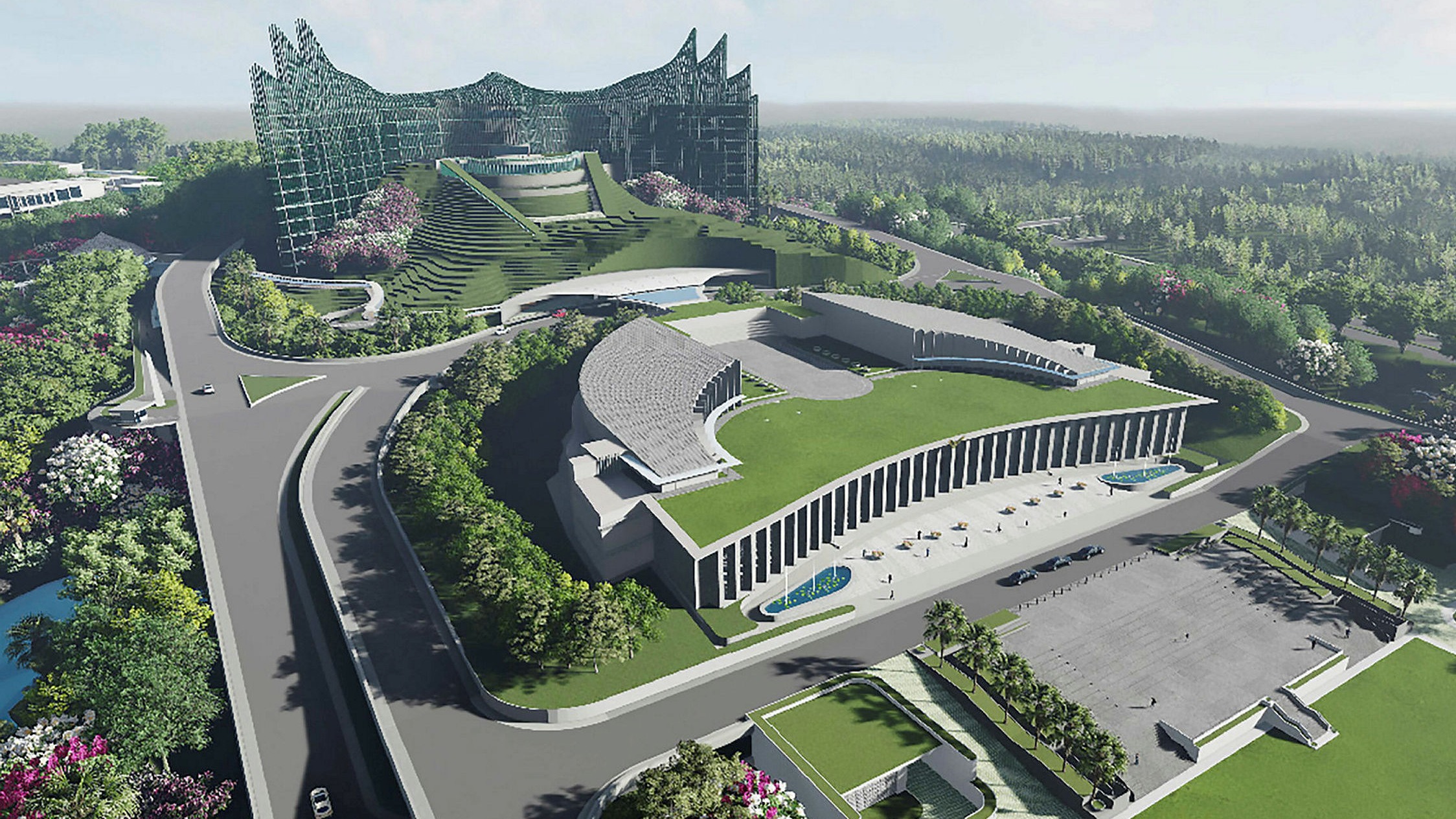
He told CNN the President wants ‘a city for all … it must be inclusive, it must be green, it must be intelligent, and it must be sustainable’.  Nusantara will cover more than 250,000 hectares of a former industrial forest—more than three times the size of Jakarta—and housing 1.5 million by 2045.

That’s a spit, not a swallow. Jakarta’s population is 11 million; triple that number if the greater metro area is included. Java has 145 million, Kalimantan 17.5. Indonesia’s population growth rate is 1.1 per cent across a nation of 273 million.

The new capital’s budget is AUD $49 billion.  As with all mega projects the figure will rise with the sun every morning, so future administrations facing fiscal stress could reallocate the rupiah to other needs. The Republic’s present debt is projected to hit around AUD 745 billion by the end of this year, about 45 per cent of its GDP.

Then Jokowi’s vision could become another Naypyidaw, the little-used artificial capital of Myanmar.  That’s less likely to happen if Widodo stays in office to ensure the transit mixers keep turning.

Few doubt the need to do something about the capital: The sea is rising by about 3.6 mm per year. One report forecasts much of North Jakarta will drown by 2050.   Traffic congestion is hideous.  So is pollution. The city holds position ten on the list of world’s black spots according to some surveys.

Research shows that Jakartans drilling wells unchecked are producing a ‘massive empty space underground, which becomes the major subsidence area.’

Opponents of the jungle capital are few, though business notes most customers are in Java and shifting will ramp costs.  Government departments can be forced to move but commerce can’t.

Concerns about the exclusion of local and indigenous communities from the planning process look worrying if true.  One British-based website which says it’s ‘a movement for democracy, freedom of information and expression in Southeast Asia’ called Nusantara ‘an internal colonial project in disguise’.

A coalition of NGOs has  asserted the area is ‘controlled by 162 mining concessions, mostly coal companies’ which will sell the city coal-fired electricity.

So far taxpayers have seen designs for an ostentatious palace and little else.  However fast the development and however long he hangs on, the 60-year old president would only glimpse his dream.

The median life expectancy for Indonesian men is 70 years compared to Australia’s 83. The debate should include boosting health care to stay alive and well – not just staying in power.


First published in Pearls & Irritations, 25 March 2022:  https://johnmenadue.com/keep-calm-and-carry-on-with-president-widodo/