FAITH IN INDONESIA

FAITH IN INDONESIA
The shape of the world a generation from now will be influenced far more by how we communicate the values of our society to others than by military or diplomatic superiority. William Fulbright, 1964
Showing posts with label IKN. Show all posts

Thursday, August 08, 2024

IGNORE JOURNOS - THEY GET IN THE WAY OF GOVERNMENT MESSAGES

 HOW TO GET GOOD PUBLICITY?  BAN JOURNOS


A tip for politicians worried about bothersome journos upsetting talking points with  probing questions: Don't invite peskies to your pressies.

Instead, gather a bevy of narcissists who call themselves social media 'influencers' and take them to anything they want to admire while being admired.

Lovelies telling their fans of a wonderful government makes for easier viewing than seeing knockabout wordsmiths stuffing mikes up newsmakers’ nostrils for a denial of the obvious.

It's a more subtle system than the Australian tactic of only inviting on-side journos to junkets, but the policy of outgoing Indonesian President Joko 'Jokowi' Widodo goes further.

He's using it to sell the benefits of his new   cash-hungry separate city project   Ibu Kota - (capital city)  Nusantara on East Kalimantan, a province on Borneo Island.

Objective journalists, economists and academics in Indonesia and overseas -mainly Australia - have been  dissecting the $45 billion (so far) vanity cash splash in a nation with great needs, like helping almost 26 million poor get decent housing rather than the Prez getting a third palace.  

 The pragmatists reckon IKN will drown the Republic in further debt and isn’t the right raft for the sinking, overcrowded and polluted capital Jakarta.

 The problem is serious and a new city one solution - preferably in Java, the political, administrative and cultural centre of the Republic.

Malaysia's answer to an over-stressed Kuala Lumpur was to build Putrajaya 35 km down the rail line and make it the admin centre.  The Parliament and many ministries remain in nearby KL so the shift has been half-hearted.

IKN is 1,200 km northwest of Jakarta, so public servants will need to abandon their families to keep their jobs.  Few are enthusiastic.

Jokowi has stomped around China and the Arab world seeking monster loans to keep the concrete pouring but there’s been much reluctance since the Japanese SoftBank knocked back the chance to be a lead investor.

This was despite tax breaks and other sweeteners, though no guarantees of handsome returns; the new city's business will be manufacturing undesired bureaucracies rather than wanted consumer goods.

Australian super funds haven’t been persuaded by ‘influencers’ to risk members’ monies in the Jokowi dream. Jakarta’s record for corruption (ranked 115th among 180 countries surveyed by Transparency International) would have frightened decision makers.  

Indonesian  Press Council Chairperson Dr Ninik Rahayu wasn’t happy with the new policy of by-passing the media: "I was surprised why the president came yesterday to the IKN and invited YouTubers and influencers. ”

Her awkward discovery is that superficial presenters pull millions when old media lurking behind paywalls only draws a few lakh. Ninik’s reasoning is right for the public good - though not the pollies’ interests:

“(Jokowi) should have invited the press (to) … see all the comprehensive policies of the IKN so the public knows all about the new capital city”, she said, claiming reporters use “journalistic principles, work democratically and professionally and present high-quality news.”

The IPC was set up by the authoritarian Soeharto government last century to keep scribes in check.  Media  conference attendees got snacks and uang lelah, a practice your correspondent has experienced. (The cash was returned to the organisers' astonishment.  The food was eaten.)  

This century the Council became an independent authority. One academic wrote that it has ‘outstanding powers to draft and ratify regulations about media accountability, to arbitrate complaints against journalists, to cultivate media professionalism, and to safeguard press freedom.’

All good - but it can’t stop newsmakers talking to ‘influencers’ rather than the media.

The international agency  Reporters Without Borders press freedom index ranks the world's fourth largest nation at 111 from 180 countries.

Last month Tempo weekly published an analysis of Jokowi's rule titled A Decade of Declining Democracy, claiming he’d “transformed Indonesia into a country characterized by autocratic legalism.”

A day later Jokowi publicly apologised for his shortcomings - the Jakarta Post reported he 'tearfully' accepted he’d made mistakes.

 The daily listed these as “the regression of democratic values and governance with intimidation against government critics and political opponents as well as shrinking public participation in legislation.”

 The Jakarta Post list should have included murder. In late June TV journalist  Rico Sempurna Pasaribu, died alongside his wife, son and grandchild when his home was firebombed.

He’s been investigating a gambling syndicate allegedly involving the military in North Sumatra. Three months earlier in the same region another journo who’d been checking the drug trade also had his house torched.

Last year the Alliance of Independent Journalists recorded ”89 cases of attacks and obstruction involving 83 individuals, five groups  and 15 media outlets’.

 Anita Wahid, a daughter of the late  Abdurrahman Wahid (Gus Dur), Indonesia’s reformist fourth president (1999 - 2001), is now a PhD student at ANU.

She’s written   that the targets “were mainly reporting on “public accountability, corruption, social and criminal issues, and environmental issues.

“The attacks included verbal and physical threats (including torture, confinement and kidnappings), gender-based sexual harassment and assaults, terror and intimidation.”

The 1999 Indonesia  Press Law is supposed to guarantee media protection and citizens' right to information.  It doesn't.

Jokowi's fauxpology is a typical Javanese gesture that will make no difference.  His successor taking over in October is the disgraced former general Prabowo Subianto, a man unfamiliar with the word 'sorry'.  

The word on the street is that Prabowo will continue crushing critics. Whether this means more ‘influencers’ and fewer reporters will become apparent as Prabowo settles into the Jakarta Palace.

Anita Wahid again: ”Journalists are needed now more than ever to monitor a government that has adopted increasingly authoritarian practices, in addition to rising corruption and human rights violations.”

Who'd want a journo’s job in Indonesia when the threats are real and fearful?  Better start a shopping website and get the VIPs keen to chat about their smart doings without the scrutiny needed to keep the bastards honest.

First published in Pearls & Irritations, 8 August 2024: https://johnmenadue.com/how-to-get-good-publicity-ban-journos/

##


Monday, June 17, 2024

GREAT IDEA - BUT FIRST GET LAND AND MONEY

 RUNNING LOW ON CASH AND TIME         


At the end of 2023, there were three clear signs that Indonesia's new capital city project on Borneo island - personally driven by President Joko 'Jokowi' Widodo - was not going well.

Now it's in deep strife with the show's two top bosses quitting the AUD 45 billion-plus Ibu Kota (capital) Nusantara  plan to relocate sinking, polluted, overcrowded Jakarta to an isolated forest site in East Kalimantan.

(Nusantara is the old Javanese name for the archipelago.)

Displaced Suku Balik people were angry about the compensation they’d been offered for leaving land held for generations.

Earlier they’d taken their case to a UN Human Rights session in Geneva on the Rights of Indigenous Peoples claiming forced removal would destroy their identity.  

Although some families wouldn't move construction work alongside their houses continued, flooding homes. Hardly the best way to win community support.

These were major matters for the wee folk that could have been foreseen during early planning, but the real concern didn’t need to be found by interviewing distressed villagers:  The sign was obvious.


Lines of idle trucks (one had 85) blocked a lane of the main road. They were queuing for diesel outside fuel stations that had run out of supplies.

 This worrying scene was not a one-off but repeated regularly. Ironically the bowsers were surrounded by vast plantations of palms that can be used to make bio-diesel.

Closer to the unfortunately named Ground Zero rises the grandiose  presidential palace where diggers and crawlers were churning the wet season mud. Vehicles regularly spun off the tracks.

For anyone familiar with the security and safety of  Australian construction sites this was chaos.

The 250,000-hectare zone is more than a three-hour drive from the port of  Samarinda. A closer airport is being built.

Locals seemed nonplussed, comforted by regular statements that all was well.  Apart from Jokowi assurances came  from the IKN head  Bambang Susantono, hand-picked from the Asian Development Bank,  and his sidekick Dhony Rahajoe, an architect and real estate developer.

All changed at the start of June when the two men walked off the job ten weeks before the first stage grand official opening planned for 17 August, the Republic's National Day.

This is now to be a split ceremony with VIPs in IKN and Jakarta.

Indonesia’s most credible newspaper Kompas questioned whether the bosses had been sacked weeks earlier than the official resignation announcement. This said they’d left for ‘personal reasons’. At least it omitted the cliche about ‘spending more time with the family.’

In September 12,000 civil servants are set to relocate from Jakarta, 1,200 km south in Java. Jokowi has said he’ll be among them once the plumbing is fixed.

The quitters kept their mouths closed but it soon became obvious that the issue was legal access to land and lack of money to pay the contractors and their 10,000 workers.

IKN had started using public money (by law limited to 20 per cent) while the President dashed around the world seeking investors - including Australians.

He told them he imagined  ‘a smart forest city concept, a modern and environmentally friendly city' with  70 per cent of land in ‘green areas… envisioned to be a heterogeneous forest emulating a rainforest.'

A Melbourne University study offered a different picture: 'Removing genuine public participation ensures (IKN) …will not be a city for all Indonesians. Instead, it looks like (it)  will serve the interests of political and business elites and the people who back them.'

Mulawarman University anthropologist Martinus Nanang told this reporter in Samarinda:‘My colleagues and I asked for all reports and surveys but we’ve never seen them.

‘We fear many decisions are being made without research. They (government planners) are afraid of the reaction by global environmentalists.’  

An Australian-led research team claimed ‘Everyone acknowledged the project was political.’

Under the Indonesian Constitution, a president can run for only two five-year terms.  Jokowi will stand down in October when the new president-elect Prabowo Subianto is inaugurated.

In this year's election campaign, he was supported by Jokowi because it was believed the newcomer would maintain his predecessor's legacy.  

Prabowo has yet to comment on the resignations.

The only serious investor interest came from  Japan's SoftBank Group which reportedly talked of a US$100 billion loan. That hope collapsed in March 2022.

 Big money wants guarantees of good returns, tricky when the proposal  is about administration rather than manufacturing.

There’s also concern about corruption, sadly commonplace in Indonesia, particularly infecting big public works.

Reuters reported Arya Fernandes, an analyst with the Indonesian Center for Strategic and International Studies saying: "The question is how to convince investors that there is no problem.”

The government rushed in two government ministers as replacements for the quitters while Jokowi said he’d be announcing investments soon, naming the United Arab Emirates as the likely saviour.

Ancient kings of Java in the Hindu-Buddhist era built splendid temples to honour their reigns.  Jokowi seems to have similar ambitions.  

## 

First published in Independent Australia 17 June 2024: https://independentaustralia.net/politics/politics-display/indonesias-new-capital-city-project-is-an-ongoing-disaster,18692

Monday, December 04, 2023

THE CITY THAT NEVER KEEPS

 REVENGE OF THE JUNGLE LOOMS


Indonesia’s biggest-ever civil engineering project deep in Borneo’s equatorial jungle should supposedly address a serious  social and environmental problem.  

Now it’s under threat. So is President Joko ‘Jokowi’ Widodo’s can-do reputation and national pride.

The need to take the weight off stinking, sinking Jakarta is real and pressing.  But Jokowi’s relocation solution is economically flawed, environmentally dangerous and probably doomed. Good idea, lousy planning,  bad place.

The 250,000-hectare construction site of the Republic’s new Ibu Kota (capital) Nusantara (IKN) is the president’s conceit.  The name is  old Javanese for the archipelago.

The provisional budget is US$35 billion. Ironically this is the sum allegedly stolen from the nation’s public purse by second president Soeharto during his 32-year kleptocracy (1966-98).  The money has never been recovered.

Indonesia already owes China more than US$22 billion for earlier infrastructure programmes.

Work on IKN is being driven using domestic funds needed for health, education and other national services. The maximum ‘public investment’ is 20 per cent.

After 18 months of crowing optimism Jokowi has now confessed he’s drawn no international investors.  Without their cash  the creek supplying contractors and 10,000 workers now on site will run dry.  

Then the fecund vines will strangle the half-built pillars, choke the drains and smother all that’s human-made - the fate of Java’s Buddhist and Hindu temples abandoned five centuries ago when Islam arrived.

That’s the prediction and hope of Saiduani Nyuk (right) head of the Kalimantan Indigenous People’s Alliance (AMAN)  representing 77 communities claiming they’re threatened by the development.


‘There’s no clarity or communication, but plenty of intimidation.’ he told Michael West Media. ‘The money isn’t there and it probably won’t be found because the government is in debt.’

All signals for IKN looked green when Japan’s Softbank reportedly talked of a US$100 billion loan. That road hit a dead end in March 2022.

A reported 130 lenders from Singapore, South Korea, Japan, Malaysia and the UAE have looked  - and done U-turns, wondering how to make a buck on grandeur.

If any Australian or other Western bankers have been escorted through the site’s mud to imagine money trees flowering,   their presence hasn’t been noticed.

Their fears would include having to grease palms  and fall foul of local and Australian law. Graft runs rife in Indonesia, now even allegedly infecting the government’s Corruption Eradication Commission watchdog.

The theory endorsed by Saiduani and others is that potential investors will keep wallets closed until  the 14 February Presidential election results are finalised.  

After two five-year terms the popular Jokowi is constitutionally barred from staying on. While the three top candidates for his job say they’ll maintain their predecessor’s dream.

If Jokowi can’t raise the funds, what chance will his less enthusiastic successors have?

On a trip to the US in November  Jokowi (who graduated in forestry) said Nusantara will be ‘a smart forest city concept, a modern and environmentally friendly city' with  70 per cent of land in ‘green areas, which is envisioned to be a heterogeneous forest emulating a rainforest.'

This is how it was before bulldozers and chainsaws arrived last century in a Jakarta-driven burst of 'development.'

First stage inauguration is scheduled for National Day (17 August) next year with around 60,000 government employees moving in during the following months.  Eventually two million are expected, a fifth of Jakarta’s population.

Capitals created by fiat have a poor success rate particularly when the shift is far into another climate and culture.

Sometimes it's better to build a new place down the road.  Like Malaysia’s judicial capital Putrajaya, 36 km from Kuala Lumpur which remains the nation's commercial hub.

Egypt’s ’New Administrative Capital’ has reportedly already over-run and under-delivered on its US$50 billion budget.  It can't attract loans or residents.

It’s accessible by road, while East Kalimantan can only be reached by air or sea from Java, making the higher cost of living another deterrent.

Jakarta defines overcrowding.  The Jabodetabet zone around the current capital has more people than Australia.

But it's the political, economic, manufacturing and power centre of the world's fourth most populous nation, and accessible from anywhere in Java.

Nusantara is more than a three-hour grind from the scruffy entry-point Samarinda, through  an environmentalist’s horror trip of oil palm plantations.  


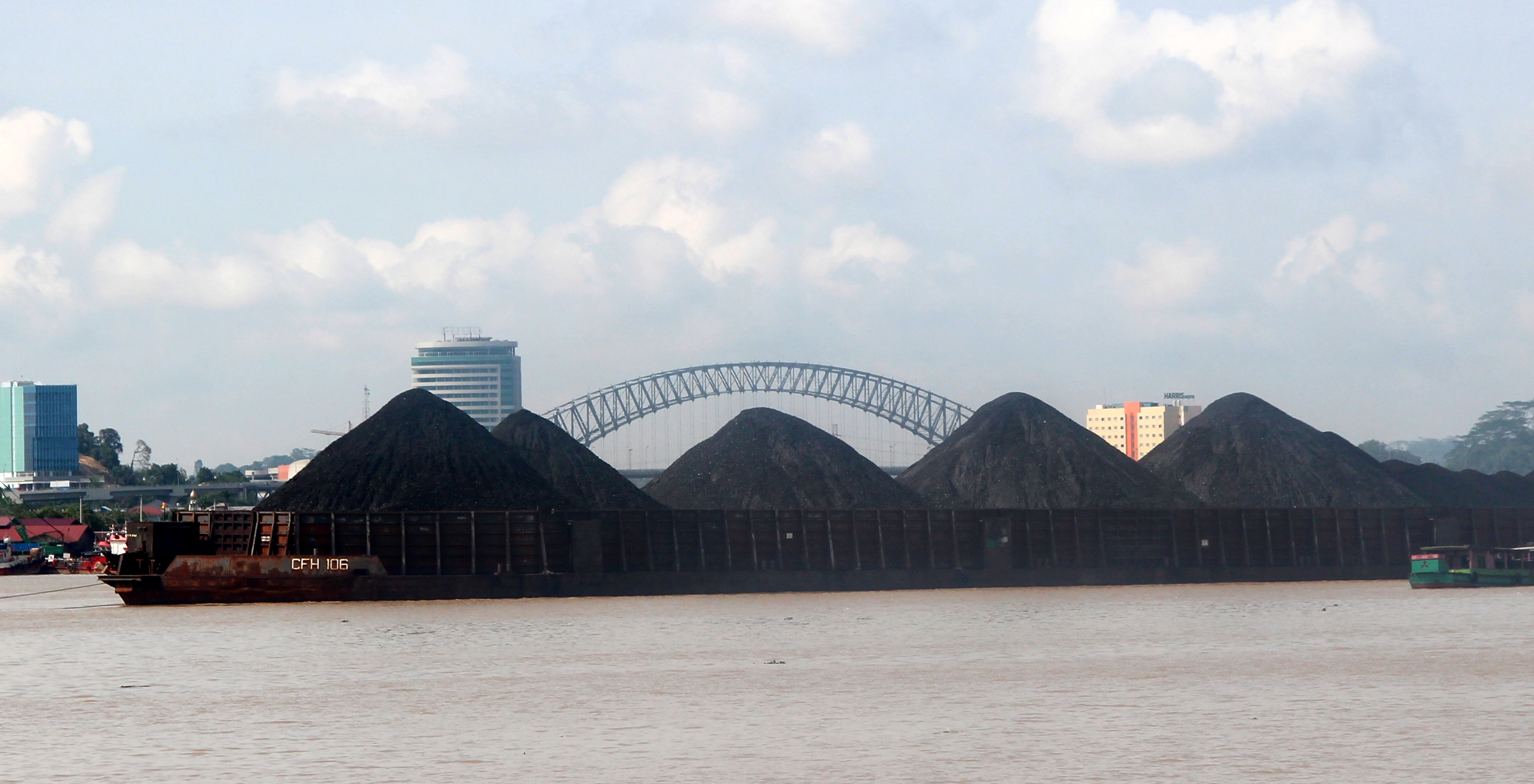
The next nightmare for the climate-conscious is the 1,000 km long Mahakam River carrying convoys of over-laden barges of thermal coal supplying much of the world's needs.

IKN starts with Ground Zero, incautiously named by someone who forgot 9/11.

The bland visitors’ display is marred by stench from clogged public toilets and broken walkways. Disabled unwelcome. ‘Green and modern’ doesn’t include health and safety.

These are more than nit-picks. If there’s no attention to detail now, how will it look later?

The work is mainly earth-moving. Jakarta-style dust is choking from the  trucks bashing the roads to rubble.

That's provided they can keep moving.  Queues park on the roads outside dry bowsers. At one closed station 85 trucks stood idle  Locals say diesel droughts have been a  problem for years, yet refined palm oil can be used as a bio-fuel.

Construction is patchy, though a dam across the Sepaku River is well ahead to the distress of around 300 local villagers.

'We don't know what's happening', said Sibukdin (on pillion), leader of the indigenous Suku Balik people.   


'People from IKN tell us to leave the land we've owned for centuries and challenge them in court if unhappy. But costs are high and the government always wins.'

So the villagers are pushing their plight internationally  hoping caring countries will tell IKN to leave them alone.

Earlier this year activist Hairudin Alexander from AMAN  presented the Sepaku concerns to a UN Human Rights session in Geneva on the Rights of Indigenous Peoples.

He told the committee that forced removal would destroy the  ethnic group’s identity.  Their language and culture is separate from the general Dayak population.

Opposition to the new city by environmental and social organisations has also been ignored. Likewise requests by this writer for briefings and interviews.

Academics have been getting the same treatment according to Mulawarman University anthropologist Martinus Nanang.

‘My colleagues and I asked for all reports and surveys but we’ve never seen them,’ he said. ‘We fear many decisions are being made without research.

‘They’re afraid of the reaction by global environmentalists.’  

IKN is a solo show. An Australian-led research team claimed: ‘Everyone acknowledged the project was political.’


A Melbourne University paper reported that  ‘Democracy won’t be making the move to Indonesia’s new capital’. 

‘Removing genuine public participation ensures (IKN) … will not be a city for all Indonesians. Instead, it looks like (it)  will serve the interests of political and business elites and the people who back them.’

IKN boss and former banker Bambang Susantono claimed 13 UN agencies have expressed support. Maybe, but they're not the elusive foreign investors Jokowi has failed to snare.

His desperation showed this month when he reportedly  said the project was open to local investors, as though they’d been excluded.

After trumpeting a 'number' of keen domestics he strangely added that if locals show no interest, the Government will seek overseas investors - a search which has been underway since Softbank said ‘no’.

'I have ordered the Head of the IKN Authority to restrain investors from abroad and give them a chance.'

No need for  government-ordered restraint - the capitalists are doing that themselves.


First published in Michael West Media, 4 December 2023:  https://michaelwest.com.au/revenge-of-the-jungle-indonesias-new-capital-unloved-and-unfunded/