FAITH IN INDONESIA

FAITH IN INDONESIA
The shape of the world a generation from now will be influenced far more by how we communicate the values of our society to others than by military or diplomatic superiority. William Fulbright, 1964
Showing posts with label Indonesian elections. Show all posts

Wednesday, February 07, 2024

I ADORE YOUR ELECTION

 LOVE ME, LOVE MY VOTE                                                         Duncan Graham


Pledges of love eternal flourishing on social media are like the vast east coast plains of normally arid Australia, saturated by summer storms,

As you read this billions of flowers will begin to bloom, the tiny seeds lying still for months, years sometimes, waiting patiently for the blessings of rain. Readers wanting to enjoy this joyous sight should not delay, for the vengeful parching sun will soon return and all will wither.

This is how it is with the election maturing on the day we also celebrate the passing of the third-century Saint Valentine. Sad story: The Roman was allegedly beaten up and beheaded because he wouldn’t renounce his faith.

That adverb has been added because no one knows for sure how the martyr left the world in his early 40s. No dashboard vision or CCTV.

He might have come home late with an unusual shade of lipstick on his toga collar - and then been dished with a frying pan by a furious Mrs V.  In those days kitchen utensils were made of cast iron.

We only know that the icon of affection is no longer with us, though the love he sowed springs still.

And so it is with the Big Ballot, a mass wooing of more than 200 million eligibles in the world’s third largest democracy (after India and the US).

Whatever their origins, Indonesia Expat aficionados have probably never seen such a mass of smiling, charming men and women seeking their affection, grinning from the crowded sidewalks.  Many even try to wave down motorists  by flapping faces with their undress of ripped vinyl.

They’re hoping, praying even, that those not already engaged or even wedded to one party will bestow their favours. Cosmopolitan readers will have encountered similar scenes elsewhere - in Singapore’s Geylang district for example - where the lights are red.

Sadly political polygamy is outlawed. The seducers’ faces are so angelic, their ambitions so pure, most of us will be tempted to go for the lot.

Satisfaction comes through shoving a nail on a hard stick provided by the Komisi Pemilihan Umum (Electoral Commission) straight through their smiles.

No lukewarm pencil ticks as in overseas systems. In Indonesia we want to be certain come the count. Voting across the archipelago is a holey experience.

If only 14 February would last forever. Then the candidates could bestow upon us their airbrushed beauty and handsome features, love eternal.  The dream would never fade.

Alas, the universal truth: Nothing lasts forever.  Fortunately that includes the ink on the finger. Tip: Avoid embracing your beloved immediately after exercising your right to do so. Blue lips are for cold climes and have yet to become trendy in the tropics.

The lawmakers were wise to restrict entrance to the cardboard booths to those above 17. By that age innocence has already been flayed, like the body of Vin the Unlucky at the gate of Via Flaminia where the stones were splashed red.

Electors will not be so inexperienced in life to be startled and distraught on the night of the results. That’s when they’ll discover the once controlled emotions of their swains, chosen for their sweetness and piety, have now turned to hate.  Losing is not for the gentle.

Shakespeare is supposed to have said: “Love me or hate me, both are in my favour. If you love me, I’ll always be in your heart. If you hate me, I’ll always be in your mind’.

The source for this aphorism is unlikely to have been the Bard. The author most likely was a copywriter for a card company that makes a whopping profit in mid-February then nothing for the next 51 weeks - much like the desert blooms Down Under.

We doubt the English language’s greatest sonneteer would scribble such shallow lines -and in any case ‘you’ and ‘your’ were not in his lexicon. 

 ‘Thee’ and ‘thine’ carry more intimacy. Anyone today who heard such words whispered in the shadows of Dunia Fantasi would probably look for a satpam to escort her out of the park and into a GoCar

Let’s keep an open mind: If WS did dip his quill into a well of bad rhyme it must have been for want of a quick guinea from a card publisher scratching for enough cliches when demand was greatest. 

Last year the real or imagined moral codes of the City Fathers and Mothers of Malang in Central East Java were shocked to the core. They’d noticed couples were using the sidewalk benches on Jalan Ijen to enjoy the Almighty’s gifts of gender difference, so ordered bamboo sticks strapped across the seats.

When this didn’t deter, threats were made to demolish the street furniture.  Fortunately less jealous and more mature lawmakers pointed out that many of the people using the facilities were the weary elderly.

Some were seen holding hands as they’d done for decades of marriage, proving that love will stay whatever the politicians say - or betray.

Happy Valentine’s Day - and don’t forget to exercise your vote.

##

First published in Indonesia Expat, 7 February 2024: 

https://online.fliphtml5.com/qinqh/zedc/index.html#p=15

Monday, January 22, 2018

IF ONLY RHETORIC LED TO RESULTS

No-deal neighbours

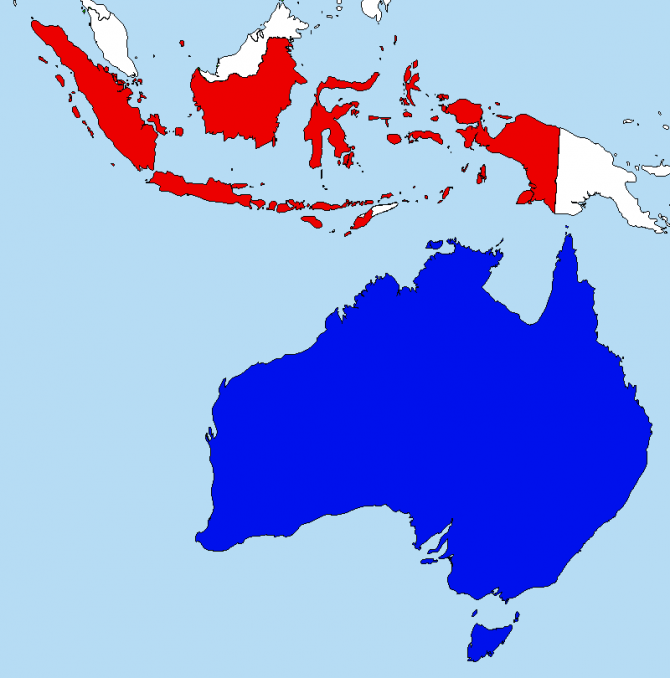
The end-of-year deadline to conclude the Australia-Indonesia free trade talks has come and gone.  Now the ambition is ‘early next year’ according to Trade Minister Enggartiasto Lukita.  That will clash with the lead up to the 2019 Presidential election when parochial concerns will be more pressing than the contentious issue of concluding business with the folks next door.


It’s a pity Donald Trump didn’t lend his talents to the negotiations. The self-appointed master deal maker might have come up with the ‘most tremendously exciting best agreement ever, wonderful and big.’

But even with the hyperbolic American leader’s skills any Indonesia-Australia Comprehensive Economic Partnership Agreement (IA-CEPA) would have been revealed as fractured once Air Force One had left the tarmac.

To say that negotiating the IA-CEPA was always going to be difficult is several fathoms below understatement so applause for those who tried hard.

Their reasoning was sound even if their understanding of the subtleties of Indonesian thinking and culture was flawed.  Two countries right alongside each other.  One has a growing population and shrinking farmland, the other has ample space and massive supplies of grain, beef and milk.

‘Partners in Prosperity’ sang the Australian Chamber of Commerce and Industry but few Indonesians joined the chorus.  They need imports but buy reluctantly.  Apart from the shame of having to rely on outsiders to supply the daily needs of the world’s fourth largest nation, Indonesians fear that buying essentials from afar will diminish their jingoistic claim to be an international independent power.

Kutukan means curse, now a relic word in English but throbbing in Indonesia where it’s regularly used, even in the mainstream media. It explains why things expected to come to pass fail despite propitious signs.  

The IA-CEPA was doomed largely because Australia wanted the agreement more than its neighbour, even though President Joko ‘Jokowi’ Widodo was reported to be keen to have all documents signed by year’s end. The Javanese are skilled in telling foreigners what they want to hear, while Australians have been naive to think ‘yes’ always means what it says.

Indonesia is gripped by nationalism and its sibling protectionism. So is Australia: In April and in the midst of the negotiations Canberra slapped a tariff on A4 paper imports from Indonesia (and other countries) after the sole manufacturer alleged dumping.  The company is called Australian Paper, but it’s owned by the Nippon Paper Group.

Australia also got greedy assuming that proximity gave an unassailable edge.  Indonesia is now importing wheat from the Black Sea at USD 100 a tonne less than the Fremantle price, and bringing in buffalo meat from India.

There have been other neon signs flashing caution. Talks started in 2010, hibernated when the two countries were quarreling over capital punishment, then woke last year.

While Jokowi was apparently agreeing with Prime Minister Malcolm Turnbull about urgency during a visit to Sydney in early 2017, back in Jakarta he was talking about ‘food sovereignity’.

The rhetoric is at odds with reality; even staples like salt and rice (Indonesia used to be an exporter) are now being elevated from bulk carriers into silos at Tanjung Priok (Jakarta) and Tanjung Perak (Surabaya). Source nations include Thailand and Vietnam.

The IA-CEPA negotiators kept smiling in public, sometimes overdoing the grins when they called a media conference in September to announce minor gains that had already been trumpeted in February.

The language also failed to connect: Turnbull spoke of a ‘high quality’ agreement while Indonesia’s lead negotiator Deddy Saleh chose the adjective ‘good’.

Australian universities want to open campuses in the archipelago - an ambition that frightens Indonesian educators who fear students will migrate to quality teaching.

What Indonesia really wants Australia can’t deliver - massive capital investments to keep Jokowi’s infrastructure projects moving. Australia is not within coo-ee of China and Japan in supplying materials and loans.  

Australians also rightly fear much would be lost in a country noted for corruption and bureaucratic quagmires, and where the rule of law can be elusive.

Australians are bound by rules that don’t always bother other traders.  It’s illegal for Aussies to bribe public officials anywhere.

The World Bank lists New Zealand as the number one country for doing business (Indonesia ranks 72nd) so it’s no surprise Australian investors head across the Tasman Sea rather than the much narrower Arafura Sea.  

The other demand has been for jobs in Australia for nurses, maids and construction crews - extending the Republic’s people exports beyond Hong Kong, Singapore and Malaysia.  

Indonesian workers are often multi-skilled, willing and prepared to live in remote areas, but few have good English or understand Australia’s rigid health and safety laws. Bali holidaymakers would have seen bare-head labourers wearing thongs scrambling up bamboo scaffolding and across work sites littered with hazards.

The work culture obstacles could be overcome with intensive training, but selling this idea in Australian states with high unemployment would generate a political firestorm. Australians will probably go to the polls in late 2018 or early 2019.

If trade talks restart next year there’s little chance much energy will be applied.  Indonesia will continue to buy primary produce from Down Under, though only if it can’t get cheaper from elsewhere, and Australian traders will still complain about tariffs and other imposts suddenly levied.  

This market potential is everything its boosters claim - expanding and close.  What they don’t say is that it’s damnably difficult to achieve when the two sides have different expectations, agendas and cultures.

(First published in Strategic Review 22 January 2018:  http://sr-indonesia.com/web-exclusives/view/no-deal-neighbors


##