FAITH IN INDONESIA

FAITH IN INDONESIA
The shape of the world a generation from now will be influenced far more by how we communicate the values of our society to others than by military or diplomatic superiority. William Fulbright, 1964
Showing posts with label Gusdurians. Show all posts

Tuesday, July 13, 2021

FAITH TRUMPS FACTS


                        Fear God, not the pandemic


July 20 will be a big day in Indonesia.  It marks the end of more than two weeks of lockdown, and it’s Bloody Tuesday - Idul Adha, the feast of the sacrifice. This year participants may become victims.


The Old Testament story has Ibrahim (Abraham) ready to knife his son Ismail (Isaac) to obey a celestial command. Filicide was avoided when the lad was substituted with a lamb. Putting faith first is cruelling Jakarta’s bid to get citizens to recognise the pandemic is real.

Just after dawn on 20 July, the yards of Indonesia’s mosques and adjacent streets will run red.  Thousands of conscious billy goats, rams and young bulls will have their throats slit, dying slowly while the slaughtermen pray aloud.

The butchers should also be imploring the deity to keep the people safe.  Crowds will gather to watch the gory scene and collect their meat. Many will be taking home sickness, maybe even death.

Psychologist and civil rights activist Alissa Wahid fears the religious event will be another Covid-19 super spreader unless the national government moves to cancel or control.  This is unlikely as the Joko Widodo administration dreads a backlash from religious leaders. 

The eldest daughter of fourth president Abdurrahman Wahid, aka Gus Dur, (right) told an Australian National University Indonesia Project webinar this month that leadership in controlling the pandemic was absent at national and regional levels:


‘There’s been a lack of preparedness in crisis management and an inability to face brutal facts. We could have done much better.  Is this a failure of government?  Yes.’

Wahid claimed ultra-conservative preachers – Muslim and Christian - are telling congregations through videos that the government, military, police and scientists are communists challenging the will of the deity, so messages urging vaccination must be disobeyed. 

‘They are saying there’s nothing we can do, the government is doomed, Indonesia is doomed because mosques are closing down (to reduce the spread of infection). Putting religion first goes to so many aspects of everyday life.

‘The country is down on its knees.  Numbers are bleak, hospitals are collapsing. Many sick people are not reporting to clinics. We are in an era of distrust.’

Wahid’s comments need to be put in context. Javanese are reluctant to confront, preferring harmony – an essential quality where millions are squashed in densely-populated kampongs.

The brutality of Australian politics is absent in serious discussion of state affairs by reputable figures.  Much criticism is muted by ‘however’ and other adverbs to soften blows and appease the target. 

Wahid’s Islamic credentials help shield her from all but the most acidic attacks.  She’s General Secretary of Nahdlatul Ulama’s Family Welfare Agency promoting strong and moderate families. NU is Indonesia’s biggest Muslim organisation with more than 50 million members


She’s also the National Coordinator of the Gusdurian network across 140 cities promoting interfaith dialogue and democracy, the issues which drove her late father.  Being blunt carries risks.  Chauvinists lurk, ready to rip reputations and besmirch motives.

A few others are getting braver as the virus bites deep and frustration mounts.  The self-styled Consortium for Public Health has publicly criticised Widodo’s apparent refusal to take full responsibility for mishandling the pandemic.

One line in the 24 civil society group’s open letter would resonate in Australia: ‘Forget, for once, about political image, focus on handling the pandemic.’

The Jakarta Post’s editor-at-large Ary Hermawan – formerly with Amnesty International -  wrote: ‘… we can no longer ignore how the ongoing health crisis has exposed the structural problems underpinning our democracy, how the state has failed us in one of the most challenging times in history.

‘Corruption and rent-seeking remain rampant during the pandemic … the democratic institutions we set up in the Reform Era (after the fall of President Soeharto in 1998) have been co-opted by a small group of people who are only interested in accumulating wealth and power.

‘The bad news is that there is no quick fix for this. But if the pandemic has taught us anything, it is that a structural transformation of our body politic is far past due.’

Although growing attacks on the Widodo administration’s incompetence are heartfelt they’re unlikely to see regime change.  It’s different next door where the United Malays National Organisation, the nation’s largest political party, has withdrawn support for PM Muhyiddin Yassin over his handling of the pandemic. 

Indonesia doesn’t follow the Westminster system of government and shadow ministers.  There’s no structured opposition or credible stand-by ready to walk on stage should the government fail.

Vice president Ma’ruf Amin, 78, is seldom seen. Student unions have dubbed him ‘King of Silence’ and his boss ‘King of Lip Service’.  The former NU cleric was chosen as Widodo’s running mate to capture the Islamic vote.

Daily cases of Covid 19 were around 5,000 a month ago. That figure has now multiplied eightfold. Some days more than a thousand deaths are reported. Johns Hopkins University Coronavirus Research Centre reports about 2.5 million cases and more than 65,000 deaths since the virus arrived in the archipelago last year.

Yet denial continues. According to Wahid, leaders in some towns are reporting their communities are Covid-free to avoid the shame of disclosing incompetent management.  On one day Gusdurians reported a total of 832 deaths gleaned from medical sources, but the Jakarta government claimed the toll was 549.

The media has also been a scapegoat for reporting bad news of the plague, with police asserting verified stories published by responsible newspapers have been hoaxes.

Economist Dr Rimawan Pradiptyo from Yogyakarta’s Gadjah Mada University told the ANU webinar local organisations were trying to fill the holes caused by government maladministration, including overlaps and departmental silo mentality.

SONJO (Sambatan - voluntary community work, and Jogja aka Yogyakarta), started in the Central Java city in March last year. It now has 23 self-help groups and 1,800 members.  They rely on donations, eschewing government funds and advertising, using the networks of the wildly popular WhatsApp messaging system to spread accurate information.

SONJO members support the vulnerable and those at risk of infection, linking the willing with the needy, helping the poor cope with authorities and source necessities, like coffins and oxygen. It has 60 shelters for patients needing to isolate. To the outsider, these look like regular tasks for public servants.

Pradiptyo: ‘Unfortunately we have limits. We have no authority. What we need to do now is let the government do the business.’

Wahid: ‘We are getting to the edge of the capacity of volunteers and the community movement.  We cannot take over the roles of government but we can try to help in limited ways. If Idul Adha goes ahead we should brace ourselves for an August impact.

First published in Pearls & Irritations, 13 July 2021: https://johnmenadue.com/fear-god-not-the-pandemic-in-indonesia/



Sunday, March 24, 2019

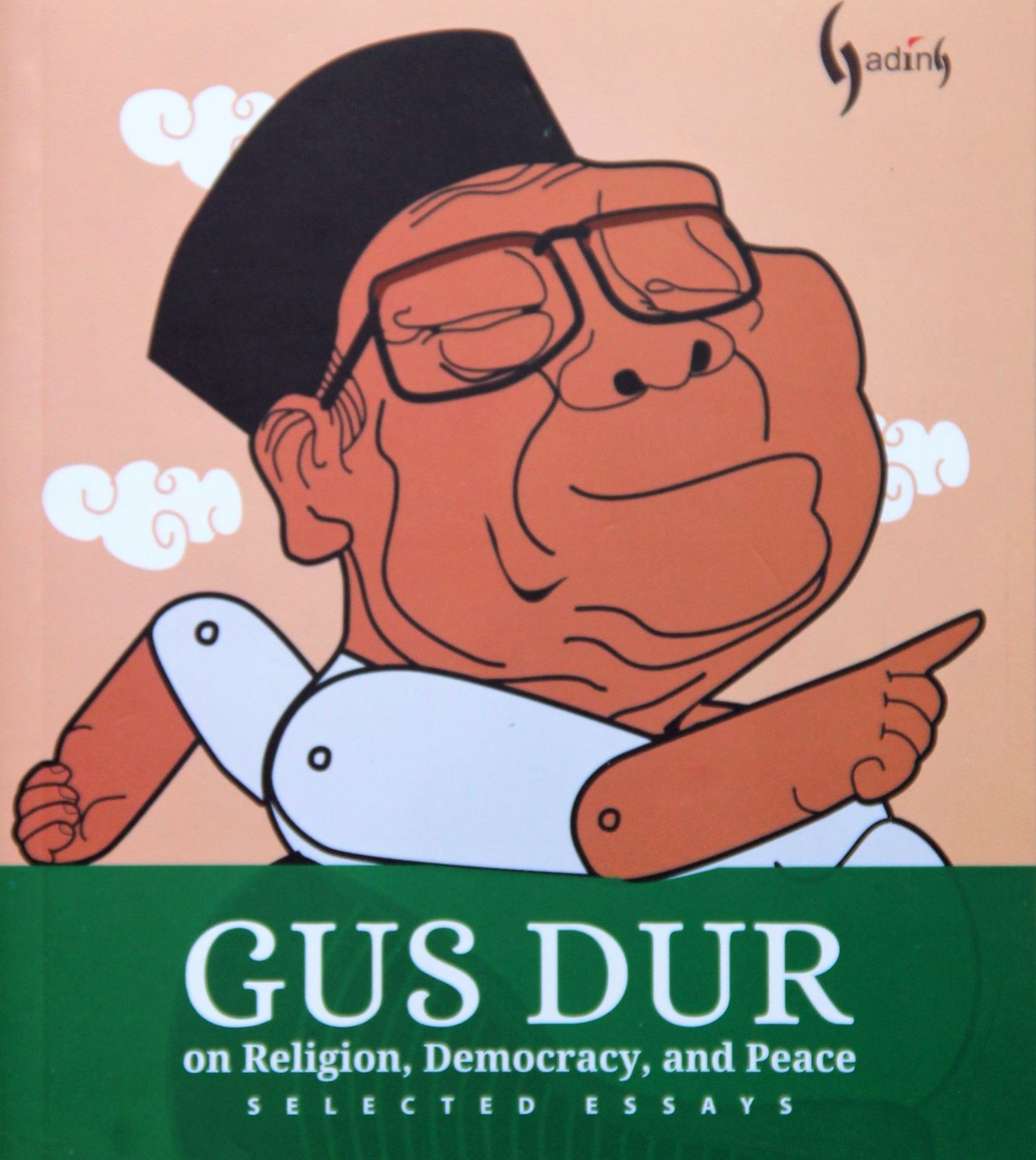
GUS DUR ON RELIGION, DEMOCRACY AND PEACE


Showcasing an Indonesian intellectual       

'Gus Dur on Religion, Democracy and Peace’: Showcasing an Indonesian intellectual           

How to get the golden egg without disturbing the hen?
This was a typical conundrum posed by Indonesia’s fourth President the late Abdurrahman Wahid.  Better known as Gus Dur, he was one of this nation’s most prominent theologians, a committed democrat and lover of metaphors. 

One of the eggs was reform and a return to the more accepting indigenous Islam.  This needed to be secured without arousing the wrath of the broody bird, the rigid Saudi form known as Wahhabism then becoming popular.

Gus Dur died in late 2009 aged 69.  Before entering politics he was head of Nahdlatul Ulama (NU), the biggest Islamic organization in the world.

His 19 months as President between 1999 and 2001 were chaotic after the fall of the long time dictator and former army general Soeharto. 

Gus Dur was a bad economist, a lousy administrator, a decent humanist and a good social reformer. He lost the top job after being threatened with impeachment.

There aren’t too many NU members who don’t have an anecdote about their former leader.  Apart from being a religious scholar the polymath was also a passionate soccer fan and all-round funny man with a sackful of jokes. He used these to start meetings and defuse tensions:

A Madurese was caught ignoring a sign banning pedicabs. ‘I saw the picture Sir,’ he told the policeman, ‘but it showed an empty becak; mine had a passenger.’

“You're stupid. Can't you read the words under the picture?’

‘No Sir. If I could read I’d be a clever man like you.’

One of Gus Dur’s favorite verses from the Koran reads: ‘I have made you nations and tribes so that you may know one another’, a robust rebuff to the parochialism preached by today’s separatists.

He wrote essays and newspaper articles till restricted by loss of sight; these were always in Indonesian though he was a self-taught polyglot.

Now the Gusdurians, the young followers of his liberal thinking, have offered some selected works to a wider audience.  Seven translators have put 13 of his essays into English as Gus Dur on Religion, Democracy and Peace.

Behind the book are the NGOs Infid (International Forum on Indonesian Development) and Yayasan Lembaga Kajian Islam dan Sosial (Islamic and Social Studies Institute).

The ambition of giving their hero’s wisdoms to the world is fine, and the book important, offering many stimulating observations. But sadly it will get rejected by some potential buyers put off by sloppy English, even on the back cover blurb:

‘Not much people know that Gus Dur wrote many reliable and high quality articles … (he) does not simply rejects negative ideas about Islam, he also proposes and advocates positive ideas about on the other hand.’

We get the gist; Gus Dur’s fans will read this book anyway and forgive the errors, but this is 2018 and the public expects English of the quality they find in this newspaper.

The uncommitted curious will put it back on the shelf. Two proof readers are listed in the credits. I doubt they read the book.

However the rest of us should, if only to lift our spirits, to remind us of the complex diversity of Islam, a faith so often portrayed in the West as violent and intolerant.

Gus Dur was an eclectic reader as confident with the holy books of other faiths as with his own, often quoting the Bible.  In 1985 - when Soeharto’s authoritarian New Order government was at its peak – the cleric gave a sermon about the ‘Revival of Islamic Civilization’ and asked ‘is it happening?’

His conclusion was positive - though this was before urgers for a caliphate donned suicide vests and rode into crowds: ‘The richness of (Islam’s) heritage from its deep perception on (sic) a true place for humanity in life, to its great tolerance make a strong base for the Muslims to sail through the revival process.’

These are qualities we need now.

Gus Dur’s second daughter Yenny is a prominent public figure helping maintain her Dad’s legacy. But at the moment there’s a dearth of dynamic elders from outside the family offering the world a counter view to the ugliness of demonstrations against those of other faiths.

Into the gap have jumped the myopic polemicists.

What might Gus Dur have said to supporters of the so-called Reuni 2/12 in December? If true to form he would have condemned their celebration of getting the ethnic-Chinese Christian former Governor of Jakarta, Basuki ‘Ahok’ Tjahaja Purnama, jailed for blasphemy.

This law has been erased from the statutes of most modern nations; it’s better covered by prohibitions on individuals deliberately and maliciously causing egregious offence, and not just against faith.

The black-banner wavers around Monas have struck fear into the hearts of Indonesia’s minorities and dismayed the Republic’s foreign friends – something Gus Dur would have opposed with conviction.

He wasn’t just a thinker – he physically confronted crazed mobs who’d fired churches.

His essay The Republic of Earth in Heaven: Another side of religious motives within social movements, written 35 years ago is apposite today.  He warns of ‘an endless process of fragmentation … diversity sacrificed to revolution’.

The revival he sought was not through terror, but the art, literature, architecture and learning that once enriched the world, making Islam universally admired.

Gus Dur on Religion, Democracy and Peace
Gading Publishing, Yogyakarta, 2018
142 pages

(First published in  The Jakarta Post J Plus 23 March 2019)


Friday, December 14, 2018

LIBERAL? MAYBE... BUT THERE ARE LIMITS


Help! What would Gus have done?


They’re idealists working out of the center of Javanese arts, culture and education. They want to promote harmony, but are bumping into difficulties with the acceptance philosophy of their guru.

The fourth President of Indonesia, the late Abdurrahman Wahid, was better known as Gus Dur. So his followers have dubbed themselves Gusdurians. 

Asian Currents teased out a few sometimes-taboo ideas with a group of sharp and bright young Gusdurians at their national headquarters in Yogyakarta. 

When asked if they’d marry a person of another faith they found a score of excuses; most centered on the hurt it would cause their extended families and separation from friends and community.
They had lists of negatives; the joys of discovering difference and compromise seemed of little importance. 

So better to marry a bad Muslim than a good Christian? “Well, not so easy.” said Ahmad Aminuddin, 26, who recognized the possibility that love can smite in unplanned ways. “There are other factors of customs and culture. We want to keep our identity. It’s complicated.” 

Though not to someone brought up in the secular West where families often leave faith choices to their kids when they reach the age of discretion. But this is Indonesia where the question: ‘What’s your religion?’ is as common as ‘cold enough for you?’ in Hobart or ‘this one’s a scorcher, eh?’ in Sydney.
The organization has 110 branches around the archipelago and a few overseas, including Malaysia, the Philippines and Thailand. It was established to keep Gus Dur’s nine values alive.
These are respecting and practicing faith, humanity, justice, equality, liberation, simplicity, brotherhood, chivalry and local wisdom. 

The internationally famous humanist was 69 and in ill health when he died in late 2009.
His 19 months in office between 1999 and 2001 after the fall of the long time dictator and former army general Soeharto, followed by the brief Presidency of B J Habibie, were chaotic.
The near-blind Islamic intellectual and all-round funny man often diffused tensions by starting meetings with a joke, frequently poking fun at religion.  He was a bad economist and administrator, but a good social reformer.

After being threatened with impeachment he yielded to deputy Megawati Soekarnoputri. To his biographer, Australian academic Dr Greg Barton, Gus Dur was a ‘non-politician politician’ who refused to make deals with the army, so gathered enough enemies to bring about his downfall.
He supplied ample ammunition by liberating the ethnic Chinese minority of racist controls, reforming the police, forgiving former Communists and preaching harmony. 

The Gusdurians say they are a community network; their HQ is a small and sparsely furnished kampong house owned by Gus Dur’s eldest daughter, psychologist Alissa Qotrunnada. She was overseas when Asian Currents visited. 

His activist second daughter Yenny runs The Wahid Institute research center in Jakarta.
Few Gusdurians ever encountered their hero, only his essays; they’ve translated 13 into English in the just-published Gus Dur on Religion, Democracy and Peace ‘to share his words with the world’.
Caricatures abound, showing the plump scholar looking more like Semar, the wayang character in Javanese mythology. At one level he’s a clown, but is also divine and wise. The name translates as ‘mysterious’. 
 
Seated – Jay Akhmad; standing from left Rifqiya Hidayatul, Ahmad Aminuddin and Nofa Safitription


The Gusdurians in Yogyakarta are all Muslims but in other centers like Malang, Catholics and Protestants are in the front ranks. Last December an unnamed group in the East Java city lined roads with posters urging Muslims not to wish Christians a Happy Christmas; the Gusdurians organized a rapid removal. 

Gusdurians push multiculturalism but their concept would be better labeled  ‘multiethnic within the Republic’; it’s not the definition used by nations with massive migration programs like Australia where people from across the world have settled. 

For Aminuddin the term means Acehnese through to Papuans living together within the archipelago.
The more cosmopolitan Akhmad Agus Fajari, aka Jay Akhmad, national coordinator of the Gusdurians, has traveled overseas where Islam is the minority faith, so understands the broader interpretation. 

At a 2018 convention which drew 650, he said the Gusdurians were not a fan club or supporter of the former president, just the new generation wanting to spread his ideas. 

There’s another partially similar NGO operating in the Republic. Islam Nusantara seems to be better funded, producing well-made films promoting indigenous culture-based Islam as opposed to the puritan Saudi Wahhabism version that’s long been dominant. Akhmad said Gusdurians were “in line” with Islam Nusantara. 

MORE IMPORTANT THAN POLITICS IS HUMANITY

“Gus Dur is the tree – we’re the twigs,” he explained. “We need to see language and definitions in context. This is one of the challenges.” It’s a word that jumps into many of his statements along with “struggle”.
Another notion that sparks much heat and little light: What’s a liberal? 

For fundamentalists it’s a synonym for Western decadence, for others it means freedom to think independently and be open-minded, difficult when some faiths demand rigid acceptance of their scriptures. 
They were surprised to know that in Australia the major conservative political party is called Liberal. 

Nofa Safitri, 24, plays with these ideas like the academic she’s probably destined to become. Raised in Bukittinggi in West Sumatra she chose Yogyakarta’s Jesuit Sanata Dharma University for her education, dismissing relatives’ fears she’d be converted. 

“I remember going into the classroom and seeing a cross on the wall,” she said. “I was at first concerned but five minutes later I’d accepted this was the environment. I never suffered discrimination. 

“One lecturer joked about pictures of Jesus showing him with a ‘six-pack body’ and saying he needed to be fit to carry the cross. We couldn’t talk like that about our Prophet.” 

Rifqiya Hidayatul, 25, has found that being a Gusdurian carries unexpected responsibilities. The night before she’d been contacted by a family seeking help for domestic difficulties; they assumed she’d inherited the former leader’s reconciliation skills. 

Gus Dur’s thinking on the rights of minorities looks unassailably reasonable – till real events intrude. The Gusdurians were nonplussed by the idea of same sex weddings and gay clergy, unthinkable in the Republic but now accepted even in countries as deeply religious as Ireland. 

Values shift. The wisdom of the elders doesn’t always answer dilemmas unforeseen last century. The Gusdurians have a model, but will have to till their own field.
##

  
(First published in Asian Currents 14 December 2028.  http://asaa.asn.au/help-gus-done/