FAITH IN INDONESIA

FAITH IN INDONESIA
The shape of the world a generation from now will be influenced far more by how we communicate the values of our society to others than by military or diplomatic superiority. William Fulbright, 1964

Thursday, September 15, 2022

THE CHINESE THREAT - DEBT


               How China is muscling Indonesia

Unlike Australians, Indonesians don’t fear war with China.  Their concerns are more prosaic – debt, work and the virus of atheism.
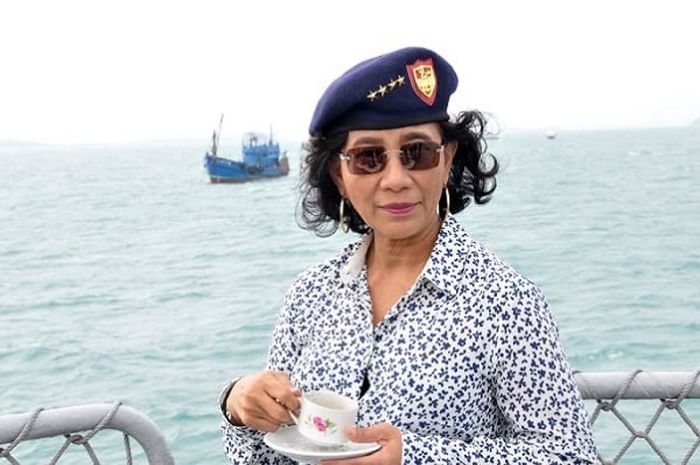
 

Susi Pudjiastuti mengaku berhasil karena banyak membaca Credit: Makassar Terkini

The TV news shows were spectacular. First, a wide shot of empty fishing boats bobbing on choppy seas. Then a close-up for the thump as shattered planks flew skyward in a red flash while the hull disappeared in an eruption of bubbles.

At last – someone showing foreign poachers not to mess with the islanders of Nusantara. Hundreds of boats were sent to Davy Jones locker.  The wee folk loved it – the heavies didn’t.  Ships claiming to be local were found to be overseas owned.

Indonesia is the second-biggest producer of seafood and was losing trade to the first. China has a 17,000-strong fleet working the waters of other countries … ‘depleting fish stocks and threatening food security,’ said The Guardian.

Action woman was Susi Pudjiastuti (above), Maritime Affairs Minister in President Joko ‘Jokowi’ Widodo’s first term (2014–2019).  She topped the poli-pops because she didn’t blah-blah - she just bang-banged.


Indonesian minister urged to stop destroying illegal fishing boats

Credit:  Bangkok Post

The BBC called her a ‘tattooed high school dropout turned self-made businesswoman’ and put her   on their world list of 100 inspirational and innovative women.

PR pix of her boss posing like Putin alongside a warship’s missile launcher misfired.  This was a job for a woman. When appointed (in Indonesia ministers don’t have to be politicians) Widodo said he needed ‘a crazy person to make a breakthrough’.  

He got both. Illegal fishing decreased by 90 per cent. Yet Widodo tossed Susi overboard from his second ministry when re-elected in 2019. Her successor got jailed for flogging lobster larvae export permits.  Now the job is held by a minor politician whose tight lips don’t sink ships literally or figuratively.

Why was Susi the Scuttler cast adrift? One researcher argued her ‘harsh managerial style alienated many parties. They later coalesced into a loosely associated coalition to counter her policies and oust her from office … (that seems) to confirm the ongoing power of an oligarchic system that still heavily shapes Indonesia’s political economy.’

The lady certainly made enemies in China, the dominant power in Indonesia’s relations with the world, using what Singapore NU academic Dr Evan Laksmana calls grey zone tactics:

 ‘Beijing’s behaviour is less about waging a legal dispute than it is a gradual strategic push to get Jakarta to inadvertently or implicitly acknowledge China’s maritime rights. Now that China controls key strategic areas in the South China Sea, it feels more confident in pushing the envelope.’

He wrote that a year ago.  Since then a Chinese survey vessel spent seven weeks mapping the seabed inside Indonesia’s Exclusive Economic Zone.  The Asia Times reported the Indonesian navy didn’t protest and may have had orders not to intervene.

Laksmana theorises that the Indonesian elite are becoming dependent on the ‘private benefits and public goods China provides … (the) grey zone strategy succeeds when there is a lack of transparency.’

That’s at the top.  But elsewhere across the archipelago the seven million ethnic Chinese - just over three per cent of the population – aren’t universally well integrated though many families have been present for centuries.  They allegedly control 70 per cent of the nation’s wealth, though the figure needs examining.

 Under former President Soeharto, sinophobia was rampant. Excluded from many jobs victims turned to banking and commerce, doing well to the resentment of the pribumi (indigenous people.)  Despite initiating persecution, Soeharto used Chinese entrepreneurs as business advisors and gave them contracts.

One of the earliest known mass killings (an estimated 10,000) of ethnic Chinese in Indonesia was in 1740.  There have been irregular outbreaks across the years. After the 1965 coup and genocide (500,000 plus), Communism was banned – and remains so.  They weren’t all Chinese, but millions were imprisoned without trial.

The most recent murders, rapes and property destruction targeting local Chinese were during riots late last century.

The social problems and Susi’s sinking strategy haven’t disturbed inter-nation business. The People’s Republic is the second largest investor (US 4.8 billion) after Singapore.

This month eight high-speed train cars arrived for the 142-km line linking Jakarta to the West Java city of Bandung.  The US $8 billion project has been built by an Indonesian-Chinese consortium using Chinese crews.

Loan agreements state at least 70 per cent of materials must come from the Middle Kingdom along with workers, an arrangement championed by Luhut Binsar Pandjaitan.

The Coordinating Minister for Maritime Affairs and Investment, no fan of Susi but a close adviser to the President, is often in Beijing doing deals with government and businesses. Dubbed ‘the prominent enabler’ he flicks aside critics worried that Indonesia is selling its sovereignty, ignoring local labour and heading into a debt trap: ‘Like it or not, happy or not happy, China is a world power that cannot be ignored.’

China is neither liked nor trusted in Indonesia, according to the US journal Foreign Policy but that slur excludes the whatever-it-takes business elite.  Chinese tech firms like Huawei partner with locals, delivering the gear and training.

 Huawei was excluded from Australia’s NBN and is banned or restricted in other Western nations suspecting its technology will garner state secrets.

China is also getting into Indonesia through education and its Luban vocational colleges, training students in IT and other skills.  (Lu Ban was an architect and inventor in the late Zhou Dynasty.)

Close to 10,000 Southeast Asian students have reportedly been through the Luban system.

Beijing has muzzled criticism of its forced assimilation of the Uyghur Muslim minority by giving.  clerics and journalists guided tours of ‘re-education camps’, claiming they’re to combat terrorism, not extinguish Islam.

Trying to make sense of these developments is bewildering when juxtaposed with history.    First President Soekarno got close to Communism, much to the angst of the army which feared an internal opposition force.  Religious groups also dreaded a Red wave of atheism.

Indonesians’ current concerns are not about an invasion but ideology. It’s assumed mainland Chinese are godless and want to spread their disbeliefs.

Although the party in China is officially atheist, five religions are recognised registered and monitored, according to the US NGO Council on Foreign Relations: Buddhism, Catholicism, Daoism, Islam, and Protestantism. 

The ethnic Chinese in Indonesia are far from godless, mainly Christian and Buddhist and prominent funders of faiths.


First published in Pearls & Irritations, 15 September 2022: https://johnmenadue.com/how-china-is-muscling-indonesia/


##


Saturday, September 10, 2022

THIS IS COURAGE

 Image preview


The courageous and inspiring inventor Fahmi Husein from UGM has passed away.  A privilege to have told his story - read here:

 https://www.blogger.com/blog/post/edit/14650398/1261378384728180701

Monday, September 05, 2022

ARSENIC IN AN AIRPORT ORANGEJUICE

Getting away with mid-air murder 
 
https://images.tokopedia.net/img/cache/700/product-1/2020/1/20/4344703/4344703_c7302a84-009d-4885-992e-f5efc061940a_1080_1080.webp?ect=4g
 
Studying in Europe was to be a highlight of Munir Said Thalib’s career. The voice of the Indonesian activist and forceful critic of the army’s human rights record was being heard internationally. His opponents hoped a spell abroad might silence the censure. Instead, it was amplified. Now it’ll be turned off as time for action expires.
 
 On 7 September 2004 when Munir headed to Utrecht University for a master’s degree in international law he chose the state carrier Garuda. That was a fatal mistake. 
 
GA 974 stopped over in Singapore, giving passengers kill-time chats with fellow travellers. One was Pollycarpus Priyanto, an off-duty Garuda pilot doubling as an undercover intelligence agent. He gave his new friend an orange juice – then zapped back to Jakarta. Munir collapsed in agony two hours from Amsterdam’s Schiphol airport. He was dead on arrival, aged 38. 
 
 A Netherlands Forensic Institute autopsy showed his body had enough arsenic to kill three men. It’s a tasteless and odourless poison. The Indonesian police laid murder charges against Pollycarpus. He was found guilty, jailed, released, retried, rejailed, released and died aged 59 in 2020 apparently from Covid.
 
But Munir’s widow Suciwati, a former teacher and union leader and her supporters, stayed angry. They reckoned Polycarpus was acting on the orders of others. In October 2007 Garuda CEO Indra Setiawan was convicted of providing Polycarpus (below) with fake documents so he could be on Munir's flight. 
 
https://inakoran.com/uploads/2020/10/17/1602952372-p400fe81400aa83f08360a58f788b7a0c.jpg
 
He got a year behind bars. That same year a Jakarta court ordered Garuda to pay Rp 664 million ($65,000) compensation to Suciwati for not making an emergency landing.
 
She then confronted the then president Susilo Bambang Yudhoyono – a former Army general. He promised her justice and convened an independent investigation. This went nowhere as senior officials refused to testify. 
 
A museum outside Malang in East Java commemorates Munir’s life which largely involved making powerful enemies. He accused the army of human rights violations against dissidents in East Timor and the provinces of Papua and Aceh and running illegal tree logging and drug smuggling rackets. He founded the Commission for Missing Persons and Victims of Violence known as KontraS.
 
 This NGO remains a strident voice in society. Now Suciwati et al have few chances of finding the truth; the Criminal Code’s statute of limitations will this month cancel all legal actions. Eighteen years of stalling have led to attrition defeating justice. 
 
The Munir justice team fingered Muchdi Purwoprandjono as mastermind of the assassination. He’d been a deputy of the State Intelligence Agency known as BIN. 
In an early stage of his army career, Muchdi was chief of Kopassus (Special Forces). 
 
He was relieved of command after the 1998 fall of President Soeharto when held responsible for the abductions of 23 student activists. One was found dead, nine were released. The rest have vanished. Muchdi was charged with commissioning and assisting in the murder of Munir because the lawyer’s campaigning had led to the general’s downfall.
 
The SMH reported the trial featured: ‘Hundreds of crew-cut, muscular men in black, gangs of street thugs and flag-waving militia singing Indonesia's national anthem besieged South Jakarta Court yesterday, decrying murder charges against (Muchdi) … a show of force against judges and prosecutors.’ 
 
The evidence seemed damning. Court records revealed 41 phone calls between Muchdi and Pollycarpus. A four-page document canvassed ways to dispose of the troublesome stirrer - shooting, beating, poisoning and – because this is Indonesia - black magic. 
 
Using Trump-style tactics Muchdi hit back, accusing unnamed ‘henchmen of foreign imperialism, trying to destabilize Indonesia's national resilience’ behind his trial. Their ‘long-term goal’ was ‘to weaken Indonesia's justice, political, economic and religious institutions.‘ No evidence was provided. 
 
While the trial was underway Melbourne University academic Tim Lindsey and researcher Jemma Parsons wrote that a convicted Muchdi would be ‘the first senior member of the powerful military and intelligence apparatus to face the consequences of the violent abuses of human rights that have been its stock-in-trade for almost half a century. 
 
‘Before the fall of former president Suharto in 1998, military and government officials enjoyed an informal but very effective immunity that put them above the law and allowed the government to routinely use murder, violence and abduction as political tools.’ 
 
Muchdi was acquitted. He’s now 73, a businessman and a politician with a party run by Soeharto’s notorious playboy son Tommy. In 2002 he was convicted of masterminding the assassination of a judge who’d sentenced him for corruption. For this killing Tommy copped 15 years jail but served only four years in a luxury cell where he was reportedly allowed to entertain girlfriends in private and make one pregnant. 
 
Back to the Munir case and what chance of a resolution to satisfy his supporters? President Joko (Jokowi) Widodo is reportedly setting up an expert group to resolve past serious human rights violations, but by-passing the courts. 
 
A Jakarta Post editorial commented: ‘In almost all the 13 cases of serious human rights violations most often cited (an estimated million-plus victims since 1965), the hands of the Indonesian Military are found everywhere, and this is one probable reason why these cases remain buried and have never reached the courts.’ 
 
Attempts to launch a truth and reconciliation commission under previous presidents have all misfired. If this latest shot misses the target, Muchdi’s place beyond the range of the law will be confirmed. But the Republic’s reputation will suffer collateral damage. 
 
First published in Pearls & Irritations, 5 September 2022: https://johnmenadue.com/getting-away-with-mid-air-murder/

Friday, August 19, 2022

WHEN COPS BECOME THE MAFIA


Sex, lies – but no videotape


Ada Single Image, Bukan Ferdy Sambo tapi Fembo, Istrinya Bernama Aswati,  Ceritanya Mirip – Pojoksatu.id

 In happier times - the public image of  top cop Ferdy Sambo and his wife Putri

Governments love distractions and there’s a doozy gripping the people next door:  A lurid tabloid tale running for five weeks and counting is keeping electors focussed on spice rather than the erosion of democracy and corruption controls.

The story so far: It’s jerry-built on quicksands so will have shifted between keyboard and digitisation. Apologies for reading like the Daily Mail:

Late afternoon on 8 July a cop kills a comrade in the house of their boss Ferdy Sambo, whose wife may have been a lady of interest to the lower ranks. Officials said ‘self-defence’, but this explanation was too facile.

The latest version has Sambo, 49, (head of Internal Affairs and a two-star general) ordering a subordinate to kill his aide-de-camp and then spray the walls with bullets to suggest a gunfight. Curiously the building’s CCTV cameras weren’t working. Arrests and inquiries continue. 

Without a sub judice rule curbing discussion beyond a courtroom, public speculation has gone feral.  False facts, as Trump would say, dash hither and thither like sheep when yard gates swing free.

Around 30 officers have been fingered amid unproven claims a mafia group has been running rackets.  As this is Indonesia, religion is stirring the pot.   The victim was a Protestant Batak, a North Sumatra ethnic group not known for shyness.  His family has been relentless in demanding answers.

President Joko ‘Jokowi’ Widodo seems to understand the problem goes beyond a smutty scandal: ‘I don’t want this case to erode public trust in the police … We need to maintain its reputation at all costs.’

Fair enough if the cops were overall upright so the tragedy could be labelled an aberration, the one-rotten-apple excuse. This fruity metaphor fails because the barrel is blemished. 

Goodwill is waning as gendarmes in beribboned khaki fudge questions from incredulous reporters. This stop-everything TV is outrating sinetron (soap operas) - scriptos wouldn’t risk such a salacious plot. The motive for the murder should only be heard by adults, said the censorious Chief Security Minister Mohammad Mahfud.

But Indonesian kiddies aren’t unworldly, learning early that if they want to know the time they should never ask a policeman. An old joke has a man reporting the theft of a goat.  The police investigation is so corrupt the farmer ends up losing his cow.

Widodo was raised in an era when foreign books were considered subversive, so may not have encountered the Roman satirical poet Juvenal’s question Quis custodiet ipsos custodes? (Who watches the watchman?) It remains as relevant today as it did in the second century.

The police investigate their own as they often do in Australia; getting the law enforcers’ cast iron culture to bend to civilian oversight will take a furnace of prolonged determination.

Churchill’s philosophy of never letting a good crisis go to waste is being followed by Widodo.  While the purring voters have been lapping sleaze on the veranda, his government has been quietly strangling democracy in the backyard.

After more than three decades of officials thieving from the public purse, the Komisi Pemberantasan Korupsi (anti-Corruption Commission), was formed in 2003 to prevent and fight corruption, which it did with gusto, warrantless wiretaps and sting ops. 

Six years later the NY Times reported the KPK had ‘investigated, prosecuted and achieved a 100-per cent conviction rate in 86 cases of bribery and graft related to government procurements and budgets.’

The individuals involved included ‘high-ranking businessmen, bureaucrats, bankers, governors, diplomats, lawmakers, prosecutors, police officials and other previously untouchable members of Indonesian society.’

In 2013 the KPK won the international Ramon Magsaysay Award for ‘integrity in governance, courageous service to the people, and pragmatic idealism within a democratic society.

Success has been its undoing.  Parliament revised the KPK law without consulting the agency and put a police general in charge. Students claimed the changes kneecapped the fight against corruption and turned out in huge demos. Their fury was reinforced by proposed code revisions to criminalize extramarital sex, abortion, and insulting the president.

Another law targets the electronic transmission of information that defames or affronts and has been used against journos. Student concerns are barely breathing, choked by widespread public feasting on the banquet now dubbed Sambo Rambo. At least it’s not Ferdygate.

The KPK has shifted from corruption eradication to prevention. Widodo has done nothing to halt the slide. When elected in 2014 his country ranked 38/100 on Transparency International’s Corruption Perception Index.  There’s been no shift.

The NGO Indonesia Corruption Watch claimed ‘The KPK has now metamorphosed into an impaired government agency... it has lost the Sisyphean institutional battle to curb political corruption in Indonesia. It has become just another politically controlled auxiliary state agency.’

Widodo came to office in 2014 as a Mr Clean but soon showed more enthusiasm for development. Having no military background, he relies on hard army men to advise on the soft stuff of civil society.

With eyes elsewhere, Widodo’s guru and former general Luhut Panjaitan wants retired army officers to be assigned jobs in government ministries and institutions. 

This is a throwback to the authoritarian dwifungsi (dual socio-political function) system used last century to maintain the army’s influence.  It included military-only seats in the parliament and top positions in the public service.  It was abandoned early this century.

Further proof that old soldiers’ ambitions never die comes with Prabowo Subianto, 70, a former commanding general of  Kopassus (Special Forces) announcing another run for President in the 2024 elections. He’s lost two previous attempts.

A Brookings report claimed ‘There is now scholarly consensus that Indonesia’s democracy has not just stagnated but is regressing…. Strengthening institutions, particularly a strong civilian bureaucracy, free and active press, independent courts, and fair elections, will be critical in rolling back some of the illiberalism …’

That was written before the Sambo Rambo circus diverted eyes from the serious issue of rushing repression.

History repeats. Juvenal called it panem et circenses.  Give ‘em food and fun, then they won’t care about civics.  Correction:  Maybe Widodo has read the classics.

First published in Pearls & Irritations,19 August 2022: https://johnmenadue.com/sex-lies-but-no-videotape/


Sunday, August 14, 2022

THE WOUNDS WEEP STILL


       Indonesia’s unfinished business

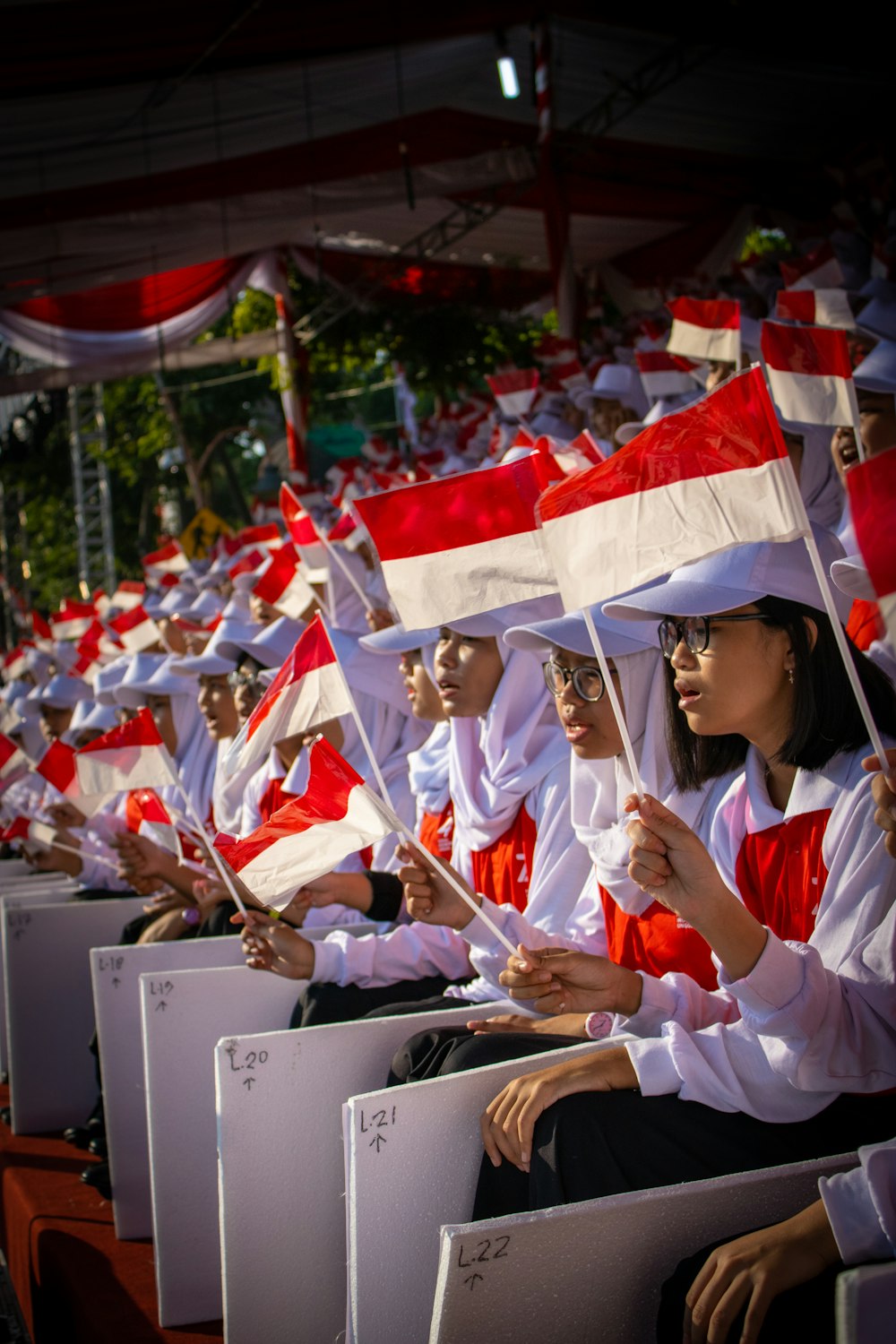
shallow focus photo of people holding Indonesia flag


Acknowledgements of Aboriginal land as preludes to formal events are now rarely contested,  a belated acceptance that Australia has a bloody history that needs to be publicly discussed as a move towards reconciliation.  Indonesia also has a grim past, but still shies from recognition – and healing.

August 17 is our neighbour’s Independence Day and the jingoism is over-the-top now pandemic restrictions have been binned.

There’s not a kampong, village or town which isn’t already so bedecked with red and white banners and bunting that buildings and trees can’t be seen. Triumphal archways make streetscapes look like sets from Aida.

 The joy started in July and won’t fade till this month is done and dusted. The big show should have been the 2020 semi-sesquicentennial marking the 1945 declaration of independence from Dutch colonialism and Japanese occupation.  Then Covid hit.

A bit of background to help the gory jigsaw pieces fit.

Two days after Japan surrendered in the Pacific War the revolutionary leader Soekarno proclaimed Merdeka (freedom); his edict was yawned away by the returning Dutch confident the natives still loved white-skinned rulers.

They didn’t: A four-year guerilla war followed till Western pressure forced the colonialists to quit in December 1948.

Just as Anzac Day recalls the disastrous landing at Gallipoli in 1915 rather than the 1918 November Armistice, 17 August celebrates the Soekarno statement not the eventual realisation of independence.

Patriots are letting rip.  Dressmakers’ have been sewing red-and-white creations, bottle-tops and face masks are bi-colour, and workers are splashing paint onto pillars, posts and walls. Indonesia Raya (Great Indonesia) blares from homes and cars, smothering the roar of motorbikes, though sadly not their pollutants.

The Covid shutdown has given progressive historians the chance to rejig the nation’s story which used to be taught as starting 77 years ago. A few posters of resistance leaders from centuries past are now being displayed.

But there are events more recent and politically volatile which remain off limits.

Soekarno became President and for two decades was almost in bed with the Reds much to the distress of the West and the Indonesian Army.  A failed coup on 30 September 1965 when Indonesia had the largest Communist movement outside the USSR and China, led to an outburst of contrived hate which ran for six months.

What happened and why is still contested. Australian translator and academic Dr Max Lane wrote that after an attempt to replace the anti-Communist military leadership, the army launched ‘an extremely violent uprising in which over one million people were killed and tens of thousands imprisoned.’

Real or imagined Communists, trade unionists, teachers, intellectuals and some ethnic Chinese were put to the sword, clubbed to death or shot, their corpses dumped in rivers and swamps.  Millions were tortured and jailed while others were denied work.

The official line remains that the killings were spontaneous reactions by outraged pious peasants who hated the godless Marxists and could not be stopped.

Although this myth has now been buried by overseas researchers proving the slaughter was organized by the Army, millions still believe otherwise.

Their credulity is unsurprising.  Till recently schoolkids were brainwashed by an obscenely violent 1984 government film, Pengkhianatan G30S/PKI (Treachery of the Communists). 

Using official documents Australian academic Dr Jess Melvin has shown the genocide was engineered through the secret police unit Kopkamtib (Komando Operasi Pemulihan Keamanan dan Ketertiban - Operational Command for the Restoration of Security and Order.)

Cracks in the Indonesian government’s disinformation fortress opened after its architect, the late second President Soeharto, yielded to public fury against his mishandling of the 1998 Asian economic crisis.  The former general resigned after 32 years of despotic rule – while amassing $32 billion.

After a brief interregnum, in 2000 his successor, religious leader Abdurrahman (Gus Dur) Wahid, publicly apologized for the killings. Though many former military men and some faith groups were outraged by his stance, it was welcomed by victims’ families.

Komnas HAM, (the National Commission on Human Rights) expected the doors would open wider and the truth revealed to all.  Naive hope. No one has ever been prosecuted for the killings. Mass graves are still being uncovered.  

During the 2014 presidential election campaign, the winning candidate Joko (Jokowi) Widodo was not from the military so seemed ready to follow Gus Dur. Not so: In 2016 Widodo was reported as stating:  ‘One of Indonesian history's darkest moments will not be revisited …the  government will focus on the future by developing the nation to gain competitiveness with other countries, not looking back on the country's past.’

Then he attended a public screening of the propaganda film allegedly telling soldiers: ‘Don’t let the PKI (Communist Party) cruelty happen again … if the PKI revives, just beat them up. ’The party is long dead and little wonder. Advocating for Communism can lead to two decades behind bars.

Once a week since January 2007 victims of human rights violations and their supporters (Aksi Kamisan – Thursday Action)  protest peacefully outside the State Palace in Jakarta. In 2018 – for the first and last time - Widodo met some of the group in a closed session but nothing happened.

This Wednesday the 77th anniversary of the Proclamation and the Republic’s achievements will not be a gala event for the families of those brutally persecuted by the state last century. 

Although their calls for recognition and reconciliation are growing shriller, few are listening. Indonesia’s military and business oligarchs and the descendants of the killers continue to ensure there’s no widespread ventilation of grievances and certainly no sorry business, as the First Australians say. 

Despite the hush, the anger, hurt and shame continue to gnaw away at the national psyche.

First published in Pearls & Irritations, 14 August 2022: https://johnmenadue.com/indonesias-unfinished-business/