FAITH IN INDONESIA

FAITH IN INDONESIA
The shape of the world a generation from now will be influenced far more by how we communicate the values of our society to others than by military or diplomatic superiority. William Fulbright, 1964

Tuesday, December 19, 2023

KIDS & POLICY - NOT AN ACID-WATER MIX.

 TAKING THE FOREIGN OUT OF AFFAIRS                     

How to get the young involved in current affairs? Politicians shy from the question fearing Gen Z’s latent power could shrink their authority, so best seek an answer elsewhere. Like Indonesia?


"Now here's another point" : Dr Dino Patti Djalal, (left) versus presidential candidate Dr Anies Baswedan


         The queue was long, wide, pressing, hot and young. It spilled beyond the five-star hotel’s car park and forecourt. Waiters chatted excitedly about the day ahead, surely a Taylor Swift concert?

But the jolliness was jarred by the walk to the venue past ranks of pavement traders selling Palestine flags ready for the street protests to come.

For this was dawn on a Saturday in Jakarta this month and the masses had come to a show with the turn-off title From Non Alignments to Creative Alignments. It featured foreign affairs, international politics and fixes for an ailing world; with wars in Gaza, Ukraine and Myanmar there was no need to fossick for issues.

Why did an estimated ten thousand teens willingly spend a full Saturday getting involved in international relations with the sort of enthusiasm displayed for the Coldplay concert a fortnight  earlier? 

Here’s the formula: Hire a plush monster hall and make tickets free. Get an entrepreneur with headline acts on speed dial, then let him loose unconstrained by the fear and caution of a government department or uni admin. 

Then it supposedly becomes ‘the biggest grassroots foreign policy group in the world …determined to form a large international relations community with mature and sensitive insights on bilateral, regional, and global issues.’

The go-to guy is Dino Patti Djalal, 58.  If Indonesia used silver spoons this fella was born with a mouthful.

He entered the world in Belgrade where his father Hasjim Djalal was a diplomat - and later deputy FM. The lad was schooled in the US, Canada and the UK where he scored a PhD at the London School of Economics.

In 2010 as US ambassador he won fame by inspiring the diaspora to plug back into the nation they’d fled last century when Soeharto was president . But his ambition flew him too close to the sun; he quit Washington for a pitch at the presidency in the 2014 election.

His pedigree and qualifications failed to move the oligarchs who bankroll parties in Indonesia; they prefer clerics, business tycoons and old soldiers to intellectuals too canny to control. Indonesia’s Icarus hit the ground hard and learned a discomforting truth: Openings for used diplomats are rare. 

But he had enough money to start an enterprise, rightly reckoning that the student idealism that had driven out the autocratic Soeharto in 1998 and steered  in democracy was floundering to find the right map to power ahead.

Uni courses in politics were  pedestrian - why not make them energetic and accessible?

Together with academic and policy adviser Dewi Fortuna Anwar, who got her PhD from Monash and has a CV longer than this story, they started the Foreign Policy Community of Indonesia

FPCI calls itself a ‘non-politic and independent foreign policy organisation to discuss and introduce international relations issues’ to diplomats, government officials, academics and students, business people and journalists.

Sounds good - but impotent without the clout of the Republic’s Foreign Affairs Department.  Despite this handicap the FPCI seems to have captured interest by running workshops and seminars.  

The presenters wear T-shirts and don’t peer down their spectacles at uppity students.   Lecturers are engaging, locals but overseas trained.

In an earlier interview with this writer he said: “Our mission is to promote peace and bring foreign policy to the public.That means finding out how to talk to ordinary people about these issues.  They may not seem interested but that changes when, for example, the price of imports rise.”

At the annual conference this month the bill-toppers included two of the three presidential candidates - former governors Anies Baswedan (Jakarta) and Ganjar Pranowo (Central Java). Cashiered former general and alleged human rights abuser Prabowo Subianto was invited, agreed, and then pulled out.

Dino asked the polis to address issues but not to campaign,  which is like urging a fish not to swim.

Ganjar appeared online from West Papua but Anies turned up and was mobbed by fans. Unlike the average plodding politician  he cracked jokes, exhausted the local media with his availability and avoided the booby-trap question which could have exploded his hopes on the spot.

Who’s his most admired figure? A magazine editor who once published a readers’ poll that put the Prophet in seventh place spent five years in jail for blasphemy. Anies got his sequence right, then added Nelson Mandela and Mahatma Gandhi. 

Others on stage during the day included a pondering of international professors telling of their fears and hopes for relations with China. All spoke in English as did many in the audience, students using the show as a chance to dazzle friends.

Ten embassies have caught on to the opportunities running stands promoting their unis. Australia sells quality and proximity, its rivals add scholarships and accommodation. Academic life used to be marketed as austere and sober, Now it’s offered as intoxicating.

To lighten the mood between sessions on the failure of diplomacy to keep fighters in hangars and drones unarmed, a try-hard lady filled in with stand-up comedy. Hopefully, she’ll refine her act before next year’s event.

By then there’ll be a fresh president and government.  The new mob may not be so tolerant of Dr Dino and his bid to poke the noses of the people into the affairs of the State.


First published in Independent Australia, 18 December 2023: 

https://independentaustralia.net/politics/politics-display/getting-younger-generations-involved-in-politics-,18184


Monday, December 18, 2023

RI POLITICS: NO ROOM FOR SMART WOMEN


Equality is risky - best stay with blokes    


Indonesians have just witnessed a messy, badly produced TV ‘debate’ between the politicians jostling to run the world’s fourth largest democracy facing a national election in less than two months.


Just a few weeks ago it seemed Indonesian politics was edging towards modernity by recognising that half the voters are women with different values, needs and expectations.  


Not to be. The oligarchs have spoken: In a nation that claims to be progressive and tolerant there's no place for a woman in any leadership team The six candidates for the Presidency and Vice Presidency are men, all Javanese, all Muslim.


For a short but hopeful time in the juggling for positions, it seemed possible that a woman might get a go.   Mid-year three ferociously ambitious mega-rich guys were seeking a partner for the 14 February poll. What date could be more auspicious for starting anew?


The paramours were lusting after a Vice President who could relate to those who’ve matured this century in a democracy, albeit flawed. Voting is voluntary. In the 2019 presidential election, the turnout was 82 per cent.


The obvious choice was Yenny Wahid, 49, and she was willing. 


The second daughter of the Republic’s fourth president, the late Abdurrahman (Gus Dur) Wahid (1940 - 2009), had the professional and personal qualifications for high office, so who’d win her hand? It was the sinetron (soapie) spellbinding the nation.


 The lady most likely headed a tiny socialist party with Buckley’s chance of scoring even a footstool in the 575-seat national parliament by going alone. She was being wooed for her qualities, ancestry and reputation for relating to the young. 


When the Indonesian Army trashed East Timor after locals rejected Indonesian rule in the 1999 referendum, Yenny was a correspondent with the then Fairfax Press, a journo in the coverage team that won a Walkley Award, Australia's highest prize in journalism.


(Use of forenames is Indonesian style. It doesn’t imply partiality.)


 Now she heads the Wahid Institute, an Islamic think-tank working for ‘the development of both Indonesian as well as Islamic society, improving the welfare of lower classes … building democracy and fundamental justice, and expanding peace and non-violence.’


In 2009 the World Economic Forum named Yenny a young global leader. She has a Harvard master's degree, a persuasive personality and international experience.


She’s a liberal Muslim with all the credentials. Her great-grandfather Hasyim Asy'ari founded the world's largest Muslim organisation Nahdatul Ulama (NU) which claims close to 100 million members.


In Indonesian culture the way women dress and behave is scrutinised for signs of unorthodoxy; Yenny, a married Mum of three, came across as an Ibu Ibu, a safe homely matron, which doesn’t mean a soft touch. 


In an earlier interview, she quashed suggestions of subservience: This is the way I express my right to wear what I want. (She uses a half-jilbab headscarf.) It’s my symbol of struggle.


It might be easier if I was a man in this macho society, but then the pressures could be physical rather than mental.


Youngish voters will dominate the  February ballot according to The Jakarta Post: Around 114 million Indonesians eligible to vote next year are under 40.


ThKompas national newspaper commented: Young people are always the target of the contestants' votes (but) not many policies are in favour of the younger generation. 


The quinquennial election is the only time the ignored feel frisky. Indonesia’s teals have clustered around the centre-left Partai Solidaritas Indonesia (PSI) which includes Yenny’s politician husband Dhohir Farisi, and the socialist   New Indonesian Nation Sovereignty Party (PKBIB) chaired by Yenny.


Both were formed this century by student Utopians after Reformasi - the 1998 fall of the autocrat General Soeharto who ran the nation for 32 years. 


In the late 1700s, the French Revolution beheaded the ruling royalty to ensure they’d never return. In 1998 the Indonesian activists who brought down Soeharto naively assumed his cronies would disappear along with the king of the kleptocrats, all wreathed in shame.


The students were too soft, so last century’s oligarchs still rule and plunder, promise and default. A Macbethian tragedy wrote one academic. Another commented that Indonesia’s experiment with democracy has been hijacked by the dark forces that held the country back before.


Yenny’s problem shouldn’t have been gender, except among ultra-conservatives. The world’s most populous Muslim-majority nation had its first female president in 2001. As vice president Megawati Soekarnoputri inherited the job when Yenny’s father was impeached.


Even as coalitions, the small parties don’t have enough cash and candidates to steer the state, so their best chance of getting close to the driver is as VP. 


The PSI nominated Yenny to stand with Ganjar Pranowo, 54, of Mega’s PDIP - the Indonesian Democratic Party of Struggle.


But Mega has no love for the Wahid family,  so no-go. Likewise with disgraced general Prabowo Subianto, 72, Indonesia's Donald Trump. 


Insiders then predicted Yenny pairing with the former Jakarta Governor Dr Anies Baswedan, 54. The one-time Education Minister and University Rector has the skills needed to work with a smart female.


The US-educated Anies has been nominated by the secular centrist Partai NasDem (National Democrat) which has 59 seats in the current Parliament.


While Yenny’s swains thought she had the youth ratings, in the end, they feared her liberal values.  So Prabowo selected outgoing President Joko (Jokowi) Widodo’s eldest son Gibran Rakabuming Raka, 36.


Ganjar Prabono (from Mega’s Democratic Party of Struggle - PDIP) went for former Constitutional Court justice Mohammad Mahfud Mahmodin while Anies picked Muhaimin Iskandar, the deputy house speaker but more importantly religiously close to Yenny’s late father through the NU Islamic organisation.


Though not so near as his daughter.  


 First published in Pearls & Irritations, 18 December 2023: https://johnmenadue.com/equality-is-risky-best-stay-with-blokes/


Tuesday, December 12, 2023

INDONESIA'S MORAL DILEMMA

 BOAT PEOPLE’S HOPES BEACHED


The Monsoon rains are moving south and the people smugglers are back in business. Duncan Graham reports from a remote beach in northwest Indonesia.


Abdu Solam (right) wasn’t paraded for media sympathy. The chance encounter during an unchaperoned wander by the only Westerner among 233 traumatised asylum seekers came as the 11-year-old dragged himself past a torn tent. 

Flapping blue plastic sheets flag the location in Indonesia of Rohingya Muslims, forced from their Myanmar homeland by a ruthless military junta bent on ethnic cleansing. Survivors then fled to the world’s biggest refugee camp (pop one million) in Bangladesh after years of misery and squalor.

Abdu had been a cripple from birth and his wasted legs suggested polio. In the West, he’d get prosthetics and training. Indonesia hasn’t signed the International Convention on Refugees so has no legal obligation to help. Consequently, he’s unlikely to ever get the aid he needs.

Nor in Australia where conservatives hostile to accepting ‘boat people’ would see a disabled child as a drain on ‘taxpayer-funded’ NDIS. 

No shelter in Oz suburbs likely either for the thin, illiterate hassled women scrubbing clothes and cooking over wood fires, their multiple kids climbing through the barbed-wire fence to frolic in the surf. 


Not OK. Cattle scouring plastic trash for something organic aren’t the only depositors of waste. With no toilets, the Rohingya use the sea which is fine till the tide turns.  They catch rain water for washing.


                                                                                                 (Left)  Zafor  Ulleh - son Mohammed Jayaan

Also unwelcome Down Under would be the middle-aged black-bearded men in long robes sitting on the dirt chanting verses from open copies of the Koran carried during the 17-day, 2,000 km plus hazardous journey.

Although they seemed to be giving thanks for their salvation, to the self-labelled ‘true blues’ they’ll be putative terrorists plotting bombings.

Should some humanity prevail in this post-compassion era, states offering settlement will only want the young, skilled and adaptable, like Aziz Ullah. The incandescently bright photographer taught himself English in the Bangladesh camp which his family fled to from their bombed and burned village last decade.

Like all refugees interviewed for Michael West Media, the 19-year-old said he didn’t care where he spent the rest of his life. He hankered to live in a society ‘where men and women are equal, where we are treated as human beings’. 


When invited to nominate a destination, no one suggested Australia; Europe, the US and Canada were mentioned with the rider that climate and cultural differences weren’t the issue, just safety, no persecution and the chance to be human.

Mohamad Fahad, 15, wanted to write his response in English, reproduced here without edits: ‘As my age is going over and also I can’t learn education, my future will become worse, so I’m asking to high-level education.’  

More than a thousand Rohingya refugees landed in Aceh last month, the largest number ever experienced by veteran human-rights activist Farida Haryani, 56, (left) She runs the social-aid agency Pasca Aceh which gets Australian Aid to help the disabled.


Most are survivors of the 2004 Indian Ocean tsunami which killed around 228,000 - the majority in Banda Aceh, the capital of Indonesia’s most northern province and close to Malaysia.

Aceh has some autonomy from Jakarta and is the only place where strict Islamic Sharia law prevails. This puts dress codes above civil rights and employs ‘morality police’ to enforce gender proximity rules and flog miscreants. Muslim women must wear jilbab (headscarves) and cover all the body apart from the face.

Said Farida: ‘We try to support the refugees by filling the gaps in the basic aid supplied by overseas agencies, like the UN High Commission for Refugees. We have a staffer in the camps who teaches English and Indonesian. Almost all refugees have only their language and few can write as they’ve had no schooling.’

Farida also speaks out against the hostility shown by some Indonesians towards the refugees, using arguments familiar to xenophobic Australians. ‘ ‘There is too much misunderstanding,’ she said. ‘All religions stress humanity. We must accept these people and argue about settlement later.’

The hostiles claim newcomers carry diseases, are criminals - or will be - can’t integrate and will steal jobs and land. The most ridiculous slur yet widely believed is that the Rohingya are Asian Israelis; Once they settle they’ll oust the locals like Palestinians.


There have been reports of calls to push the refugee boats back to sea, but so far tolerance has prevailed.

Messages and calls to expel UNHCR and other foreign agencies are driven by claims they’re pull factors encouraging asylum seekers.  In reality a prime lure is next door Malaysia which has already, though reluctantly, taken in 184,000 Rohingya according to UNHCR and allowed them to work.

The demands were carried on signs waved by 25 young men demonstrating at the main traffic circle in Banda Aceh and seen by this writer. The peaceful protest was overseen by about 50 police. Passers-by paid no attention and the show ended with handshakes all around.

It’s been a different story on nearby Sabang island - where more boats have landed, according to videos circulating on social media showing violent confrontations with police in riot gear.


The 20-metre timber freighter that brought Aziz and his fellow hopefuls to the beach at Sigli about 120 km south of Banda Aceh has already been stripped of its engine and other parts by local chancers. Relations with villagers seemed good, with some bringing food and clothes.

Eventually, the UNHCR will bus them to a more secure temporary camp if provided by the local government. A former roadworkers' base, Mina Raya has a few decrepit buildings in a square around a basketball court with no hoops and a deflated ball, a metaphor for the depressing mess. 

Simple fixes could have made the area fit for play, but the people haven’t even assembled a prayer room, though they’ve painted murals idealising their homeland.  The long-term mental damage will be entrenched.

Few men among the 500 inmates can hold a gaze, making them seem shifty when in reality they’re racked by shame, grief, guilt and anger - though all questioned denied this last emotion.  Two cried while being interviewed.

Among the 500 inmates is Alomgir, 22, who calls himself Alex; he smiles continuously  but prefers to study trees and clouds when talking. He’s been in the camp for a year with his seven-month-pregnant wife Omy Lasa. She’s been getting care at a local hospital through NGOs.

 He said the couple paid people smugglers one lakh (100,000 Bangladesh taka - AUD 1,400) for their journey. 

‘The Indonesians are good, very kind,’ he said. ‘It’s better here than in Bangladesh, but we don’t know what is happening and when we can ever move.’ On Jakarta's fringes, there are 14,000 mainly Afghan refugees; some have been in Indonesia for more than a dozen years.

‘Asylum seekers are an international problem which should not be left to NGOs and local governments,’ said Farida.

‘I’ve told my government that it must get involved at a national level before the situation worsens. It should go further to ASEAN because the problem started with Myanmar and now affects us, Malaysia and Thailand. All are members.’

 In 2002 fifty nations set up the Bali Process to sort out the tragedy of boat people. Hundreds of asylum seekers have drowned trying to reach Australia and Indonesia; these two countries co-chair the forum.

On the evidence in this story the ministers and their officials seem to be better at talking than fixing.  Time to start doing something before the situation worsens.

##

Since this story was filed 400 more Rohingya refugees have arrived in Aceh, prompting talk of transferring them to Galang Island in the Riau Archipelago. 

First published in Michael West Media 

12 December 2023:  https://michaelwest.com.au/nowhere-to-go-refugees-stranded-in-indonesia-while-the-world-looks-away/

Monday, December 04, 2023

THE CITY THAT NEVER KEEPS

 REVENGE OF THE JUNGLE LOOMS


Indonesia’s biggest-ever civil engineering project deep in Borneo’s equatorial jungle should supposedly address a serious  social and environmental problem.  

Now it’s under threat. So is President Joko ‘Jokowi’ Widodo’s can-do reputation and national pride.

The need to take the weight off stinking, sinking Jakarta is real and pressing.  But Jokowi’s relocation solution is economically flawed, environmentally dangerous and probably doomed. Good idea, lousy planning,  bad place.

The 250,000-hectare construction site of the Republic’s new Ibu Kota (capital) Nusantara (IKN) is the president’s conceit.  The name is  old Javanese for the archipelago.

The provisional budget is US$35 billion. Ironically this is the sum allegedly stolen from the nation’s public purse by second president Soeharto during his 32-year kleptocracy (1966-98).  The money has never been recovered.

Indonesia already owes China more than US$22 billion for earlier infrastructure programmes.

Work on IKN is being driven using domestic funds needed for health, education and other national services. The maximum ‘public investment’ is 20 per cent.

After 18 months of crowing optimism Jokowi has now confessed he’s drawn no international investors.  Without their cash  the creek supplying contractors and 10,000 workers now on site will run dry.  

Then the fecund vines will strangle the half-built pillars, choke the drains and smother all that’s human-made - the fate of Java’s Buddhist and Hindu temples abandoned five centuries ago when Islam arrived.

That’s the prediction and hope of Saiduani Nyuk (right) head of the Kalimantan Indigenous People’s Alliance (AMAN)  representing 77 communities claiming they’re threatened by the development.


‘There’s no clarity or communication, but plenty of intimidation.’ he told Michael West Media. ‘The money isn’t there and it probably won’t be found because the government is in debt.’

All signals for IKN looked green when Japan’s Softbank reportedly talked of a US$100 billion loan. That road hit a dead end in March 2022.

A reported 130 lenders from Singapore, South Korea, Japan, Malaysia and the UAE have looked  - and done U-turns, wondering how to make a buck on grandeur.

If any Australian or other Western bankers have been escorted through the site’s mud to imagine money trees flowering,   their presence hasn’t been noticed.

Their fears would include having to grease palms  and fall foul of local and Australian law. Graft runs rife in Indonesia, now even allegedly infecting the government’s Corruption Eradication Commission watchdog.

The theory endorsed by Saiduani and others is that potential investors will keep wallets closed until  the 14 February Presidential election results are finalised.  

After two five-year terms the popular Jokowi is constitutionally barred from staying on. While the three top candidates for his job say they’ll maintain their predecessor’s dream.

If Jokowi can’t raise the funds, what chance will his less enthusiastic successors have?

On a trip to the US in November  Jokowi (who graduated in forestry) said Nusantara will be ‘a smart forest city concept, a modern and environmentally friendly city' with  70 per cent of land in ‘green areas, which is envisioned to be a heterogeneous forest emulating a rainforest.'

This is how it was before bulldozers and chainsaws arrived last century in a Jakarta-driven burst of 'development.'

First stage inauguration is scheduled for National Day (17 August) next year with around 60,000 government employees moving in during the following months.  Eventually two million are expected, a fifth of Jakarta’s population.

Capitals created by fiat have a poor success rate particularly when the shift is far into another climate and culture.

Sometimes it's better to build a new place down the road.  Like Malaysia’s judicial capital Putrajaya, 36 km from Kuala Lumpur which remains the nation's commercial hub.

Egypt’s ’New Administrative Capital’ has reportedly already over-run and under-delivered on its US$50 billion budget.  It can't attract loans or residents.

It’s accessible by road, while East Kalimantan can only be reached by air or sea from Java, making the higher cost of living another deterrent.

Jakarta defines overcrowding.  The Jabodetabet zone around the current capital has more people than Australia.

But it's the political, economic, manufacturing and power centre of the world's fourth most populous nation, and accessible from anywhere in Java.

Nusantara is more than a three-hour grind from the scruffy entry-point Samarinda, through  an environmentalist’s horror trip of oil palm plantations.  


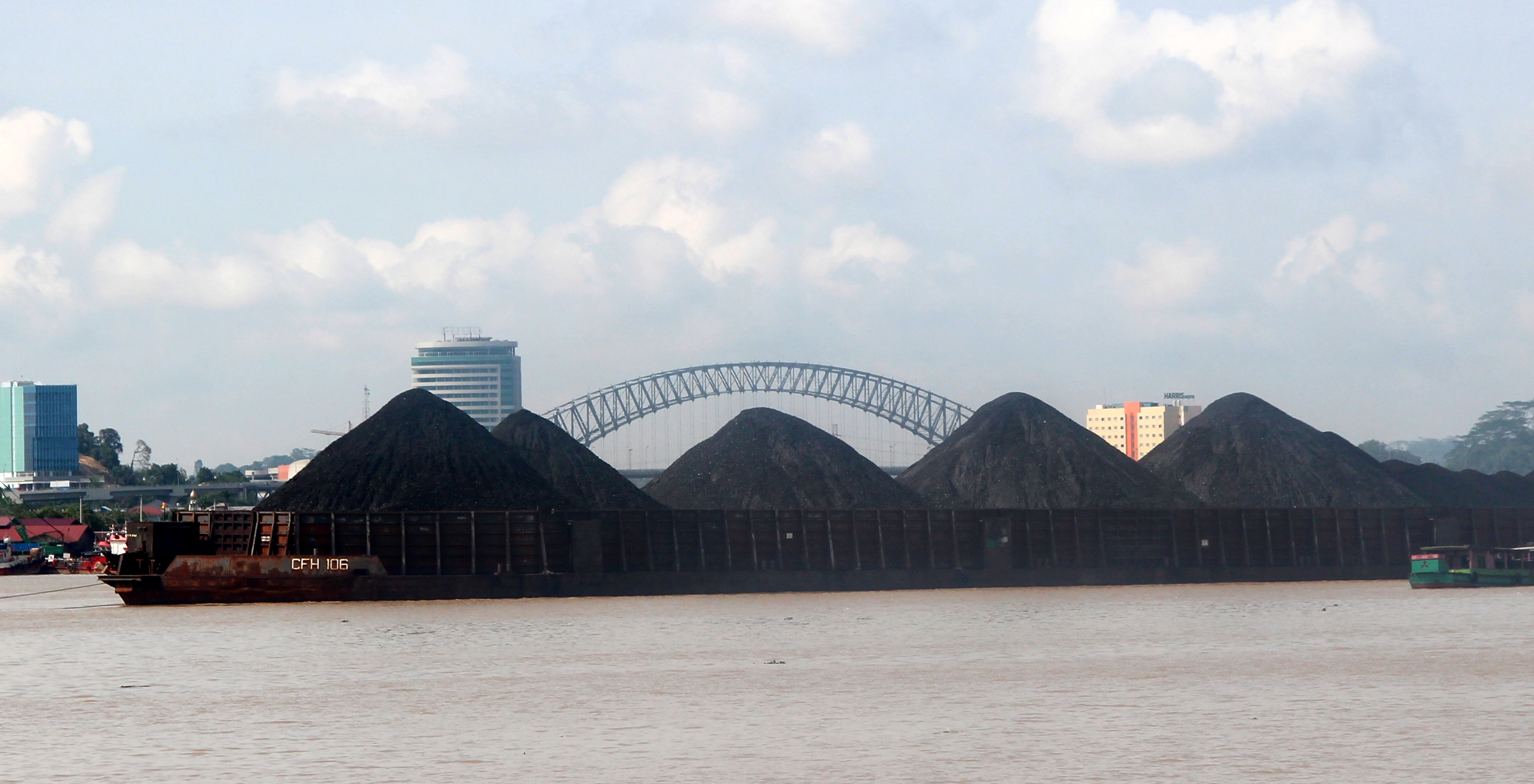
The next nightmare for the climate-conscious is the 1,000 km long Mahakam River carrying convoys of over-laden barges of thermal coal supplying much of the world's needs.

IKN starts with Ground Zero, incautiously named by someone who forgot 9/11.

The bland visitors’ display is marred by stench from clogged public toilets and broken walkways. Disabled unwelcome. ‘Green and modern’ doesn’t include health and safety.

These are more than nit-picks. If there’s no attention to detail now, how will it look later?

The work is mainly earth-moving. Jakarta-style dust is choking from the  trucks bashing the roads to rubble.

That's provided they can keep moving.  Queues park on the roads outside dry bowsers. At one closed station 85 trucks stood idle  Locals say diesel droughts have been a  problem for years, yet refined palm oil can be used as a bio-fuel.

Construction is patchy, though a dam across the Sepaku River is well ahead to the distress of around 300 local villagers.

'We don't know what's happening', said Sibukdin (on pillion), leader of the indigenous Suku Balik people.   


'People from IKN tell us to leave the land we've owned for centuries and challenge them in court if unhappy. But costs are high and the government always wins.'

So the villagers are pushing their plight internationally  hoping caring countries will tell IKN to leave them alone.

Earlier this year activist Hairudin Alexander from AMAN  presented the Sepaku concerns to a UN Human Rights session in Geneva on the Rights of Indigenous Peoples.

He told the committee that forced removal would destroy the  ethnic group’s identity.  Their language and culture is separate from the general Dayak population.

Opposition to the new city by environmental and social organisations has also been ignored. Likewise requests by this writer for briefings and interviews.

Academics have been getting the same treatment according to Mulawarman University anthropologist Martinus Nanang.

‘My colleagues and I asked for all reports and surveys but we’ve never seen them,’ he said. ‘We fear many decisions are being made without research.

‘They’re afraid of the reaction by global environmentalists.’  

IKN is a solo show. An Australian-led research team claimed: ‘Everyone acknowledged the project was political.’


A Melbourne University paper reported that  ‘Democracy won’t be making the move to Indonesia’s new capital’. 

‘Removing genuine public participation ensures (IKN) … will not be a city for all Indonesians. Instead, it looks like (it)  will serve the interests of political and business elites and the people who back them.’

IKN boss and former banker Bambang Susantono claimed 13 UN agencies have expressed support. Maybe, but they're not the elusive foreign investors Jokowi has failed to snare.

His desperation showed this month when he reportedly  said the project was open to local investors, as though they’d been excluded.

After trumpeting a 'number' of keen domestics he strangely added that if locals show no interest, the Government will seek overseas investors - a search which has been underway since Softbank said ‘no’.

'I have ordered the Head of the IKN Authority to restrain investors from abroad and give them a chance.'

No need for  government-ordered restraint - the capitalists are doing that themselves.


First published in Michael West Media, 4 December 2023:  https://michaelwest.com.au/revenge-of-the-jungle-indonesias-new-capital-unloved-and-unfunded/