FAITH IN INDONESIA

FAITH IN INDONESIA
The shape of the world a generation from now will be influenced far more by how we communicate the values of our society to others than by military or diplomatic superiority. William Fulbright, 1964

Monday, December 04, 2023

THE CITY THAT NEVER KEEPS

 REVENGE OF THE JUNGLE LOOMS


Indonesia’s biggest-ever civil engineering project deep in Borneo’s equatorial jungle should supposedly address a serious  social and environmental problem.  

Now it’s under threat. So is President Joko ‘Jokowi’ Widodo’s can-do reputation and national pride.

The need to take the weight off stinking, sinking Jakarta is real and pressing.  But Jokowi’s relocation solution is economically flawed, environmentally dangerous and probably doomed. Good idea, lousy planning,  bad place.

The 250,000-hectare construction site of the Republic’s new Ibu Kota (capital) Nusantara (IKN) is the president’s conceit.  The name is  old Javanese for the archipelago.

The provisional budget is US$35 billion. Ironically this is the sum allegedly stolen from the nation’s public purse by second president Soeharto during his 32-year kleptocracy (1966-98).  The money has never been recovered.

Indonesia already owes China more than US$22 billion for earlier infrastructure programmes.

Work on IKN is being driven using domestic funds needed for health, education and other national services. The maximum ‘public investment’ is 20 per cent.

After 18 months of crowing optimism Jokowi has now confessed he’s drawn no international investors.  Without their cash  the creek supplying contractors and 10,000 workers now on site will run dry.  

Then the fecund vines will strangle the half-built pillars, choke the drains and smother all that’s human-made - the fate of Java’s Buddhist and Hindu temples abandoned five centuries ago when Islam arrived.

That’s the prediction and hope of Saiduani Nyuk (right) head of the Kalimantan Indigenous People’s Alliance (AMAN)  representing 77 communities claiming they’re threatened by the development.


‘There’s no clarity or communication, but plenty of intimidation.’ he told Michael West Media. ‘The money isn’t there and it probably won’t be found because the government is in debt.’

All signals for IKN looked green when Japan’s Softbank reportedly talked of a US$100 billion loan. That road hit a dead end in March 2022.

A reported 130 lenders from Singapore, South Korea, Japan, Malaysia and the UAE have looked  - and done U-turns, wondering how to make a buck on grandeur.

If any Australian or other Western bankers have been escorted through the site’s mud to imagine money trees flowering,   their presence hasn’t been noticed.

Their fears would include having to grease palms  and fall foul of local and Australian law. Graft runs rife in Indonesia, now even allegedly infecting the government’s Corruption Eradication Commission watchdog.

The theory endorsed by Saiduani and others is that potential investors will keep wallets closed until  the 14 February Presidential election results are finalised.  

After two five-year terms the popular Jokowi is constitutionally barred from staying on. While the three top candidates for his job say they’ll maintain their predecessor’s dream.

If Jokowi can’t raise the funds, what chance will his less enthusiastic successors have?

On a trip to the US in November  Jokowi (who graduated in forestry) said Nusantara will be ‘a smart forest city concept, a modern and environmentally friendly city' with  70 per cent of land in ‘green areas, which is envisioned to be a heterogeneous forest emulating a rainforest.'

This is how it was before bulldozers and chainsaws arrived last century in a Jakarta-driven burst of 'development.'

First stage inauguration is scheduled for National Day (17 August) next year with around 60,000 government employees moving in during the following months.  Eventually two million are expected, a fifth of Jakarta’s population.

Capitals created by fiat have a poor success rate particularly when the shift is far into another climate and culture.

Sometimes it's better to build a new place down the road.  Like Malaysia’s judicial capital Putrajaya, 36 km from Kuala Lumpur which remains the nation's commercial hub.

Egypt’s ’New Administrative Capital’ has reportedly already over-run and under-delivered on its US$50 billion budget.  It can't attract loans or residents.

It’s accessible by road, while East Kalimantan can only be reached by air or sea from Java, making the higher cost of living another deterrent.

Jakarta defines overcrowding.  The Jabodetabet zone around the current capital has more people than Australia.

But it's the political, economic, manufacturing and power centre of the world's fourth most populous nation, and accessible from anywhere in Java.

Nusantara is more than a three-hour grind from the scruffy entry-point Samarinda, through  an environmentalist’s horror trip of oil palm plantations.  
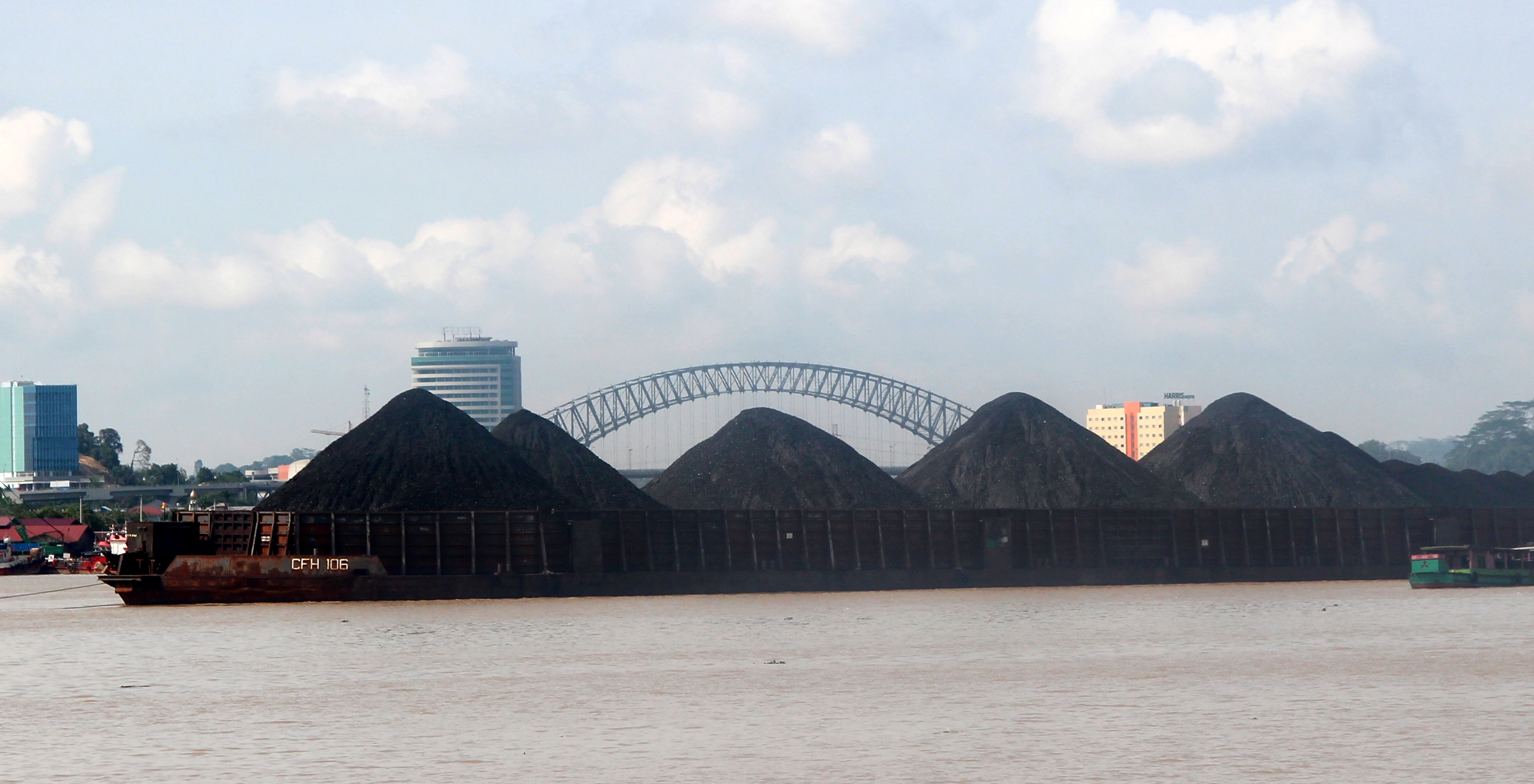


The next nightmare for the climate-conscious is the 1,000 km long Mahakam River carrying convoys of over-laden barges of thermal coal supplying much of the world's needs.

IKN starts with Ground Zero, incautiously named by someone who forgot 9/11.

The bland visitors’ display is marred by stench from clogged public toilets and broken walkways. Disabled unwelcome. ‘Green and modern’ doesn’t include health and safety.

These are more than nit-picks. If there’s no attention to detail now, how will it look later?

The work is mainly earth-moving. Jakarta-style dust is choking from the  trucks bashing the roads to rubble.

That's provided they can keep moving.  Queues park on the roads outside dry bowsers. At one closed station 85 trucks stood idle  Locals say diesel droughts have been a  problem for years, yet refined palm oil can be used as a bio-fuel.

Construction is patchy, though a dam across the Sepaku River is well ahead to the distress of around 300 local villagers.

'We don't know what's happening', said Sibukdin (on pillion), leader of the indigenous Suku Balik people.   


'People from IKN tell us to leave the land we've owned for centuries and challenge them in court if unhappy. But costs are high and the government always wins.'

So the villagers are pushing their plight internationally  hoping caring countries will tell IKN to leave them alone.

Earlier this year activist Hairudin Alexander from AMAN  presented the Sepaku concerns to a UN Human Rights session in Geneva on the Rights of Indigenous Peoples.

He told the committee that forced removal would destroy the  ethnic group’s identity.  Their language and culture is separate from the general Dayak population.

Opposition to the new city by environmental and social organisations has also been ignored. Likewise requests by this writer for briefings and interviews.

Academics have been getting the same treatment according to Mulawarman University anthropologist Martinus Nanang.

‘My colleagues and I asked for all reports and surveys but we’ve never seen them,’ he said. ‘We fear many decisions are being made without research.

‘They’re afraid of the reaction by global environmentalists.’  

IKN is a solo show. An Australian-led research team claimed: ‘Everyone acknowledged the project was political.’


A Melbourne University paper reported that  ‘Democracy won’t be making the move to Indonesia’s new capital’. 

‘Removing genuine public participation ensures (IKN) … will not be a city for all Indonesians. Instead, it looks like (it)  will serve the interests of political and business elites and the people who back them.’

IKN boss and former banker Bambang Susantono claimed 13 UN agencies have expressed support. Maybe, but they're not the elusive foreign investors Jokowi has failed to snare.

His desperation showed this month when he reportedly  said the project was open to local investors, as though they’d been excluded.

After trumpeting a 'number' of keen domestics he strangely added that if locals show no interest, the Government will seek overseas investors - a search which has been underway since Softbank said ‘no’.

'I have ordered the Head of the IKN Authority to restrain investors from abroad and give them a chance.'

No need for  government-ordered restraint - the capitalists are doing that themselves.


First published in Michael West Media, 4 December 2023:  https://michaelwest.com.au/revenge-of-the-jungle-indonesias-new-capital-unloved-and-unfunded/

Wednesday, November 29, 2023

INDONESIA'S TRUMP - NO FRIEND NEXT DOOR


FASCISM -THE FEAR THAT’S NEAR


Credit:  Inside Indonesia
 

Could Australia face a fascist leader next door after the Indonesian Presidential election in February? That’s getting more likely as the polls harden, hoaxes flourish and slanders stir.


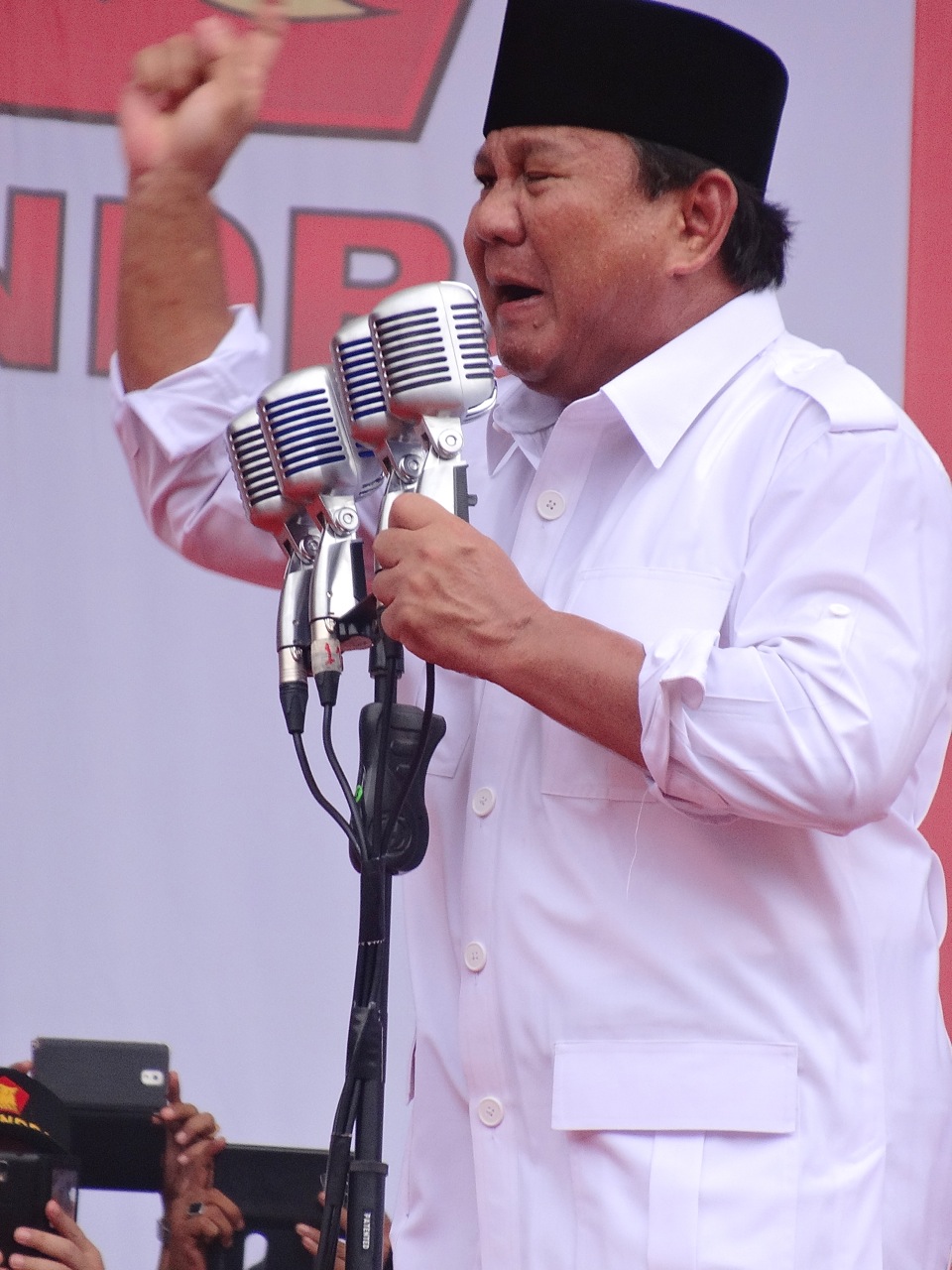
The disgraced former general Prabowo Subianto, 72, is a candidate, but no friend of democracy, once claiming it’s an unsuitable system for Indonesia.


 He’s been learning from populists like Donald Trump and Peter Dutton that the best way to rouse the masses is to say outrageous things that lazy journos don’t challenge.


In the Australian Opposition Leader’s case, it’s included boat people and ‘African gangs’ - but Prabowo’s target is the people next door. That’s us.


As Defence Minister Prabowo has been revelling in the attention and often making a fool of himself, though that doesn’t seem to bother his backers.


During an earlier campaign televised debate,  he reportedly said that terrorist attacks in Indonesia were caused by non-Muslims disguised as Muslims, inferring the thugs were Christians (the second largest faith group) or the hated atheists.  


Earlier he cited a US sci-fi thriller Ghost Fleet as proof of overseas villains planning the disintegration of Indonesia by 2030. The book is fiction.

,  

Earlier this year Agence France-Presse reported ‘multiple videos that have been viewed hundreds of thousands of times on YouTube and Facebook falsely claiming Indonesia and Australia are at war over the ownership of Ashmore Reef’.  The videos' origins are unknown so can't be linked to Prabowo, though they fit the narrative.


In a speech in early November at the Ministry of Defence Prabowo reportedly told staff that unnamed ‘big global forces’ were after the Republic’s wealth.


He then switched to charging ‘foreign intelligence agencies interfering in conflicts in Indonesia.’ His information was ‘based on sources’, so far unnamed.


His office has not responded to a request for an interview to clarify his claims, but he's publicly located four internal conflict zones, with West Papua the most serious concern for Canberra as pro-independence activists operate in Australia.


Horror stories from the province keep erupting but successive Australian governments have shunned involvement in the long-running Papua dispute, and in 2015 signed the Lombok Treaty to confirm their official hands-off position.


That won’t pacify Prabowo if his focus groups suggest bashing the neighbours yields votes. Australians probably reckon confronting a nation with eleven times the population as too nutty to contemplate.


Though not to Indonesians nurturing sour memories of their neighbour's actions, starting with our involvement in the 1999 referendum that led to the independence of East Timor, fracturing the ‘unitary state’. 


This was followed by Diggers leading peacekeepers after Indonesian militias rejected the result and turned to killing and burning.


In 2006 we took in 43 Papuan asylum seekers; the Indonesian ambassador pulled sticks and for a while quit Canberra. 


In 2013  our spy agencies were exposed tapping the phones of sixth president Susilo Bambang Yudhoyono - till then a confirmed Ozophile - and his wife Ani.


So much protein for the paranoid. Little surprise then that Lowy Institute polling in 2021 showed only 55 per cent of Indonesians said they trust us - a 20-point drop across the decade. Around one-third of respondents reckoned we're a threat. 


US historian Professor Christopher Browning links fascists to ‘inflammatory rallies; the incessant mongering of fear, grievance, and victimization; the casual endorsement of violence; the pervasive embrace of conspiracy theories; the performative cruelty; the feral instinct for targeting marginalized and vulnerable minorities; and the cult of personality.’


Prabowo ticks every box.


Here’s the state of play leading to the 14 February poll: Apart from Prabowo two other candidates want to run the world’s fourth most populous nation with the largest number of Muslims.


One is Dr Anies Baswedan, previously an academic and Jakarta governor. The second is a former lawyer and provincial governor Ganjar Pranowo.


In their party affiliations and statements, both 55-year-old 'family men' come across as centre-left moderates with tolerably clean records by Indonesian standards.


Should one of these win office Australians could probably rest easy, expecting a continuation of the slumber-time enjoyed under the current president Joko ’Jokowi’ Widodo.


Foreign affairs is a limp starter in the Presidential race where domestic issues are clear favourites.  Much depends on who becomes foreign minister, what coalition parties the president brings into his Cabinet, and the deals done to keep office.  


Last year Prabowo talked about Russia as ‘a very good friend to Indonesia’ but the long-held ‘free and activepolicy of non-alignment with major powers will likely remain, annoying Washington and Beijing.


The economy is doing well on the back of mineral exports.  Inflation at 2.28 per cent is tolerable and the people's lot is improving -   for the poor slowly, for the rich rapidly.


Prabowo’s Gerindra (Great Indonesia Movement) party has 75 seats in the 575-member Parliament.  It rarely goes into specific policies, and when it does they're contentious and confusing, like banning gays in government jobs, then rescinding.


Prabowo was born in Jakarta in 1951, the son of a famous Dutch-educated economist. His mother was a Protestant. Prabowo’s younger brother Hashim Djojohadikusumo is a business tycoon reportedly worth US$685 million; he’s helped bankroll his sibling’s political ambitions.


After joining the military Prabowo studied in the US and developed an admiration for Ataturk, the founder of modern Turkiye.


His career wasn’t harmed by his 1983 marriage to Soeharto’s mega-rich second daughter Siti Hediati Hariyadi. Their son Didit Hediprasetyo, 39,  is now a fashion designer in Europe.


The couple divorced in 1998. Some Muslim groups want them to remarry so the State has a First Lady, an idea Siti has scuppered.


Prabowo allegedly committed human rights abuses when crushing the East Timorese independence movement last century. He was also allegedly behind the kidnappings of 23 pro-democracy activists in 1998. Some survived - 13 vanished.


He was cashiered and fled to exile in Jordan, but was never charged.


Six years after his dismissal he returned with grand ambitions, seeking to be the presidential nominee for his former father-in-law’s party Golkar.


When that bid went down the gurgler he started Gerindra and stood for President in 2014. When he lost to Jokowi he did a Trump, alleging ‘massive systemic fraud’. None was proved.


After failing again in 2019 he rejected the result, declared himself the winner and claimed he'd unleash ‘people power’ to get his way.  He went to the Constitution Court to prove his case. He couldn't.  Riots followed. Six died and hundreds were injured. Police alleged protesters were paid Rp 300,000 ($30) each to foment strife.


Should Prabowo lose again in February pessimists fear a St. Valentine’s Day massacre could follow, for the short-fuse  septuagenarian will never get another shot at the job he desperately craves and fervently believes to be his destiny.


If he loses be afraid.  If he wins be very afraid.


##

 First published in Pearls & Irritations, 29 November 2023: https://johnmenadue.com/facism-the-fear-thats-near/

Tuesday, November 28, 2023

THE BEAUTIES AND THE BEASTS

 SAYING IT IN STONE  - OR PLASTER 


Visitors to Bali will have admired the statues of events from Hindu ancestry - or just playful advertising.  Either way the sculpture skills and creativity are impressive.  Unfortunately, this brilliance perishes once the Bali Strait has been crossed and you're into Java.


Welcome


Malang is a popular stopover for the adventurous hoping to scale Guning Semeru, the highest mountain on the island or see the sunrise from Gunung Bromo.

There are also scores of Candi, the remains of Buddhist and Hindu temples, underscoring the city's importance as a cultural centre.  That doesn't extend to this memorial supposedly celebrating the 'excellence' of links between the army and the people.


Be fearful

These ghastly figures getting face-lifts are supposed to represent learning (the student) religion (the Muslim cleric) the military (a soldier) and agriculture (a farmer).  Women have no place in this quadrumvirate as they are giving birth, washing and feeding these bug-eyed monsters.

Fortunately they're staged at a crossroads and often masked by banners advertising cigarettes, so not  too likely to scare the kiddies.  They can learn to smoke and destress from seeing these ghosts.

##


Monday, November 27, 2023

BUGGER OFF

 At last - the Oz media recognises Indonesia


Whadya reckon - an update on the bruising election campaign? A thoughtful piece about Indonesia's US$22 billion debt to China? A serious concern about corruption See here: https://www.cnnindonesia.com

Sorry - all too boring.  Better a space-filler about a woman bitten by a bug in Bali - briefly in pain but now all well. That’s Channel 7’s idea of news and there'll be no link from me.

What could possibly top this press-stopper?  Maybe a cracked fingernail, or lost eyelash extender.  Thank goodness no-one gets stung (literally and metaphorically) in Oz - all our wildlife is benign, like our banks and bureaucrats.

Saturday, November 18, 2023

CREATING A UNIFORM STATE


 BACK WHERE THEY DON’T BELONG     


In Indonesia old soldiers never die; they just infiltrate civic affairs, then grab jobs from the worthy and talented young, slowing the economy. 

After two decades of being confined to barracks, the Indonesian army is marching back into civil and political life in a country that claims to be a democracy.  

This is bad news for  smart grads, society and neighbour states. It comes just ahead of next February’s presidential election so the winner will be stuck in the dry concrete of a law they didn’t make and sure to shrink their authority.

During the dictatorship (1966-1998) of General Soeharto the military was participating in every effort and activity of the people in the field of ideology, politics and economics and the sociocultural field.’

The dwi fungsi (two functions) doctrine had the army bossing  the cops. There were 38 seats in the national parliament reserved for senior officers and sinecures in the public service.

Soldiers behaved like born-to-rules, demanding free food in restaurants and barging to the front in queues. Some arrogance remains: This story is being keyboarded in a garrison town where siren-shrieking convoys on routine missions jump lights and force other traffic off the roads.

The superiority began to dissolve early this century when the fourth president Abdurrahman ‘Gus Dur’ Wahid separated police and defence. He also tried to make the force professional. The Australian Federal Police have been involved in the reform, but now all could unravel..

Senior military officers have long wantedwi fungsi back and this year President Joko ‘Jokowi’ Widodo agreed. Regional military commands (Kodam) will be set up in all 37 provinces, ‘to strengthen the national defence system.’ This gives the Tentara Nasional Indonesia (national armed forces) the chance  to spot carpers and subversives.

There’s also a pragmatic reason: The army has waiting rooms of gold braid nearing the 58-year retirement age. With life expectancy above 72 and rising, relevance-deprivation syndrome threatens.

Even though banned from public affairs the relationship continued, though subtly. However innocuous the ribbon-cutting there’s usually a glad-handing man (occasionally a woman) in uniform, an armchair ready on the stage

Comrade isn’t there to guard the invitees, but to show he’s one of us - and to get a feed. They’re good at making speeches and swapping name cards.

That’s not all.  Last month came a surprise new law letting TNI retirees take civilian jobs and seats on State-owned company boards. A commentary published by Melbourne University worried about  the speed and opacity:

‘The sudden inclusion of the contentious clause, without a draft being made publicly available on the website of the national legislature undermines the role of the (Parliament) of scrutinising laws to hold government accountable.’

The world’s third largest democracy already exists in ‘a state of disorder’ according to  a bleak analysis by the Australian-educated Indonesian academic Dr Abdil Mughis Mudhoffir.

He reckons government by the people ‘has never been deeply held onto by the country’s politicians. The growth of illiberal policies is more a norm than a symptom of a decaying liberal order.’

These changes will shove the Republic further down The Economist’s Democracy Index where its been slipping for the past nine years under Jokowi who’d rather focus on civil engineering than civil liberties.

Dr Abdil has argued that from the get-go the Pres ‘accommodated military figures associated with past human rights violations in his cabinet. 

‘This is not simply because Jokowi was surrounded by anti-democratic elites that forced him to abandon his promises of advancing human rights. 

‘Rather, Jokowi partnered with corrupt politicians, military figures, bureaucrats and businesses, who then used their influence to repurpose democratic institutions for the interests of their survival.’

The Civil Society Coalition  fears a ‘politicisation' of the TNI ahead of the election, alleging ‘an aroma of nepotism’ over senior appointments given to the President’s friends.

Electoral democracy is a wriggling beast but this definitionis a useful catch-all: ‘A political system in which political leaders are elected under comprehensive voting rights in free and fair elections, and freedoms of association and expression are guaranteed.’

Linked is the separation of powers - the administration, the police to enforce internal law and order, and the military to protect the nation from external hostiles.

Indonesia doesn’t face too many because of its size and refusal to join the US or China blocks in their contest for power in the region. It has about 400,000 active personnel.

What sort of person wants to join an army?

Recruiters parade patriotism, a desire to serve and to protect the motherland -or fatherland if you’re a misogynist - from real or imagined threats.  Essential personal qualities include a family tradition,  unquestioning acceptance of discipline, and reluctance to think as an individual.  The weak seek a brotherhood.

The more pragmatic and  less sentimental joiners list security, pension, pay, travel, learning a trade and getting an education.

Less noble motives are bedroom warriors’ under-sheet fantasies on the power of lethal weapons  to solve problems when words fail.

Are these the right people to run jobs in civil society and fill seats on company boards? The Indonesian government thinks so, and will be marshaling retirees from the armed services into civilian affairs including agriculture through the ‘food barnprogramme.

Soldiers who drove desks, counted beans and signed orders to buy munitions may have skills that can be transferred. But those capable only of  thrusting bayonets into bodies will have problems sticking paperclips onto files

Indonesia’s education system is slowly improving. The best tech colleges and universities are turning out bright young pros keen to get working. But they’ll struggle if Dad’s Army gets there first.

That’s not just dispiriting for ambitious candidates with needed qualities. If state-owned businesses can’t pick staff  on merit they’ll fail to be competitive. 

Should the next president try to scrap the jobs-for-the-boys policy he’ll face the might of the military that’s recovered its power - delivered by a civilian president..

## 


First published in Pearls & Irritations, 18 November 2023: https://johnmenadue.com/back-where-they-dont-belong/