FAITH IN INDONESIA

FAITH IN INDONESIA
The shape of the world a generation from now will be influenced far more by how we communicate the values of our society to others than by military or diplomatic superiority. William Fulbright, 1964
Showing posts with label President Joko Widodo. Show all posts

Monday, December 04, 2023

THE CITY THAT NEVER KEEPS

 REVENGE OF THE JUNGLE LOOMS


Indonesia’s biggest-ever civil engineering project deep in Borneo’s equatorial jungle should supposedly address a serious  social and environmental problem.  

Now it’s under threat. So is President Joko ‘Jokowi’ Widodo’s can-do reputation and national pride.

The need to take the weight off stinking, sinking Jakarta is real and pressing.  But Jokowi’s relocation solution is economically flawed, environmentally dangerous and probably doomed. Good idea, lousy planning,  bad place.

The 250,000-hectare construction site of the Republic’s new Ibu Kota (capital) Nusantara (IKN) is the president’s conceit.  The name is  old Javanese for the archipelago.

The provisional budget is US$35 billion. Ironically this is the sum allegedly stolen from the nation’s public purse by second president Soeharto during his 32-year kleptocracy (1966-98).  The money has never been recovered.

Indonesia already owes China more than US$22 billion for earlier infrastructure programmes.

Work on IKN is being driven using domestic funds needed for health, education and other national services. The maximum ‘public investment’ is 20 per cent.

After 18 months of crowing optimism Jokowi has now confessed he’s drawn no international investors.  Without their cash  the creek supplying contractors and 10,000 workers now on site will run dry.  

Then the fecund vines will strangle the half-built pillars, choke the drains and smother all that’s human-made - the fate of Java’s Buddhist and Hindu temples abandoned five centuries ago when Islam arrived.

That’s the prediction and hope of Saiduani Nyuk (right) head of the Kalimantan Indigenous People’s Alliance (AMAN)  representing 77 communities claiming they’re threatened by the development.


‘There’s no clarity or communication, but plenty of intimidation.’ he told Michael West Media. ‘The money isn’t there and it probably won’t be found because the government is in debt.’

All signals for IKN looked green when Japan’s Softbank reportedly talked of a US$100 billion loan. That road hit a dead end in March 2022.

A reported 130 lenders from Singapore, South Korea, Japan, Malaysia and the UAE have looked  - and done U-turns, wondering how to make a buck on grandeur.

If any Australian or other Western bankers have been escorted through the site’s mud to imagine money trees flowering,   their presence hasn’t been noticed.

Their fears would include having to grease palms  and fall foul of local and Australian law. Graft runs rife in Indonesia, now even allegedly infecting the government’s Corruption Eradication Commission watchdog.

The theory endorsed by Saiduani and others is that potential investors will keep wallets closed until  the 14 February Presidential election results are finalised.  

After two five-year terms the popular Jokowi is constitutionally barred from staying on. While the three top candidates for his job say they’ll maintain their predecessor’s dream.

If Jokowi can’t raise the funds, what chance will his less enthusiastic successors have?

On a trip to the US in November  Jokowi (who graduated in forestry) said Nusantara will be ‘a smart forest city concept, a modern and environmentally friendly city' with  70 per cent of land in ‘green areas, which is envisioned to be a heterogeneous forest emulating a rainforest.'

This is how it was before bulldozers and chainsaws arrived last century in a Jakarta-driven burst of 'development.'

First stage inauguration is scheduled for National Day (17 August) next year with around 60,000 government employees moving in during the following months.  Eventually two million are expected, a fifth of Jakarta’s population.

Capitals created by fiat have a poor success rate particularly when the shift is far into another climate and culture.

Sometimes it's better to build a new place down the road.  Like Malaysia’s judicial capital Putrajaya, 36 km from Kuala Lumpur which remains the nation's commercial hub.

Egypt’s ’New Administrative Capital’ has reportedly already over-run and under-delivered on its US$50 billion budget.  It can't attract loans or residents.

It’s accessible by road, while East Kalimantan can only be reached by air or sea from Java, making the higher cost of living another deterrent.

Jakarta defines overcrowding.  The Jabodetabet zone around the current capital has more people than Australia.

But it's the political, economic, manufacturing and power centre of the world's fourth most populous nation, and accessible from anywhere in Java.

Nusantara is more than a three-hour grind from the scruffy entry-point Samarinda, through  an environmentalist’s horror trip of oil palm plantations.  
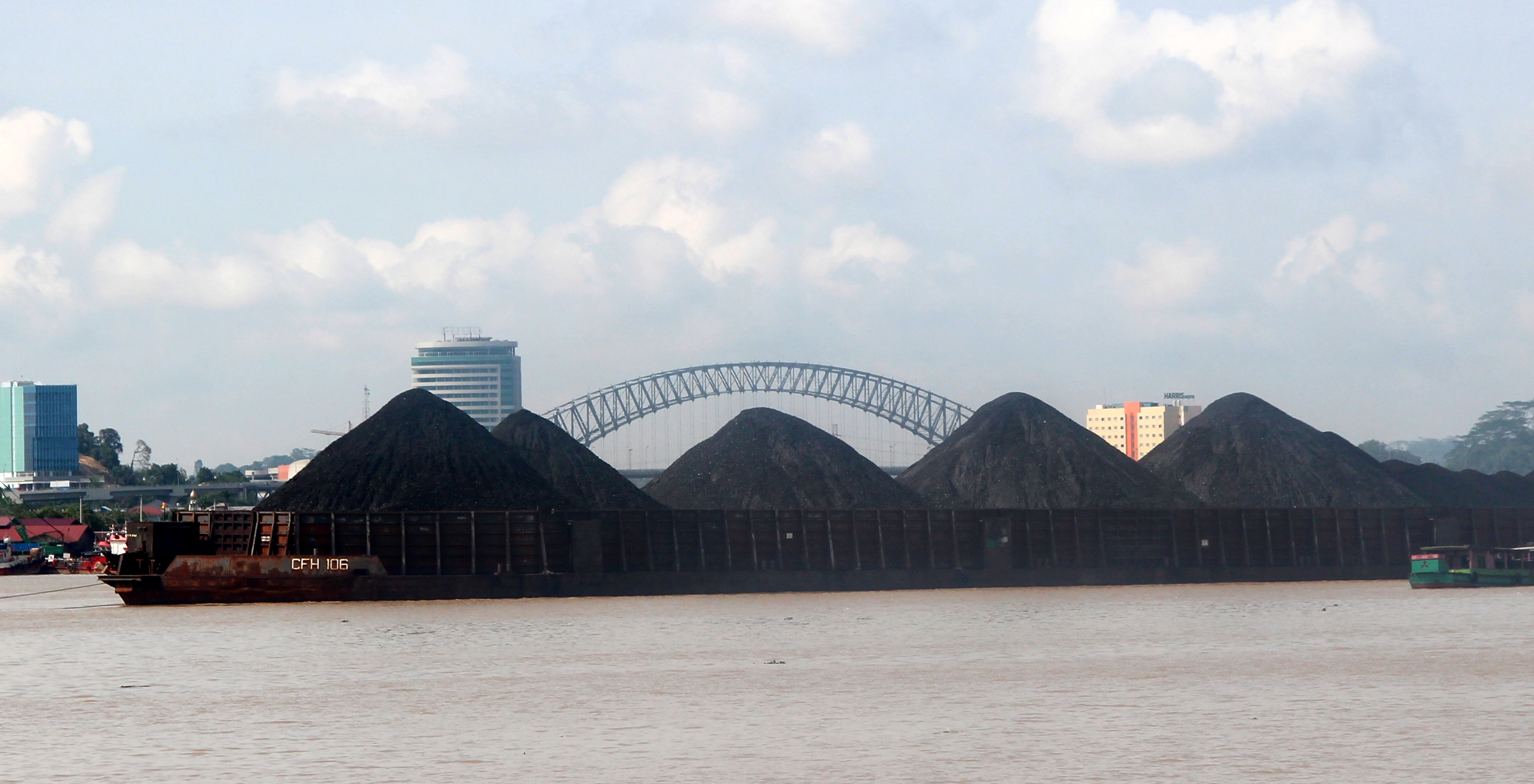


The next nightmare for the climate-conscious is the 1,000 km long Mahakam River carrying convoys of over-laden barges of thermal coal supplying much of the world's needs.

IKN starts with Ground Zero, incautiously named by someone who forgot 9/11.

The bland visitors’ display is marred by stench from clogged public toilets and broken walkways. Disabled unwelcome. ‘Green and modern’ doesn’t include health and safety.

These are more than nit-picks. If there’s no attention to detail now, how will it look later?

The work is mainly earth-moving. Jakarta-style dust is choking from the  trucks bashing the roads to rubble.

That's provided they can keep moving.  Queues park on the roads outside dry bowsers. At one closed station 85 trucks stood idle  Locals say diesel droughts have been a  problem for years, yet refined palm oil can be used as a bio-fuel.

Construction is patchy, though a dam across the Sepaku River is well ahead to the distress of around 300 local villagers.

'We don't know what's happening', said Sibukdin (on pillion), leader of the indigenous Suku Balik people.   


'People from IKN tell us to leave the land we've owned for centuries and challenge them in court if unhappy. But costs are high and the government always wins.'

So the villagers are pushing their plight internationally  hoping caring countries will tell IKN to leave them alone.

Earlier this year activist Hairudin Alexander from AMAN  presented the Sepaku concerns to a UN Human Rights session in Geneva on the Rights of Indigenous Peoples.

He told the committee that forced removal would destroy the  ethnic group’s identity.  Their language and culture is separate from the general Dayak population.

Opposition to the new city by environmental and social organisations has also been ignored. Likewise requests by this writer for briefings and interviews.

Academics have been getting the same treatment according to Mulawarman University anthropologist Martinus Nanang.

‘My colleagues and I asked for all reports and surveys but we’ve never seen them,’ he said. ‘We fear many decisions are being made without research.

‘They’re afraid of the reaction by global environmentalists.’  

IKN is a solo show. An Australian-led research team claimed: ‘Everyone acknowledged the project was political.’


A Melbourne University paper reported that  ‘Democracy won’t be making the move to Indonesia’s new capital’. 

‘Removing genuine public participation ensures (IKN) … will not be a city for all Indonesians. Instead, it looks like (it)  will serve the interests of political and business elites and the people who back them.’

IKN boss and former banker Bambang Susantono claimed 13 UN agencies have expressed support. Maybe, but they're not the elusive foreign investors Jokowi has failed to snare.

His desperation showed this month when he reportedly  said the project was open to local investors, as though they’d been excluded.

After trumpeting a 'number' of keen domestics he strangely added that if locals show no interest, the Government will seek overseas investors - a search which has been underway since Softbank said ‘no’.

'I have ordered the Head of the IKN Authority to restrain investors from abroad and give them a chance.'

No need for  government-ordered restraint - the capitalists are doing that themselves.


First published in Michael West Media, 4 December 2023:  https://michaelwest.com.au/revenge-of-the-jungle-indonesias-new-capital-unloved-and-unfunded/

Monday, July 17, 2023

JOKOWI'S BROLLY TRIP TO OZ

He came, he saw, he wandered                


A wet Sydney welcome                                                Credit Tribune


Forecasting outcomes from international leaders’ chats is a fraught exercise. Media hustlers offer topics and hint scoops. Flops get overlooked. And so it was with Indonesian President Joko ‘Jokowi’ Widodo’s trip to Sydney earlier this month.


Before heading Down Under for a billed three-day visit (in reality just one full day) Jokowi briefed selected Australian journalists to steer the news agenda onto his road.


It was supposed to be an EV batteries mineral deal yielding billions in investments, plus extracting major concessions on discriminatory travel rules. Neither happened.


Former ambassador John McCarthy deflated some of the hype: Truth be told, our relationship with Indonesia has become a mite boring. Never mind. In this business boring is good. 


Then he unscrewed the lid the media manipulators wanted locked by claiming that Indonesia will never be a quasi-ally of Australia.


We need its heft (not ‘fence-sitting neutrality’) …to work with its fellow Southeast Asians to bring China and America back from the brink. This will involve more than engagement. It will involve activism. We need it as a strong pole in a multi-polar region.


If such sturdy stuff was on the Sydney agenda it never surfaced.


Credit:  Detik News


Instead, the leaders’ business was so speedily dispatched Jokowi had time for more EV battery talk with Peter Dutton, a wet harbour police boat cruise and jolly pix with endangered Sumatran Tigers, ironically safer in Taronga Zoo than their natural environment. Their Bali and Java rellies have already been shot into history.  Literally.


As a brief break not bad. As a strategy spruik, not good, and few know because the hidden message was to appease Indonesia’s radical nationalists ready to inflame real or imagined Western plots in the upcoming election campaign as they’ve done before.  Hence this hose-down


‘We recognise the importance of Indonesia’s territorial integrity and your sovereignty as a nation. And we respect that, and we work with you on a range of issues covering the difficult geopolitical circumstances of our time.’ 


Decoded this means a couple of things:  First we’ll tell you more sometime about AUKUS nuclear-powered subs in your waters.  Second, we won’t back Papuan separatists like we supported your independence during the 1945-49 war against the colonial Dutch.


Having deplaned on possibly his last visit as president (he steps down in October 2024 after an election in February) Jokowi stayed media shy, doubtless fearing questions about human rights abuses, persecution of gays and a retreating democracy. Or maybe the World Trade Organisation.


The joint leaders’ list of must-dos ‘reaffirmed the importance of the multilateral trading system, with the WTO at its core … focused on improving WTO functions and having a fully functioning dispute settlement mechanism by 2024.’


This is gold-standard hypocrisy because Indonesia is giving two fingers to the WTO by stopping many critical mineral exports. 


Late last year the global authority ruled the bans violated its tariffs and trade agreement. But Indonesia refused to restart its port bulk loaders, arguing it needs the ores to stay in the archipelago and be processed.


The Asia Times reported Economic Coordinating Minister Airlangga Hartarto saying developed countries controlling other nations' exports was a ‘form of modern-day colonialism that will inhibit Indonesia’s economic growth and development.’


‘Down-stream processing’ has been an unhatched egg in Australia for so long it has addled as we continue to ship cheap iron ore to China and import its costly steel products. Jakarta has watched our inability to change this system so is taking action by building Chinese-funded smelters.


It has more nickel than any other country and more than it can currently use.  The European Union wants raw ore for stainless steel and EV batteries, so complained to the WTO.


The EU won but Indonesia’s response was: We’ll appeal and keep doing things our way. According to Reuters Jokowi said: ‘We want to be a developed country, we want to create jobs. If we are scared of being sued, and we step back, we will not be a developed country.’


That’s a road Canberra won’t explore because we think we’re sticklers for international rules and use the WTO to clobber countries like China that has banned our wines and barley ostensibly for political reasons.


The meeting also celebrated the third anniversary of the Indonesia -Australia Comprehensive Economic Partnership Agreement.  Proof that the free trade deal has yet to live up to expectations comes with the Foreign Ministers being told to ‘renew the plan of action’.


The IA-CEPA includes quotas on work and holiday visas, eventually allowing entry for 5,000 Indonesians a year.  This unused clause waits for another meeting - whoever that may be from Indonesia - and preferably with more time.


As he wanted, Jokowi’s plans to sell EVs to the neighbours and get WA lithium topped the talking points. While a presidential tick helps, in the end, any deals will be done by investors who’ll decide whether trade makes business sense.


Australian bankers reckon the risks too great to invest in Jokowi’s Nusantara new city signature project in East Kalimantan which is already looking parched for want of dollars. Who’ll put money into a show where the state is corrupt, returns hard to detect, and worries whether the cheerleader’s successor will be waving Widodo’s flags?


Having given much space to pre-visit predictions, the AFR discovered a ‘strongly-worded communique’ driven by ‘international tough-mindedness’, language invisible to other readers. 


The 40-point document was thick with soft synonyms suggesting the leaders’ teams  ‘welcomed, recognised’ and ‘underlined’ ideas, but blandishments are decorations, not enforceable treaties. 


 As Ross Taylor, former president of the Perth-based Indonesia Institute and a persistent advocate for fairer and cheaper entry permits for Indonesians, claimed there’s a ‘huge market’ wanting to enjoy the Wide Brown but finding the process discriminatory and onerous:


Why not treat Indonesians like we handle Malaysians and Singaporeans who get cheap online visas?  Because - as Lowy research shows - we don’t trust ‘em, and it’ll take real tiger talk to start a change.


 John McCarthy should be at the next leaders’ love-in.


##

 First published in Michael West Media, 17 July 2023:  https://michaelwest.com.au/unpacking-the-presidents-mien-just-how-successful-was-jokowis-visit-to-australia/

Tuesday, February 08, 2022

CASTRATING THE KPK - SLOWLY


ERASING THE UNTOUCHABLES: THE INDONESIAN WAY    


 Indonesia; KPK; anti-corruption agencies; « WORKING WITH THE GRAIN:  Integrating governance and growth

 Source:  Working with the Grain

Corruption erodes trust, weakens democracy, throttles development and causes widespread pain and harm, according to Transparency International.  For many years the Indonesian Government seemed determined to crush the villainy.  That resolve is now being questioned.

----------------------------------------------

Corporate tsars and the political powerful rarely back independent probes into official misconduct– unless limited to their rivals. Canberra has yet to debate such an authority, while next door Indonesia’s oligarchs are destroying their Komisi Pemberantasan Korupsi (Corruption Eradication Commission), not with a bang which might alarm, but many whimpers.

In 1998 Indonesia’s second president Soeharto resigned during the Asian Financial Crisis when huge crowds demanded democracy and an end to avarice.  During the authoritarian kleptocrat’s 32 years in power, his family reportedly amassed US $30 billion by plundering the public purse and demanding bribes.  The former general was never prosecuted and died in 2008.  The money has not been recovered.

The KPK was established in December 2003 during the presidency of Megawati Sukarnoputri, though the foundations had been laid earlier when the liberal cleric Abdurrahman Wahid (aka Gus Dur) ruled (1999 – 2001). 

The political atmosphere at the time was heady with the promise of starting afresh and washing away the filth from decades of palm-greasing staining the nation’s name and known as KKN – Korupsi, Kolusi, Nepotisme.

The Commission set about its duties with energy and positive publicity.  Early hits were a who’s who of oligarchs, government ministers, corporate crooks and high-profile socialites.

One of the most sickening cases involved former social affairs minister Juliari Peter Batubara, a Protestant member of the ruling Partai Demokrasi Indonesia Perjuangan, (PDI-P Indonesian Democratic Party of Struggle).  The spiv was jailed for 12 years for trousering $2.25 million from funds budgeted to buy Covid-19 relief packages for the poor.

Like many fellow malefactors, Batubara realised too late that the KPK was not like other authorities allegedly ready to drop investigations in return for cash-stuffed envelopes.  Its formidable powers included warrantless wiretaps, travel bans, freezing bank accounts and detaining suspects.

During the golden years, the Untouchables were TV news regulars hustling famous names into cars after late-night raids on sky-level homes and offices.

With a 100 per cent success rate, the KPK rapidly became the most trusted and supported agency in Indonesia, peaking in 2013 with the Ramon Magsaysay Award, named after the former Philippine President who had a reputation for integrity and idealism. 

The prize has been run since 1957 by the NY-based Rockefeller Brothers’ Trust Fund. It called the KPK ‘a fiercely independent government body that serves as a symbol of hope and reform.’  It wouldn’t say that now.

When the current president Joko Widodo won his first five-year term in 2014 supporters were certain he’d support the overworked KPK facing a backlog of 16,200 cases.

They expected an idealist but got a pragmatist who’d rather concentrate on his nation’s infrastructure than its integrity. Ironically he also wants overseas money, though ethical Western investors shun countries that tolerate dirty deals. (Some nations like the US, the UK and Australia, have laws where citizens can be prosecuted in their homeland for bribing bureaucrats abroad.)

Presidential Chief of Staff Moeldoko seemed unaware his country had ratified the UN Convention against Corruption when he allegedly dubbed the KPK ‘a hindrance to investment’. Though he later added that he meant the KPK law, it seemed he’d revealed the administration’s real concerns.

Because the Commission had widespread support the erosion has been subtle.  The agency needed to focus more on graft prevention than law enforcement, according to new chair Firli Bahuri, appointed by Widodo in 2019 for a five-year term.  This was despite the KPK Ethics Council having found him guilty of a ‘gross violation’ by allegedly alerting a suspect.

The former Commissioner General of Police had enjoyed a lacklustre career in uniform, though a shining contact list which includes Megawati.  The unchallenged queen of the ruling PDI-P is rumoured to be Widodo’s dalang (puppet master).

Last October the daughter of first president Soekarno (1945-65) got the job of chairing the steering committee of the National Research and Innovation Agency, an amalgamation of five state institutions.

The appointment startled the academic community hoping for leadership from an internationally acclaimed scientist.  There are a few like US-educated physicist Yohanes Surya, though  Indonesia has no Nobel laureates.

Megawati, 75, failed to complete her studies at two unis (agriculture at one, psychology at another), but now holds nine honorary doctorates.  Despite her lack of qualifications she’s apparently ‘obsessed’ with science, an interest she’s kept secret till now.

But away from perceived nepotism and back to the KPK.  Bahuri’s changes included ordering long-term investigators who’d put many brigands behind bars, to take a civil service examination. They reportedly included personal queries:  ‘Why are you not married at this age? Do you still have a desire? Do you want to be my second wife? What do you do when you're dating?’

 Fifty-one failed the test and were kicked out.  Widodo reportedly said he didn’t want the staff ousted and neither did the public.  Their concerns made no difference.

Among the rejects was Indonesia’s Eliot Ness, Novel Baswedan who’d lost an eye when hydrochloric acid was thrown in his face after he left a mosque.  He’d been investigating allegations of police force wrongdoings and a case involving politicians collecting bribes through an ID electronic card project

In a curious development, Baswedan and his sacked colleagues were then offered jobs with the police.

The KPK rot continued within. In September 2020 the agency’s Supervisory Council found Bahuri guilty of indulging in a ‘hedonistic lifestyle’ after he chartered a helicopter to fly home.  He was tickled with a written reprimand and kept his job.

Last September KPK deputy Lili Pintauli Siregar tipped off a North Sumatra city mayor that he was a suspect. The law says KPK leaders could face up to five years in jail for alerting anyone under investigation.

Her salary was docked Rp 1.85 million (AUD 181) a month.  No big deal. Her allowances are ten times that sum. If the KPK’s bosses don’t follow the rules, why should others bother? 

 Zaenur Rohman of Gadjah Mada University’s Centre for Anticorruption Studies reportedly said:  ‘The KPK had its worst record in handling corruption cases. In fact, the Attorney General’s Office performed better, handling corruption cases involving (state insurance companies) Jiwasraya and Asabri that involved trillions of rupiah in state losses.’

An editorial in The Jakarta Post commented pithily: ‘Things are really dire if the AGO, an agency not known for its integrity or good performance, outdid the KPK.’

Just before 2021 ended Widodo addressed KPK staff on International Anti-corruption Day.  He didn’t order hard-line persecution of crims as the public demands (some have called for the death penalty), but went soft:  ‘Corruption eradication should not only mean an arrest being made. Preventing corruption is more fundamental.’

So the archipelago’s streetscapes are now befouled with big posters featuring men in uniform telling citizens to neither give nor receive bribes, though it is common knowledge this remains the best way to get bureaucrats to perform their duties and do so speedily.

 Government departments and uni campuses declare they are graft-free zones as though immoral behaviour is like a virus.

The education-not-prosecution line has been followed by Bahuri who, unlike Yale psychologist Paul Bloom, doesn’t believe we have an innate sense of right and wrong.  Bahuri wants parents to instil moral behaviours in their kiddies ‘so that an anti-corruption mentality is built and formed in every individual in this Republic.’

There has been change - downwards.  A decade ago Transparency International’s Corruption Perception Index ranked Indonesia 96 among 179 nations.  Its position now is 102.  

First published in New Mandala 8 Feb 2022:  https://www.newmandala.org/erasing-the-untouchables-the-indonesian-way/