FAITH IN INDONESIA

FAITH IN INDONESIA
The shape of the world a generation from now will be influenced far more by how we communicate the values of our society to others than by military or diplomatic superiority. William Fulbright, 1964
Showing posts with label FM Retno Marsudi. Show all posts

Thursday, August 24, 2023

TRUST US, WE'RE THE GOOD FOLKS NEXT DOOR

 NO WORRIES, THEY’RE ONLY PASSING BY            


In the early 1960s, the then USSR started building missile sites in Cuba, near enough to Florida for endurance swimmers.  This almost led to the Cold War turning flaming hot. Now Australia is to buy more than 200 US missiles and stage them close to Indonesia.


The Arafura Sea is too wide to swim, but the subsonic Tomahawks capable of carrying 450 kg of conventional explosives (or, Absit! nuclear warheads with vastly more destructive power) can clear the distance in under 30 minutes.


Whether fired from land or sea (RAN destroyers or submarines), they’ll most likely head north-west, atop the world’s fourth most populous nation.


We upset the neighbours in September 2021 when announcing AUKUS. The then PM Scott Morrison allegedly told President Joko ‘Jokowi’ Widodo only after Joe Biden had spoken.


Last year PM Anthony Albanese said ‘Australia’s relationship with Indonesia is one of our most important, … ever-deepened by the strategic and economic interests that we share.’ Though not matters of defence. 


Are we taking Jakarta for granted again? If so, more distrust is likely. Lowy Institute surveys show a third of Indonesians see Australia as a security threat.


Should words turn to launches, the missiles would presumably be seeking warships in the contested waters of the South China Sea, which Indonesia calls the Natuna Sea. (The Chinese mainland is beyond range).


Defence Industry Minister Pat Conroy reportedly said the Tomahawks ‘would contribute to maintaining a strategic balance in the Indo-Pacific region’. Courtesy of Stanley Kubrick’s Dr Strangelove, Conroy added: ‘Only by deterrence can we promote strategic balance in our region and promote peace and stability as well.’


This isn’t just a $1.3 billion trade deal. The US State Department reckons the sale is ‘vital to the US national interest to assist our ally in developing and maintaining a strong and ready self-defence capability’. If so, why does Australia have to buy?


The other nations with Tomahawks are the UK and Japan.


Last month Australia’s mainstream media got in a tizz when aerial photos showed a RAAF Poseidon flying over a Chinese surveillance ship heading towards Queensland. This was headlined as an ‘encounter’ though other reports used the less-provocative terms ‘spotted’ and ‘sighted.’


The ABC  reported  a ‘spy ship monitoring joint military exercises (Talisman Sabre war games) with the US’. There have been no reports of Chinese sailors doing anything more aggressive than peering over satellite feeds and squinting through binoculars from outside our territorial waters. 


That didn’t stop Defence officials implying this was something decent folks don’t dodescribing the watching as an ‘unfriendly and provocative act’.


A useful phrase for Indonesia’s Foreign Minister Retno Marsudi to use should the Republic’s citizens spot killer missiles streaking above their archipelago. 


Another reason for the absence of angry statements and ambassador recalls is because Indonesian politicians have their eyes on the ground, specifically the 2024 general and presidential elections.


Foreign affairs just smoulder on the edges of the campaign where the primary heat sources are domestic issues.


Before being made the first woman Foreign Minister in 2014, Retno was ambassador to the Netherlands where she’d earlier been a student. Her President has shown little interest in her portfolio, so she’s largely been left alone.


Three big issues she’s faced and failed to either resolve or make any impression remain - Myanmar, the South China Sea disputes and AUKUS. 


Less than six months from the February poll there’s negligible speculation about the FM’s replacement. In the Indonesian system, ministerial appointments can be made from civil society. Retno, 60, is a career diplomat. She’s declined repeated requests for an interview.


Soon after her appointment she spoke out against academic charges of Indonesia’s ‘narrow nationalist-tinged discontinuity and unpredictability in foreign policy’.


 She responded that ‘Indonesia is recognised by outsiders for its successes in democracy, development and stability.’ But no mention of pacts and accords with other nations because of the policy of non-interference.


As an aside, Indonesia now has many more toll roads, ports and airfields, and is economically stable. But the boast about democracy is hollow. The US Journal of Democracy reported that:


‘Under (Jokowi’s) tenure, free elections have been threatened, civil liberties have declined, corruption fighters and legislative checks weakened, and the armed forces’ role in civilian affairs has grown.’


After Morrison called his counterpart  to say, ‘BTW something I meant to mention …’, Jokowi was reported as ‘repeatedly and forcefully’ raising concerns with the then-PM.


Retno added her country ‘was worried about the increasing tension between major countries …and the possibility of a cold war. What we all don't want is the possibility of an increasing arms race and power projection in the region.’


But that’s what’s happening with the Tomahawks. So far any outrage has been contained.  To add to the puzzlement Jokowi neutered his FM courtesy of the New Straits Times: 


 ‘We should view the Quad and AUKUS as partners, and not competitors ... ASEAN aims to make the region a stable and peaceful one.’


(The Quad is a security talkfest that doesn’t involve Indonesia. It started in 2007, was killed off a year later by PM Kevin Rudd, and was reborn in 2017. Members are Australia, the US, India and Japan.)


A decade ago PM Julia Gillard released the White PaperAustralia in the Asian Century. It stressed that Australia’s ‘future prosperity and security are inextricably linked to what happens in the region’.


That was then. What happens now in the region is being determined in another hemisphere. As veteran journalist John Pilger, 83has written:


‘In my lifetime, the US has overthrown or attempted to overthrow more than 50 governments, mostly democracies. It has interfered in democratic elections in 30 countries.’


Indonesia’s next President and FM might want to ask some tougher questions about AUKUS, Tomahawks and whatever is next on Australia’s Washington shopping list.


First published in Pearls & Irritations, 24 August 2023: https://johnmenadue.com/tomahawk-missiles-over-indonesia-no-worries-theyre-only-passing-by/


##


Monday, September 27, 2021

OUR LOVELY FRIENDS AND NEIGHBOURS - ALL UNTRUSTWORTHY


                Walk right in – no consultation required


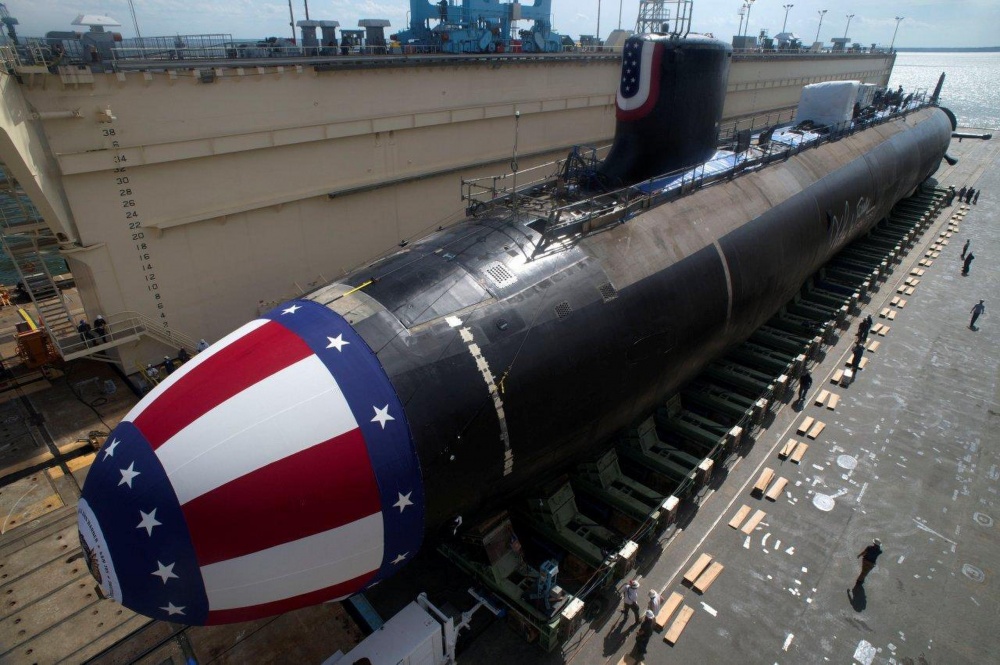
 Nuclear Submarines and Aircraft Carriers | US EPA

This is how to make friends and influence neighbours the Australian way:  First, a couple of ministers pop in on their way elsewhere after 21 months of absence. They pronounce warm relationships and BFF (Best Friends Forever).  A swap of bromides, nice pix, some pressies of vaccines to save lives and military gear to end them.  Then hey ho, it’s off to the big show.

A week later the host gets woken around fajar (the pre-dawn prayer) to be told by the Pal Down Under of detail she forget to mention on the earlier trip:  ‘Wouldn’t normally bother you with trivia Bu Retno, but the media will beat it up so best you hear about our latest acronym first from the horse’s mouth.

‘AUKUS is a bit like ANZUS minus the Kiwis but plus the Brits. We’re linking with the UK and US to build you-beaut nuclear-powered subs to cruise around your archipelago, help make you safer.

‘Not to worry.  They won’t submerge till long after our careers plunge into retirement. Ha, ha! The fleet may have Tomahawk cruise missiles but won’t be carrying nuclear weapons.  Well, not yet.’

As previously reported on this website, the 9 September meeting in Jakarta between Foreign Minister Marise Payne with her Indonesian counterpart Retno Marsudi produced an abundance of blah and a dearth of policy to advance the relationship.

Likewise the chat between Defence Minister Peter Dutton and Prabowo Subianto, Indonesia’s version of Donald Trump. The furious loser in the 2019 presidential race is now Defence Minister, and apparently didn’t even get a courtesy heads-up about AUKUS.

What hasn’t been denied is that the Indonesians weren’t just left in the dark about the trilateral deal– they were more in a sensory-deprivation regional policy cell.

It took more than a day for Marsudi’s spokesman Teuku Faizasyah to craft the appropriate language and tone.  In a statement published in English, he said Indonesia ‘takes note cautiously’ of AUKUS while ‘deeply concerned’ about an arms race and ‘power projection in the region’. 

The rest was motherhood stuff about peace, stability, security and pleas to ‘advance dialogue’.  Marsudi stayed silent. Nothing that might lead to a recall of ambassadors, but it did draw a subtle Javanese rebuff. 

The SMH reported plans to meet Joko Widodo on PM Scott Morrison’s flight back from the US and explain why our ‘good mate’ wasn’t consulted were erased when the President remembered he had other elbows to bump in the provinces. 

When Payne and Dutton were in Jakarta earlier this month they proclaimed a strong and respectful relationship.  A week is a long time in foreign affairs.

The Jakarta Post headlined the local reaction to AUKUS as ‘RI tells off Australia’ but the scolding was done with a room-temperature tissue.  The reality is that while RI is publicly offended by the distrust, it’s privately relieved others will be getting their hands dirty in handling China’s expansion while fearing collateral damage should the big egos clash.

Surprisingly the soberest warnings haven’t  come from the peace lobby but a military man, former ADF chief Chris Barrie channelling Winston Churchill:  ‘If we are not using every element of our national power to try and avoid going to war-war instead of jaw-jaw, then we’re making a very serious mistake.’

Although geographically central, Indonesia and its ASEAN partners will likely become ‘strategic observers’ of AUKUS. The Republic has a long-held non-alignment policy and a military ill-equipped for ventures beyond the oppression of domestic dissent. 

It also stays in the back row of the bleachers for the US / India / Australia / Japan ‘Quad’, which Payne callsa diplomatic network of like-minded democracies’.  Indonesia is the biggest player in the region and the world’s third-largest democracy so should have a front-row seat in the ‘security dialogue’ if not a place on the ground.  Its absence is mainly its fault, but fears the Red wrath searing the economy should it barrack for the West.

The Middle Kingdom is now Indonesia’s top trading partner, taking almost 20 per cent of its exports as against the US 11.4 per cent.  Kalimantan (Borneo) coal traders have been filling bulk carriers’ empty holds after President Xi Jinping banned Australia’s black gold.

Beijing (along with Hong Kong) is the largest investor in Indonesia with most money going into ports, roads, railways and mineral processing plants. This is the hand the world’s most populous Islamic country doesn’t want to bite, even though it’s also allegedly throttling the faith of millions of Uyghur Muslims.

The coordinates where the compass needle could go awry are in Indonesia’s Natuna Regency a mini archipelago of 150 or so mostly unoccupied islets 1,145 km north of Jakarta in the South China Sea.  That makes it sound irrelevant, but more than 60 per cent of global maritime trade passes nearby every year.

 A few days before the AUKUS reveal, Kompas daily reported fishers spotting Chinese boats in the zone.  The RI Navy hoisted tact and claimed no proof of infringements. In January 2020 tales of incursions led to Widodo on a warship reminding potential poachers of his Republic’s exclusive economic zone.  Beijing claims fishing rights within an imagined ‘nine-dash line’ unrecognised in international law.

In her Jakarta speech this month Payne talked up the Association of Southeast Asian Nations 34 times saying: ‘Australia's vision for the future of our region has ASEAN at its centre. It's principally a shared vision, underpinned by shared principles.’

That was a week ago. To be polite, it’s not only outdated but nonsense. AUKUS is a settled take-over as three senior members of the Anglo Empire move in on Southeast Asia, elbowing aside the long-established ASEAN which was never consulted or mentioned in the joint leaders’ statement.

The pith helmets are back, though now made of bullet-deflecting steel. By Jingo! All we need now is Rudyard Kipling.


 First published in Pearls & Irritations, 27 September 2021: https://johnmenadue.com/aukus-how-to-make-friends-and-influence-neighbours-the-australian-way/

Wednesday, September 30, 2020

DON'T PROD THE PANDA


                                  Chinese workers in Indonesia stoke tensions                            

Indonesia’s foreign policy seems divorced from reality.  It’s called bebas-aktif (free and active) and supposed to mean no siding with world powers.  

Officially it reads: ‘As a matter of principle, so doing would be incompatible with the country’s national philosophy and identity as implied in Pancasila’, the nation’s five principles of religious devotion, humanitarianism, nationalism, consultative democracy, and social justice.

Well, yes,  all fine and dandy, but the time’s coming when the fourth most populous country may have to decide whether it wants to snuggle with the world’s largest (China) or the third (US) as both vie for support.

The US has already rolled up its sleeves and shown tattoos. Defence Minister Prabowo Subianto, the failed candidate in last year’s presidential election, was on an armaments shopping spree when warned off buying Russian fighter jets and Chinese naval vessels.  That’s according to Bloomberg, and the reports haven’t been denied. 

Now it’s academic as Indonesia doesn’t have the cash. Figures from the government agency Statistics Indonesia show the economy withered 5.32 per cent in this year’s second quarter, and is expected to shrink further.

From facts to fear. The US Congress 2020 report on Military and Security Developments Involving the People’s Republic of China included this par:

 ‘... the PRC is very likely already considering and planning for additional overseas military logistics facilities to support naval, air, and ground forces. The PRC has likely considered locations for PLA (People’s Liberation Army) military logistics facilities’ in 12 countries, including Indonesia.

This is the only reference in the 174-page document and the ‘very likely’ qualification suggests conjecture. Foreign Minister Retno Marsudi responded that her country wouldn’t become a military base for anyone, but Congress is flying kites.

The notion of the Chinese seeking a base seems unlikely as they’d know an approach at this stage would rouse nationalist wrath and threaten major infrastructure projects they’re funding.  But it seems to be edging closer.

Veteran Asia hand John McBeth has contacts many Indonesian hacks would envy.  Writing in The Asia Times he reported a Chinese coast guard cutter working the fringes of Indonesia’s 200-nautical-mile Economic Exclusion Zone ‘is now suspected of trying to stake out the limits of Beijing’s nine-dotted line of historically claimed sovereignty over the South China Sea.

 ‘The latest incident suggests that Jakarta may sooner or later have to confront the fact that China is now seeking to lay down markers in claiming traditional fishing rights inside Indonesian waters in a clear breach of the 1982 United Nations Convention on the Law of the Sea.’

Marsudi issued a formal protest to Chinese ambassador Xiao Qian over the alleged intrusion on 12 September. 

The resolve to repel Chinese ambitions may weaken as Indonesia faces the same dilemma confronting Australia.  Both are heavily dependent on doing business with Beijing while trying to steer their independent foreign policies through contested waters churned by two contesting superpowers.

Ambassador Quin has reminded that his nation’s bilateral business with the archipelago last year was nudging US $80 billion, making it Indonesia’s biggest trading partner – and twice the size of the US.


At a soft-power level, figures were rising fast before Covid-19 struck; two million Chinese tourists annually compared with one million Aussies. Around 10,000 Indonesians were studying in China. (About 8,500 chose Oz Unis.)  These figures make the renminbi as attractive as our dollars.


Dr Dino Patti Djalal – a former ambassador to the US and founder of the Foreign Policy Community of Indonesia – told the South China Morning Post the growing trade meant more Indonesian companies are paying debts in renminbi as ‘the Chinese are pushing for this’.

As reported earlier in this column, Orang Tionghoa  (ethnic Chinese Indonesians) have long had a strained relationship with the pribumi, the so-called native Indonesians, even though many families have been present for centuries and are full citizens. 

Official figures reveal only three million Orang Tionghoa in Indonesia, though the real statistic may be closer to three per cent of the population, or eight million.  Whatever, they wield huge business influence, drawing resentment which sometimes turns violent.  The most deadly incident was in 1998 when rioters killed and raped.

Indonesian boosters like to describe their nation as ‘multicultural’ but the definition is different from countries which foster immigration.  In Indonesia it means the many ethnic groups scattered across what used to be the Dutch East Indies are living together in the ‘unitary state’.  How many? Figures swing wildly from 600 to more than 1,000, though only nine can muster more than two per cent of the population of 270 million.

Chinese loans have financed great swathes of infrastructure in the past five years.  Sinologist Leo Suryadinata writes that around 1,000 Chinese state and private companies are involved in electronics, mining and construction.

In the week when 160 seasonal workers from Vanuatu arrived in Darwin to pick fruit for farmers who can’t get – or don’t want – unemployed Australians – a similar number of Chinese workers landed in Indonesia.

The men were brought to Bintan in the Riau Islands, 40 km south of Singapore, to work on an aluminium smelter and coal-fired power station.  The total number of Chinese at that location is now 450. 

The company involved claims it’s already employing 3,000 locals and the foreigners, known as xinyimin (‘new migrants’) will be gone by the end of the year.

Three months earlier Indonesians in Southeast Sulawesi protested the arrival of 500 Chinese to build a nickel smelter.  Overall there are reported to be around 30,000 Chinese temporary workers in the Republic, mainly employed on infrastructure projects.

Importing labour is part of the deal with site managers arguing the xinyimin are specialists and need to take instructions in Chinese languages, which few locals understand. The contracts apparently don’t include skills transfers. Officially Indonesia has more than seven million unemployed but because many are underemployed, and data collection suspect, the number is far higher.

In the Australian situation, the reasons for importing labour are more basic. Deputy Nationals Leader David Littleproud told the ABC: ‘There's a real aversion from the Australian workforce to go and pick fruit.’ Critics claim that’s too simplistic because it ignores closed borders and alleged worker exploitation.

Whether the xinyimin are being ripped off in Indonesia isn’t known.  Scuttlebutt alleges the men stay on and take other jobs though that seems unlikely. Apart from the language difficulties the workers keep to themselves and don’t mix with the locals. In a paper for Singapore’s Yusof Ishak Institute, Suryadinata wrote:

‘The relationship between xinyimin and Chinese Indonesians are generally not close, especially since the younger generation of Chinese Indonesians have lost an active command of Mandarin.

‘There is therefore a new Chinese migrant community emerging in Indonesia that may come into conflict with Chinese Indonesians who consider these new migrants as competitors. Xinyimin may also become an issue for the indigenous population who see them as exploiters and foreigners.’

So far Beijing’s policies concern threats to marine territory and jobs rather than fifth columnists and human rights abusers, as in Australia.  Little concern about spies and campus influencers.

That approach is unlikely to change while the Joko Widodo government remains in debt to the PRC.  The country with more Muslims than any other nation is even going soft on the issue of Muslim Uyghur allegedly persecuted in Xinjiang province.

A report from the Jakarta-based Institute for Policy Analysis of Conflict quotes Dr Munajat Stain, a senior aide to President Widodo: ‘We did not want to engage in their (Uyghur persecution) narrative because it would only empower the Islamists and radicals belonging to the opposition’ (inside Indonesia).

The Widodo administration is purchasing more than labour, smelters and services, it’s also buying the Chinese line that the Uyghur are separatists, a much feared ideology because it might fracture the ‘unitary state’ .  No calls to investigate ‘re-education camps’ and the Covid-19 source. It wouldn’t do to prod the Big Panda.

Coronavirus update:  Officially, 271,000 cases and 10,300 deaths, including 107 doctors and 74 nurses across Indonesia.  Jakarta and other cities in limited lockdown.  Testing rates are among the lowest in the region – unsurprising as rapid tests cost around AUD 15 or a day’s wage for a labourer – and fears that hospitals are places for dying, not healing.

The WHO recommends 270,000 tests every week.  The number is currently under 100,000.

First published in Pearls & Irritations, 30 September 2020:
https://johnmenadue.com/duncan-graham-chinese-workers-the-worry-not-spies/