FAITH IN INDONESIA

FAITH IN INDONESIA
The shape of the world a generation from now will be influenced far more by how we communicate the values of our society to others than by military or diplomatic superiority. William Fulbright, 1964
Showing posts with label 17 August. Show all posts

Wednesday, August 16, 2023

DIY PRIDE

 INDONESIA HAS WHAT WE LACK - A DAY OF UNITY             


It’s banners and bunting season in Southeast Asia as our neighbours celebrate independence. Singapore finished its wavings on 9 August and Malaysia’s moments of pomp will come on 16 September. Like Australia, both won sovereignty through diplomacy.


Next up is Indonesia on 17 August and the 78th birthday party will be brimming with exuberance we’d consider over the top. 


The excessives acknowledge a genuine achievement at a terrible cost, seized by nationalists, not handed back by an exhausted European state.


The gaiety is driven from below, not imposed by officials pushing citizens to cheer.  Involvement is universal. Families painting their gates and kerb lines on the asphalt across Indonesia this past week do so in the spirit of gotong royong, community self-help.


Government grants are rare - the banners draping fences and forming arches have been handed down like relics from past years, or bought from wandering vendors. Much is homemade and inventive.


There’ll be thousands of closed-street parties, an abundance of savouries and buckets of rice, much singing and mineral water, though no grog. 


Understanding our giant and much-overlooked neighbour demands more than a splash in a Bali villa pool, and a dabble with Indonesian language  at  junior high. It needs immersion.


Australians expect division on 26 January reckoning it’s either an invasion or John Howard’s ‘luckiest thing that happened to Australia’.


So we find Indonesia’s razzmatazz and fireworks hard to understand, and not just because we’re fearful of bushfires and distrustful of authority defining eventful moments.  


While we puzzle, Indonesia’s celebrations relate with Americans because their histories have been settled.


The 4 July 1776 Declaration of Independence at the Second Continental Congress in Philadelphia established the US as a separate nation. Then came war to secure independence, ending with the 1783 Treaty of Paris.


At 10 am on 17 August 1945, the revolutionary leader Soekarno declared the birth of the Republic of Indonesia and the death of the Dutch East Indies after more than three centuries


War erupted, ceasing only when sovereignty was transferred to the short-lived ‘United States of Indonesia’ at the end of 1949, though West Papua was not included  till 1963.


Both nations have settled their past, an essential foundation for accord. Our history has not been resolved for much remains unrecognised.  


The latest estimates  from Newcastle University research has more than 10,000 Aboriginal and Torres Strait Islander lives lost across more than 400 massacres. More happened between 1860 to 1930 than in the 70 years after settlement.


The polyglot Soekarno, who became the nation’s first President, is titled Proklamator. He was a great orator, yet his speech is short, dull and devoid of detail:


‘We the people of Indonesia hereby declare the independence of Indonesia. Matters concerning the transfer of power, etc., will be carried out in a conscientious manner and as speedily as possible.’


British-America epidemiologist and former Reuters journalist Dr Elizabeth Pisani caught the fragility with her essential read, Indonesia Etc.Exploring the Improbable Nation. 


The separation statement was read before a microphone and a bunch of blokes on a veranda. The women were in the backrooms, cooking for the safari suits and sewing flags.


The humble Jakarta house where it all happened  has since been demolished because Soekarno thought it insufficiently grand for a national monument. 


There was little time for crafted eloquence at the proclamation. Two days earlier the Japanese, who’d brutally occupied the archipelago since 1942, surrendered marking the end of the Pacific War, though locally still in control and armed.


The Indonesian revolutionaries who’d been planning for freedom since 1908 rushed to seize the moment. Threats by impatient students to kidnap Soekarno and force him into action added to the chaos.  This was no time to discuss specifics.


The 31 words get read at every Independence Day event and are so pedestrian that only the flag-raising, usually performed by strutting teens, arouses emotion.


Although there are questions about the flag’s origins, these don’t cleave society.  One tale has it inherited from the red and white striped emblem of the Majapahit Era (1293 - 1527), Java’s Golden Age.


A probably fabricated version has a youth ripping off the blue section of the Netherlands tricolour after climbing a hotel flagpole in the East Java capital of Surabaya, which is where most of the red was blood.


The British arrived at the port at the end of October to reinstate rule by The Hague, but by then the pemuda (headstrong youth) had seized Japanese weapons to defend their new nation against mainly Indian Army infantrymen.


The one-sided Battle of Surabaya is remembered every year on 10 November. The most important account has been written by Australian journalist Dr Frank Palmos.


During the fighting, an estimated 2,000 Allied troops and 16,000 Indonesians were killed. The survivors fled south and started a guerrilla war against the returning colonialists. This lasted four years, taking Indonesian casualties up to 100,000 deaths.


The late American-Australian historian Dr Merle Ricklefs wrote that the Indonesians’ determined resistance ‘galvanised the nation in support of independence and helped garner international attention. 


Internationally it confirmed that the Republic had popular support. Later Britain, Australia and the US through the United Nations forced the Dutch to abandon their colonial ambitions.


While we’re still debating our flag and whether 26 January is the appropriate day (maybe the Voice could advise), Indonesians have no doubt their choice is right.


Though divisions in the Republic are distressing, sometimes violent and usually involving religion and ethnicity, they’re absent on 17 August, the day of unity.


January 26 marks unfinished business. The new Australia Day could be the day we pass the referendum.


First published in Pearls & Irritations, 16 August 2023: https://johnmenadue.com/indonesia-has-what-we-lack-a-day-of-unity/


##


Sunday, August 14, 2022

THE WOUNDS WEEP STILL


       Indonesia’s unfinished business

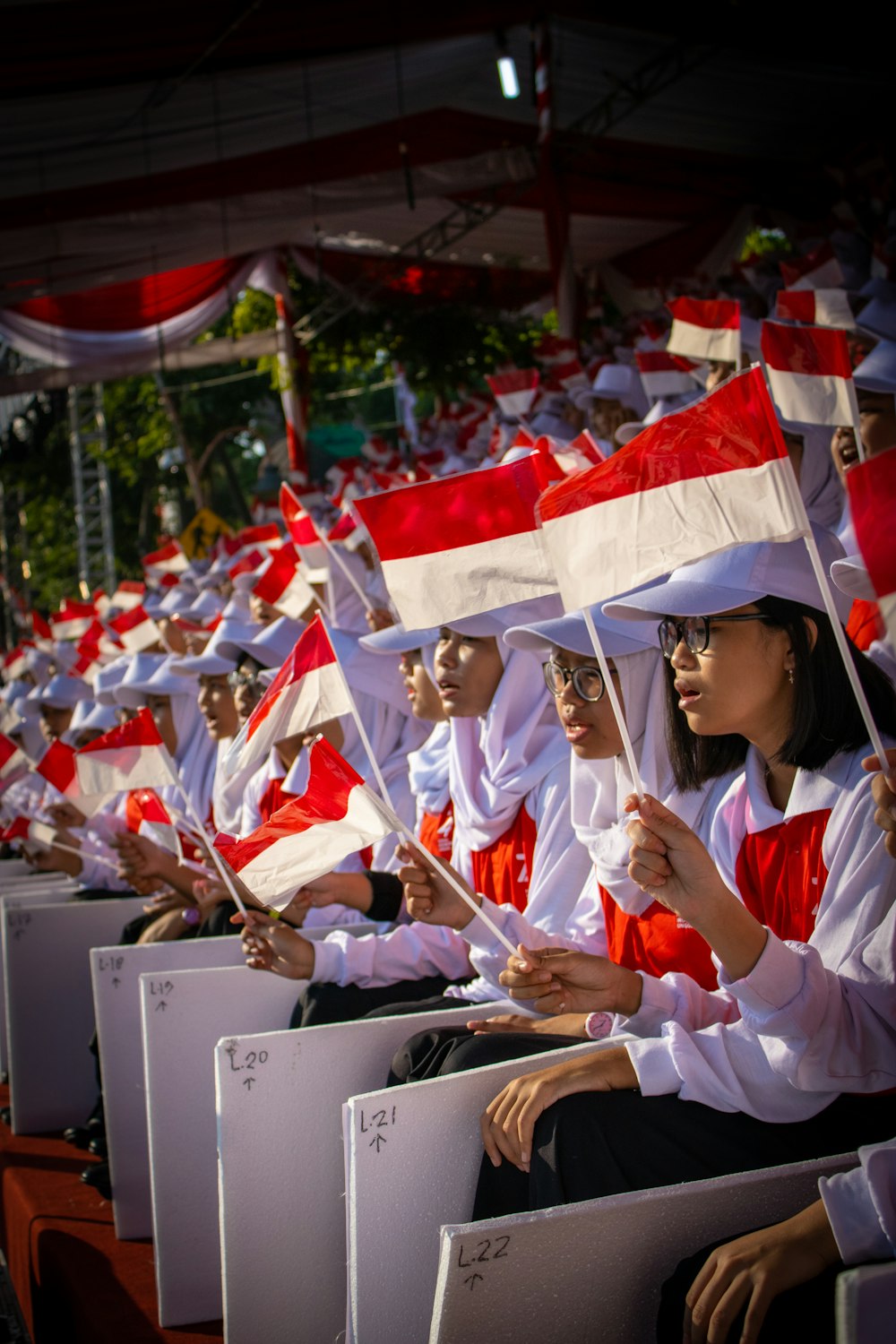
shallow focus photo of people holding Indonesia flag


Acknowledgements of Aboriginal land as preludes to formal events are now rarely contested,  a belated acceptance that Australia has a bloody history that needs to be publicly discussed as a move towards reconciliation.  Indonesia also has a grim past, but still shies from recognition – and healing.

August 17 is our neighbour’s Independence Day and the jingoism is over-the-top now pandemic restrictions have been binned.

There’s not a kampong, village or town which isn’t already so bedecked with red and white banners and bunting that buildings and trees can’t be seen. Triumphal archways make streetscapes look like sets from Aida.

 The joy started in July and won’t fade till this month is done and dusted. The big show should have been the 2020 semi-sesquicentennial marking the 1945 declaration of independence from Dutch colonialism and Japanese occupation.  Then Covid hit.

A bit of background to help the gory jigsaw pieces fit.

Two days after Japan surrendered in the Pacific War the revolutionary leader Soekarno proclaimed Merdeka (freedom); his edict was yawned away by the returning Dutch confident the natives still loved white-skinned rulers.

They didn’t: A four-year guerilla war followed till Western pressure forced the colonialists to quit in December 1948.

Just as Anzac Day recalls the disastrous landing at Gallipoli in 1915 rather than the 1918 November Armistice, 17 August celebrates the Soekarno statement not the eventual realisation of independence.

Patriots are letting rip.  Dressmakers’ have been sewing red-and-white creations, bottle-tops and face masks are bi-colour, and workers are splashing paint onto pillars, posts and walls. Indonesia Raya (Great Indonesia) blares from homes and cars, smothering the roar of motorbikes, though sadly not their pollutants.

The Covid shutdown has given progressive historians the chance to rejig the nation’s story which used to be taught as starting 77 years ago. A few posters of resistance leaders from centuries past are now being displayed.

But there are events more recent and politically volatile which remain off limits.

Soekarno became President and for two decades was almost in bed with the Reds much to the distress of the West and the Indonesian Army.  A failed coup on 30 September 1965 when Indonesia had the largest Communist movement outside the USSR and China, led to an outburst of contrived hate which ran for six months.

What happened and why is still contested. Australian translator and academic Dr Max Lane wrote that after an attempt to replace the anti-Communist military leadership, the army launched ‘an extremely violent uprising in which over one million people were killed and tens of thousands imprisoned.’

Real or imagined Communists, trade unionists, teachers, intellectuals and some ethnic Chinese were put to the sword, clubbed to death or shot, their corpses dumped in rivers and swamps.  Millions were tortured and jailed while others were denied work.

The official line remains that the killings were spontaneous reactions by outraged pious peasants who hated the godless Marxists and could not be stopped.

Although this myth has now been buried by overseas researchers proving the slaughter was organized by the Army, millions still believe otherwise.

Their credulity is unsurprising.  Till recently schoolkids were brainwashed by an obscenely violent 1984 government film, Pengkhianatan G30S/PKI (Treachery of the Communists). 

Using official documents Australian academic Dr Jess Melvin has shown the genocide was engineered through the secret police unit Kopkamtib (Komando Operasi Pemulihan Keamanan dan Ketertiban - Operational Command for the Restoration of Security and Order.)

Cracks in the Indonesian government’s disinformation fortress opened after its architect, the late second President Soeharto, yielded to public fury against his mishandling of the 1998 Asian economic crisis.  The former general resigned after 32 years of despotic rule – while amassing $32 billion.

After a brief interregnum, in 2000 his successor, religious leader Abdurrahman (Gus Dur) Wahid, publicly apologized for the killings. Though many former military men and some faith groups were outraged by his stance, it was welcomed by victims’ families.

Komnas HAM, (the National Commission on Human Rights) expected the doors would open wider and the truth revealed to all.  Naive hope. No one has ever been prosecuted for the killings. Mass graves are still being uncovered.  

During the 2014 presidential election campaign, the winning candidate Joko (Jokowi) Widodo was not from the military so seemed ready to follow Gus Dur. Not so: In 2016 Widodo was reported as stating:  ‘One of Indonesian history's darkest moments will not be revisited …the  government will focus on the future by developing the nation to gain competitiveness with other countries, not looking back on the country's past.’

Then he attended a public screening of the propaganda film allegedly telling soldiers: ‘Don’t let the PKI (Communist Party) cruelty happen again … if the PKI revives, just beat them up. ’The party is long dead and little wonder. Advocating for Communism can lead to two decades behind bars.

Once a week since January 2007 victims of human rights violations and their supporters (Aksi Kamisan – Thursday Action)  protest peacefully outside the State Palace in Jakarta. In 2018 – for the first and last time - Widodo met some of the group in a closed session but nothing happened.

This Wednesday the 77th anniversary of the Proclamation and the Republic’s achievements will not be a gala event for the families of those brutally persecuted by the state last century. 

Although their calls for recognition and reconciliation are growing shriller, few are listening. Indonesia’s military and business oligarchs and the descendants of the killers continue to ensure there’s no widespread ventilation of grievances and certainly no sorry business, as the First Australians say. 

Despite the hush, the anger, hurt and shame continue to gnaw away at the national psyche.

First published in Pearls & Irritations, 14 August 2022: https://johnmenadue.com/indonesias-unfinished-business/


Tuesday, August 24, 2021

COMMISERATION, NOT CELEBRATION


How the plague squashes patriotism       


It was weird, like the day after in a disaster movie.  Empty chairs on a red carpet and mike stands sans mikes.  Not a VIP within coo-ee, though their black limos were parked outside the Malang town hall. This was Indonesia’s national day, 17 August and no one was partying.

Eventually, ten guys in a cycling club turned up and sang the national anthem, Indonesia Raya to an empty road at 10 am.  Then the cops stopped the traffic while one played the music on his smartphone while holding a mike connected to a battery-powered speaker.  


Some saluted, others turned their motorbikes around and left for more important events.  Yet this little show was touching because it looked real while the Big Bangs of yesteryear were contrived affairs filled with bussed-in schoolkids.

The pandemic is scarifying Indonesia, and not just through death, pain, and bereavement. Apart from pushing the economy into recession and upending President Joko Widodo’s grand plans for administrative reform, it’s also hitting nationalism, faith and learning.

The world’s most populous Islamic state will never be the same once the virus has been tamed.

In better times the Republic’s birthday was celebrated with eruptions of pride and optimism, not quite Americans’ 4 July ebullience though heading that way.  Or was until Covid called.

Though the times are forbidding and the outlook grim, most strived for continuity, stringing up banners, bunting, ribbons and anything which might flap patriotism, brightening the streetscape.  Front fences were painted, verges weeded, and gaudy murals of gritty guerrillas refreshed.

The flag’s name is Merah-Putih (red and white) with its origins five centuries earlier when Java’s Majapahit kingdom used red and white stripes looking much like those on Old Glory.

The bicolour sewn by Fatmawati, the third of Soekarno’s nine wives, was fluttering outside his Jakarta house when the founding president proclaimed independence.  His short speech used to be re-read at city halls across the archipelago with goose steps and parade ground shouting of Merdeka (freedom).

Instead, we got a virtual performance on TV from Jakarta and a spontaneous display.  Apparently, bureaucrats decided to run a small show 90 minutes earlier and then retreat.

All pomp and joys have been paused for the second time.  Last year was lightened by expectations of a dawning ‘new normal’. That sun hasn’t risen. Now the mood is dour as citizens hang bendera kematian (white flags with black crosses) on gateways, hear the ambulance sirens and are shocked when familiar names are called through mosque loudspeakers.

Faith has been a casualty as the once sustaining certainties crumple.  While the Covid tsunami was surging across the northern hemisphere the then health minister Dr Terawan Agus Putranto assured all would be well provided the people prayed.

Although a Protestant he addressed a national Islamic conference to get his belief endorsed. Present was vice president Ma’ruf Amin who spoke of clerics – including himself - reciting the qunut (prayer against calamities).  He told journos: ‘That’s why the coronavirus is staying away from Indonesia.’

Instead, it rushed in with a roar louder than in nearby nations. Nor has the deity interceded as petitioned by Indonesia’s six approved faiths. Fatalists arguing the plague is the almighty’s curse on sinners, struggle to explain why carers are dying - 545 doctors and 445 nurses till the end of July.

One of the five pillars of Islam is making the pilgrimage to Mecca. (The others are living a godly life, praying, caring for others and self-purification.) In 2019 more than 220,000 flew to Saudi Arabia for the hajj. Millions want to participate but numbers are contained by quotas.

Last year and this year, Jakarta grounded flights to the kingdom, leaving a deep and lasting pain in individuals and their relatives. 

Extended families save for decades so one or two can make the overseas trip of a lifetime and return with the honorific Haji and new status. It’s usually the elderly who participate so thousands will now go to their graves without fulfilling their obligation of cleansing all sins before meeting their maker. 

Indonesians are communal people and seldom seen alone. Wakes draw crowds of mourners and prolonged prayer.  Now visits to comfort the sorrowful are banned.  Bodies can’t be washed by family. They’re interred in plastic-wrapped coffins.  They should be shrouded so the corpse is in contact with the earth.  The only witnesses are gravediggers.

Traditions once lost aren’t always recovered at full strength.


Most churches are shuttered with parishioners urged to head home, stay and pray.  Without the support of a congregation and inspiration from the pulpit, the spirit weakens.

Schools and unis are running online learning.   Indonesia has low internet penetration rate for the region.  Connections are mainly 3G and slow.  Censorship hampers learning – with Vimeo educational programmes banned because the hosting service won’t delete occasional nudity.

A major problem is with staff moving classroom techniques online, with disastrous results according to academics Muhammad Zuhdi and Stephen Dobson:

‘Many (teachers) have not been trained to give students full learning responsibilities within a normal classroom, never mind in an online environment. They have struggled to gain students’ attention over time ... They have found it even more challenging to assess whether students have been learning.’

So students are set weekly assignments and left to learn by themselves.  No big issue for the disciplined and determined with space to study and supportive elders, but others will flounder.

It’s difficult to tell how families are handling kids at home, though anecdotally not well. Only parents with skills, time and temperament, able to follow syllabi and maintain focus can cope. The fear is real: Teens who miss a year or more of education will be ill-equipped to help the nation’s recovery.

Even before Covid struck UNICEF was reporting around 4.4 million aged 7–18 missing school. A Lowy Institute 2018 review dubbed RI education ‘a high-volume, low-quality enterprise that has fallen well short of the country’s ambitions for an internationally competitive system.’

This year Education Minister Nadiem Anwar Makarim told the media he doesn’t want to see the ‘loss of an entire generation and the gap between the haves and have-nots becoming insurmountable:

‘Distance learning will at least in the short term have a negative impact on educational outcomes and qualities because it takes a long, long time for people to adapt to new ways of teaching and learning.’

Signs of any adaptation are still difficult to detect. But at least the Merah-Putih keeps flying.  Tragically so do the bendera kematian.

First published in Pearls & Irritations, 23 August 2021:  https://johnmenadue.com/how-the-plague-squashes-patriotism/