FAITH IN INDONESIA

FAITH IN INDONESIA
The shape of the world a generation from now will be influenced far more by how we communicate the values of our society to others than by military or diplomatic superiority. William Fulbright, 1964
Showing posts with label Marise Payne. Show all posts

Thursday, October 28, 2021

SEEK A BETTER WAY INTO SEAsia, Ms PAYNE


            Time to euthanise the ASEAN nag
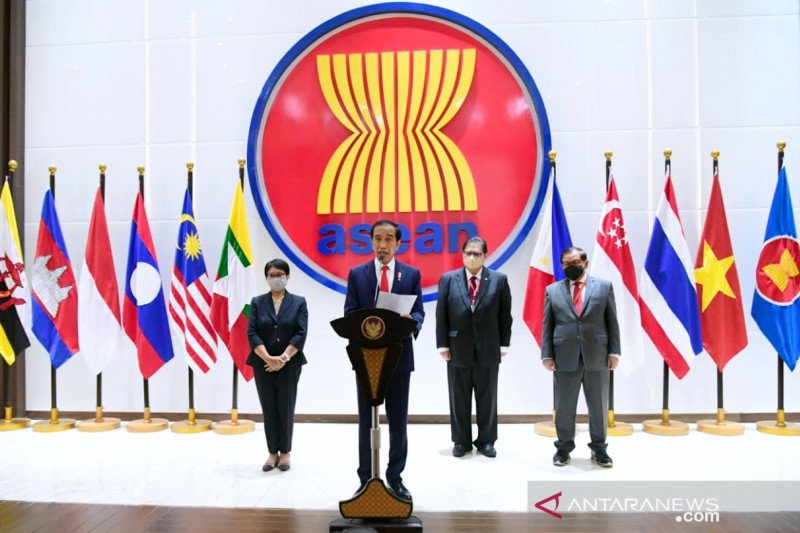
 

 Anggota DPR sambut lima kesepakatan ASEAN Leaders' Meeting - ANTARA News

 Image - Antara

If ASEAN crashed in the Melbourne Cup the on-course vets would be ready with the needle and green tarpaulin.  But this bag-o’-bones is such a dud it would have been scratched by the stewards.


The ten-member Association of Southeast Asian Nations has been grazing in the pension paddock for so long no amount of doping will turn the 54-year old gelding (double the normal lifespan) into a strapping stallion. 

Yet a rejuvenation is being claimed based on one limp decision to ban member Myanmar from ASEAN’s bi-annual meet in Brunei this week. [26-28 Oct]  That’s almost nine months since the Tatmadaw (Myanmar military) staged a coup after civilian candidates won last year’s election.

 Former Burma will have to be represented at the ASEAN gathering by a ‘non-politician’, as though any neutral negotiators have survived scything by the current ruthless regime.

(The country’s ambassador to the UN was sacked by the junta after refusing to recognise army rule.  Kyaw Moe Tun said no one should co-operate with the military until it handed back power to the democratically elected government.  He’s been charged with high treason, lives in exile and has reportedly been stalked by assassins.)

The resolution to snub Myanmar’s leader General Min Aung Hlaing has been lauded by ASEAN’s few fans as an example of culturally appropriate collective reasoning when it’s just a ploy to keep the knackers away.

The clique’s rules insist on non-interference in members’ internal affairs, angering Yangon anti-junta protesters who’ve reportedly been burning the ASEAN flag. The Philippines Foreign Minister is also fed up with inaction.

Teodoro Locsin broke from the tradition of bland statements when he was quoted saying playing neutral on Myanmar was no longer an option:  ’Our credibility as a real regional organisation disappears … We're a bunch of guys who always agree with each other on the worthless things’.

The worthy thing should have been the furious condemnation of the 1 February take-over.  Last November electors in the nation of 54 million voted 87 per cent for the National League for Democracy and its leader Nobel laureate Aung San Suu Kyi.

But the former British colony has a long history of being run by men with guns and the generals wanted their power back.  The electors didn’t and hit the streets.  So far more than 1,100 have paid with their lives.  Thousands have been arrested and imprisoned.

The UN, Western nations and others protested furiously, while ASEAN pondered.  In April its leaders met Myanmar's junta chief Min Aung Hlaing in Jakarta and reached a ‘five-point consensus’ on how to tackle the crisis made by the general. That was paraded as an example of Asian quiet diplomacy.

So has the recent release of hundreds of political prisoners, a theory scotched by Nicholas Coppel.  The former Australian ambassador to Myanmar and now a Monash academic says opening cell doors often happens around auspicious days in the Buddhist calendar.

There’s no point in spelling out details of the Jakarta plan because nothing happened.  Some ASEAN members – notably Indonesia, Malaysia and Singapore – were getting edgy. In August Brunei’s Second Foreign Minister Erywan Yusof was appointed as ASEAN’s crisis envoy. He tried to meet Suu Kyi who is under house arrest but got knocked back.  So the group decided to ban the self-appointed PM from its bi-annual summit.

Coppel claims the decision to kick Myanmar out ‘would have been a shock to Min Aung Hlaing as he, along with most observers, are habituated to expect ASEAN inability to address difficult internal issues.’

David Scott Mathieson who works with The Asia Institute in Myanmar but writes as ‘an independent analyst’ argues that ‘ASEAN’s fiasco is also the West’s moral failure.

‘The West’s thinking it could subcontract the crisis to the regional bloc and, from afar, impose sanctions, strong statements and humanitarian assistance, has contributed to the impasse.  The UN, US, EU, UK and Australia are all complicit in ASEAN’s failings by failing to build support structures around regional diplomacy.’

A little history starting with the Vietnam War and fear of the Red Wave rolling south helps to understand this mess.

To avoid an imagined Communist tsunami and after slaughtering at least 500,000 citizens who may – or may not – have been lefties, Indonesia set up ASEAN in 1967 with Thailand, the Philippines, Malaysia and Singapore. The HQ is in Jakarta.

ASEAN is now better known for what it doesn’t do than its successes. Ironically two members are Red – Vietnam and Laos, with Cambodia sticking close to China. Myanmar joined in 1997.

Four are in some weak form of democracy (Indonesia, Singapore, Malaysia and the Philippines). Two are military dictatorships (Thailand and Myanmar) and one authoritarian sultanate (Brunei). Apart from the former Siam, all were once ruled by colonial powers. Now the only glue is recent history, geography and being Asian. 

It’s through this inept sodality that FM Marise Payne wants us to engage with Southeast Asia.

In Jakarta last month she told Indonesians that Australia’s ‘vision for the future of our region has ASEAN at its centre. It's principally a shared vision, underpinned by shared principles.

‘ASEAN's outlook on the Indo-Pacific  … resonates strongly with our own Indo-Pacific vision including principles of ASEAN centrality, openness, transparency, inclusivity, and a rules-based region.

‘Australia strongly believes that the principles enshrined in the ASEAN Outlook should guide the post-pandemic order in the region … We believe that engaging with ASEAN and supporting our partners in Southeast Asia is one of the best investments Australia can make in a stronger, more prosperous, and more secure future for our region.

She spoke of the group 34 times.

In her enthusiastic embrace, Payne forgot to mention secret ‘engagement and investment’ had already been done with Washington and London to buy nuclear-powered subs to cruise seas around the archipelago, and build bigger bases in Australia for foreign troops to point their missiles northward. 

No consultation with the locals. At the worst, this puts Indonesia on the front line of any future clash of the US and PRC titans, or a ‘strategic spectator’ as one commentator said.

The wash-up of anger, dismay, bewilderment and accusations of an arms race has smothered Payne’s paean on ASEAN which she may now choose to forget.  Better put her money on another horse come 2 November.

First published in Pearls & Irritations, 28 October 2021: https://johnmenadue.com/faltering-forum-time-to-euthanise-the-asean-nag/



Monday, September 27, 2021

OUR LOVELY FRIENDS AND NEIGHBOURS - ALL UNTRUSTWORTHY


                Walk right in – no consultation required


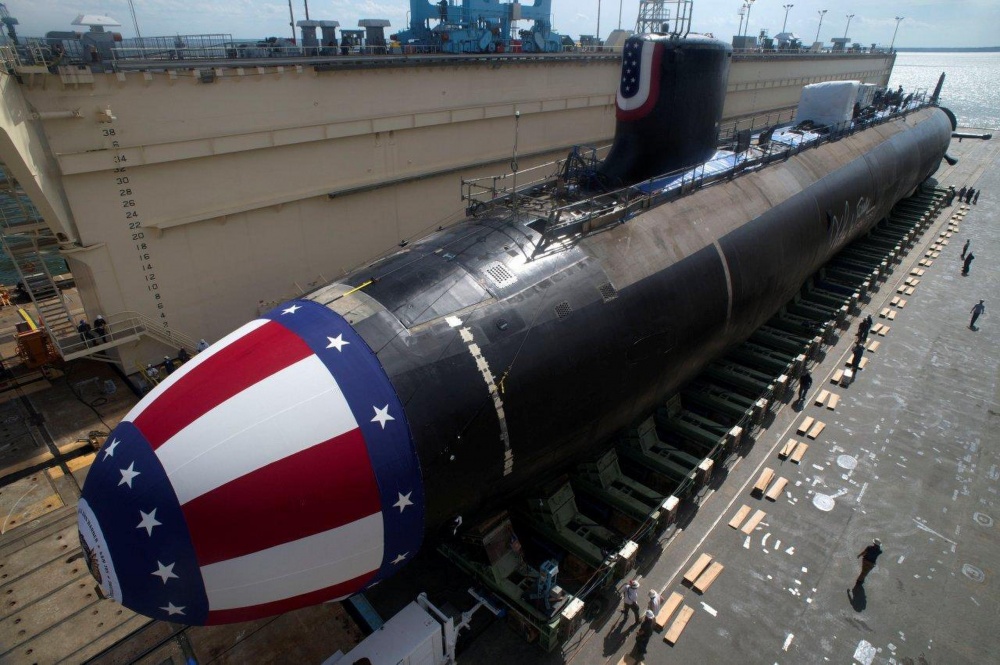
 Nuclear Submarines and Aircraft Carriers | US EPA

This is how to make friends and influence neighbours the Australian way:  First, a couple of ministers pop in on their way elsewhere after 21 months of absence. They pronounce warm relationships and BFF (Best Friends Forever).  A swap of bromides, nice pix, some pressies of vaccines to save lives and military gear to end them.  Then hey ho, it’s off to the big show.

A week later the host gets woken around fajar (the pre-dawn prayer) to be told by the Pal Down Under of detail she forget to mention on the earlier trip:  ‘Wouldn’t normally bother you with trivia Bu Retno, but the media will beat it up so best you hear about our latest acronym first from the horse’s mouth.

‘AUKUS is a bit like ANZUS minus the Kiwis but plus the Brits. We’re linking with the UK and US to build you-beaut nuclear-powered subs to cruise around your archipelago, help make you safer.

‘Not to worry.  They won’t submerge till long after our careers plunge into retirement. Ha, ha! The fleet may have Tomahawk cruise missiles but won’t be carrying nuclear weapons.  Well, not yet.’

As previously reported on this website, the 9 September meeting in Jakarta between Foreign Minister Marise Payne with her Indonesian counterpart Retno Marsudi produced an abundance of blah and a dearth of policy to advance the relationship.

Likewise the chat between Defence Minister Peter Dutton and Prabowo Subianto, Indonesia’s version of Donald Trump. The furious loser in the 2019 presidential race is now Defence Minister, and apparently didn’t even get a courtesy heads-up about AUKUS.

What hasn’t been denied is that the Indonesians weren’t just left in the dark about the trilateral deal– they were more in a sensory-deprivation regional policy cell.

It took more than a day for Marsudi’s spokesman Teuku Faizasyah to craft the appropriate language and tone.  In a statement published in English, he said Indonesia ‘takes note cautiously’ of AUKUS while ‘deeply concerned’ about an arms race and ‘power projection in the region’. 

The rest was motherhood stuff about peace, stability, security and pleas to ‘advance dialogue’.  Marsudi stayed silent. Nothing that might lead to a recall of ambassadors, but it did draw a subtle Javanese rebuff. 

The SMH reported plans to meet Joko Widodo on PM Scott Morrison’s flight back from the US and explain why our ‘good mate’ wasn’t consulted were erased when the President remembered he had other elbows to bump in the provinces. 

When Payne and Dutton were in Jakarta earlier this month they proclaimed a strong and respectful relationship.  A week is a long time in foreign affairs.

The Jakarta Post headlined the local reaction to AUKUS as ‘RI tells off Australia’ but the scolding was done with a room-temperature tissue.  The reality is that while RI is publicly offended by the distrust, it’s privately relieved others will be getting their hands dirty in handling China’s expansion while fearing collateral damage should the big egos clash.

Surprisingly the soberest warnings haven’t  come from the peace lobby but a military man, former ADF chief Chris Barrie channelling Winston Churchill:  ‘If we are not using every element of our national power to try and avoid going to war-war instead of jaw-jaw, then we’re making a very serious mistake.’

Although geographically central, Indonesia and its ASEAN partners will likely become ‘strategic observers’ of AUKUS. The Republic has a long-held non-alignment policy and a military ill-equipped for ventures beyond the oppression of domestic dissent. 

It also stays in the back row of the bleachers for the US / India / Australia / Japan ‘Quad’, which Payne callsa diplomatic network of like-minded democracies’.  Indonesia is the biggest player in the region and the world’s third-largest democracy so should have a front-row seat in the ‘security dialogue’ if not a place on the ground.  Its absence is mainly its fault, but fears the Red wrath searing the economy should it barrack for the West.

The Middle Kingdom is now Indonesia’s top trading partner, taking almost 20 per cent of its exports as against the US 11.4 per cent.  Kalimantan (Borneo) coal traders have been filling bulk carriers’ empty holds after President Xi Jinping banned Australia’s black gold.

Beijing (along with Hong Kong) is the largest investor in Indonesia with most money going into ports, roads, railways and mineral processing plants. This is the hand the world’s most populous Islamic country doesn’t want to bite, even though it’s also allegedly throttling the faith of millions of Uyghur Muslims.

The coordinates where the compass needle could go awry are in Indonesia’s Natuna Regency a mini archipelago of 150 or so mostly unoccupied islets 1,145 km north of Jakarta in the South China Sea.  That makes it sound irrelevant, but more than 60 per cent of global maritime trade passes nearby every year.

 A few days before the AUKUS reveal, Kompas daily reported fishers spotting Chinese boats in the zone.  The RI Navy hoisted tact and claimed no proof of infringements. In January 2020 tales of incursions led to Widodo on a warship reminding potential poachers of his Republic’s exclusive economic zone.  Beijing claims fishing rights within an imagined ‘nine-dash line’ unrecognised in international law.

In her Jakarta speech this month Payne talked up the Association of Southeast Asian Nations 34 times saying: ‘Australia's vision for the future of our region has ASEAN at its centre. It's principally a shared vision, underpinned by shared principles.’

That was a week ago. To be polite, it’s not only outdated but nonsense. AUKUS is a settled take-over as three senior members of the Anglo Empire move in on Southeast Asia, elbowing aside the long-established ASEAN which was never consulted or mentioned in the joint leaders’ statement.

The pith helmets are back, though now made of bullet-deflecting steel. By Jingo! All we need now is Rudyard Kipling.


 First published in Pearls & Irritations, 27 September 2021: https://johnmenadue.com/aukus-how-to-make-friends-and-influence-neighbours-the-australian-way/

Monday, September 13, 2021

SORRY, GOTTA RUSH - BIGGER PLACES AWAIT


   Just passing by – got a mo?


marise payne peter dutton

Last week’s visit to Jakarta by Foreign Minister Marise Payne and Defence Minister Peter Dutton (above, image Facebook) was flagged as an ‘exclusive’ in an AFR curtain-raiser implying a renaissance in relations between Australia and Indonesia. That expectation came to naught.

Ahead of the ministers’ arrival two Centre for Policy Development authors on this website and The Jakarta Post offered the passengers some well-meaning though politically unrealistic ideas: ‘The time is right to invest more into the relationship.’ Correct, but as in any successful marriage, the process has to be continuous.

 ‘The stakes are high’. Correct if referring to decaying understandings on either side of the Arafura Sea. But apart from the universal plague and ceaseless South China Sea disputes, P and D saw no pressing issues other than the usual STDs – security, trade and defence.  Proof came with their reports.

A few legally unenforceable MOUs were updated during the one full-day visit, but nothing substantial apart from Dutton flying a test balloon about RI troops training in Australia.  The idea could well pop when human rights supporters take aim. Many are alarmed at the military’s heavy suppression of separatists in West Papua, a province closed to Western journalists.

Whoever dropped the story to the AFR forgot to provide an agenda or add this was a rest-and-refuel while heading to New Delhi, Seoul, Washington and New York for the important stuff.  Instead, it gushed claims of a ‘warm personal relationship’ between Payne and her counterpart Retno Marsudi.

If the alleged link between the ladies is commonplace there’d be no need for any rah-rah about their meeting, or for Dutton to claim the bond is ‘first-rate’.   It’s not, as successive Lowy surveys disclose.

Almost 21 months have passed since the last Australian ministers were in Indonesia.  Then it was Payne with Dutton’s predecessor Linda Reynolds, and the location was Bali, not Smog City. Indonesians haven’t taken to Zoom – they need to eyeball and judge close-up.

The promotion masked the embarrassing reality behind the hi-and-goodbye: The Australian Government takes the people next door, the country with more Muslims than anywhere else and the world’s third-largest democracy for granted.

That’s not only insulting – particularly to the protocol-obsessed Javanese - it’s also foolish.  Whatever goodwill may be in the joint account, history shows it could all be withdrawn with one misjudged action or crass comment. 

Melbourne academics Tim Lindsey and Dave McRae have written: ‘There are no two neighbouring countries anywhere in the world that are more different than Indonesia and Australia. They differ hugely in religion, language, culture, history, geography, race, economics, worldview and population (Indonesia, 270 million, Australia less than 10 per cent of that).

‘In fact, Indonesia and Australia have almost nothing in common other than the accident of geographic proximity. This makes their relationship turbulent, volatile and often unpredictable.’

If anyone in Canberra had noted this gritty assessment there’d be so many regular get-togethers we’d know Indonesians almost as well as Americans.

For all the misgivings it would be wrong not to recognise the importance of the P and D visit.  The AFR ran comments from experts welcoming the ministers’ ‘overdue’ trip and noting a lack of confabs means ‘Australia risks declining strategic access, influence and relevance.’

The pandemic has been a useful excuse to keep ministers away from the Big Durian, but that hasn’t stopped VIPs visiting the US, Japan, the UK and other countries where Covid threatens as much as it does in the archipelago.

The CPD suggestion that Afghan refugees in RI should be accepted by Australia is morally right – though doomed for base domestic reasons. Australia has banned asylum seekers registered in Indonesia after July 2014 from ever resettling Down Under.

Reversing this ignoble policy would be politically risky; there’ll be an election next year and the 20th anniversary of the Bali Bomb to remind voters of extremism in Indonesia.

 Indonesia isn’t party to the 1951 Convention relating to the Status of Refugees so leaves its 14,000 unwelcome guests to the UNHCR.  Integration of the Afghans would take a leader of courage, but President Joko Widodo is no Angela Merkel.  Nor is Scott Morrison.

In 2015 the German president defied doomsayers and pushed her country to keep its borders open.  The Republic now leads the European Union in taking applications for asylum seekers.

The idea of Canberra and Jakarta working to tackle the Myanmar coup is also meritorious but looking to next year’s Bali Process meeting for solutions is a mite optimistic. The informal, non-binding forum has a poor record, as the CPD’s CEO Travers McLeod knows well. After hundreds of asylum seekers drowned in 2015, he co-authored a paper on the tragedy focusing on the agency’s ineffectiveness.

 What might make the improvements the CPD seeks is to dilute the domestic anxieties which drive foreign policies.  Surveys in both countries reveal public ignorance, indifference and distrust as neither bothers to seriously tackle the negative perceptions and superficial media.

ABC Australia TV, which is supposed to be our showcase in Indonesia and elsewhere is an under-funded, uncoordinated and embarrassing mishmash of parochialism.  Al Jazeera is not threatened.

As widely reported our unis have just about abandoned teaching Indonesian language and studies.  This could be reversed if FM Payne pushed hard enough.

Sadly these serious concerns were not among her talking points.  If her 40-minute online speech reflected the closed-door meetings, it wasn’t worth the hype. The opportunities and urgency seen by others were invisible to the minister.

 The Senator reminded all of Australia’s help in combating Covid – we gave one million doses to a nation of 273 million - but found no time to address the CPD’s submission, substituting an obfuscation of clichés.  Playing fields – always level - got guernseys, but refugees were sidelined.

Indonesians wanting a road map to a real relationship will have to seek other ways. Useless waiting 21 months only to get another circular tour.

First published in Pearls and Irritations 13 September 2021: https://johnmenadue.com/our-two-ministers-just-passing-by-in-indonesia-got-a-mo/