FAITH IN INDONESIA

FAITH IN INDONESIA
The shape of the world a generation from now will be influenced far more by how we communicate the values of our society to others than by military or diplomatic superiority. William Fulbright, 1964

Tuesday, April 09, 2024

COURTING DISASTER

 LOSERS WHINGE, WINNERS RULE


From left:  Winner, then losers   Credit Kompas

A tip to take a wee shot at understanding the way of doing politics in Indonesia:  Suspend rationality.  Now imagine PM Anthony Albanese offering Scott Morrison a ministry - choice from five.  Not such a smart move for Down Under but OK for next door.

Come May the Indonesian Constitutional Court should respond to challenges by the two losing candidates following the 14 February national presidential election results.  Cashiered former general Prabowo Subianto won convincingly as president-elect on his third attempt at the top job.

The hearing from a parade of outraged witnesses has been making for good daytime TV during the past fortnight, though now on pause for the Idul Fitri religious holiday.

Debate in court is a great improvement on street reactions to the 2019 election result when the defeat of  Prabowo triggered riots, torched cars, the killing of ten and the wounding of almost 400. Speculation that it was pre-planned has been rife, though the Prabowo camp  denied responsibility.

Readers might imagine this trouncing might have encouraged Prabowo, 72, to slink away from further contests and retire to his equine stud in the hills.  Instead a few months later he was welcomed back into the political ring; the man who thrashed him at the polls Joko 'Jokowi' Widodo made his prancing rival the Minister of Defence.

This gave the disgraced former soldier an arena to keep going in national politics, access  to the public purse and space for another crack at the job he’s long craved. (The Constitution bars a president from more than two terms so Jokowi wasn’t in the circus this year.)

 It also ensured Prabowo and his right-wing Gerindra (Great Indonesia Movement Party) would shut up criticising the Jokowi government.

Pearls & Irritations can announce the Court's most likely decision now:  The plaintiffs' claim will collapse and Prabowo will remain president-elect till he takes over from Jokowi on 20 October.

The near certainty of this result is underpinned by these factual pillars: Prabowo and his running mate Gibran Rakabuming Raka (who by curious chance happens to be Jokowi’s eldest son) won 58.58 per cent of the vote.

Next was former academic and Jakarta Governor Anies Baswedan with 24.95 per cent, then former Central Java Governor Ganjar Pranowo with 16.47 per cent

Even if discrepancies, graft, pork-barreling, nepotism, Jokowi's meddling and a swag of other charges brought by the complainants are proved, the vote for Prabowo was so overwhelming, that the alleged wrongdoings wouldn’t be weighty enough to negate the result.  It would also upset the electorate in no mood for a re-run having made their choice so clearly.

Then there's the timing.  The case opened in the last week of March during the holy fasting month leading to this week’s Idul Fitri celebrations.  Though work officially continues up to the big event on 10 April the reality is that an empty tummy takes its toll.

Cameras have caught court officials nodding in the early afternoon though not because they agree with the evidence.  Speeches drone through the still air along with the mesmerising hum of air conditioners and fans.  Hunger gnaws and nicotine addiction screams.  

In the contest of legal arguments versus the imagined evening break-fast meal there’s just one winner.

Another factor: After Idul Fitri comes a two day plus holiday supposedly for earnest prayer and the mudik ritual; this means returning to distant villages to seek forgiveness from relatives for inattention to family responsibilities.  

The traffic soup is thick - about 194 million are expected on the roads - so ideal for those of different or no faiths to stay home and fix roof leaks - except the hardware shops will be shut and tradies gone.

As the hearing started Ganjar  reportedly  said Prabowo should be disqualified ”on the grounds that the way he registered himself had violated election law in addition to ethical problems resulting from nepotism and a coordinated abuse of power".

This argument pings off last year's dramatic decision by the Constitutional Court to allow Gibran, 36, to run as vice president even though he was four years younger than legally permitted.

But who needs rules and precedents when you’ve got the Chief Justice on side? Anwar Usman, who has since lost his position because he didn’t recuse himself from the case, was Gibran's uncle when the controversial decision was made.  Sticklers for the rule-of-law expected the resolution to be rescinded.  It wasn’t.

 Commented one political newsletter: “This trial (the current Constitutional Court hearing) serves more as a national face-saving exercise for Anies and Ganjar by showing the general public that the odds were against them from the start.

“Moreover, the trial provides these two former candidates with a national platform to segue into a new political direction whatever form that may take.”

Jakarta gossip suggests that might include offers of ministries by the President-elect when the court proceedings are over, following the example set by Jokowi in asking not just Prabowo into government, but also his sidekick.

Seeking the Vice Presidency in the 2019 bitter contest was business tycoon Sandiaga Uno.  He’s now Minister of Tourism and Creative Economy.

Should Anies or Ganjar get similar invites, will either seize the bribe to stay on the public payroll - or will they take an ethical stand and trash any offers ?  

The responses will  determine how far principles remain - or have tumbled down the landslip-prone hill of Indonesian democracy.

##

First published in Pearls & Irritations, 9 April 2024:https://johnmenadue.com/losers-whinge-winners-rule/

Sunday, April 07, 2024

THANKS MATE, IT'S FIXED, NO WORRIES

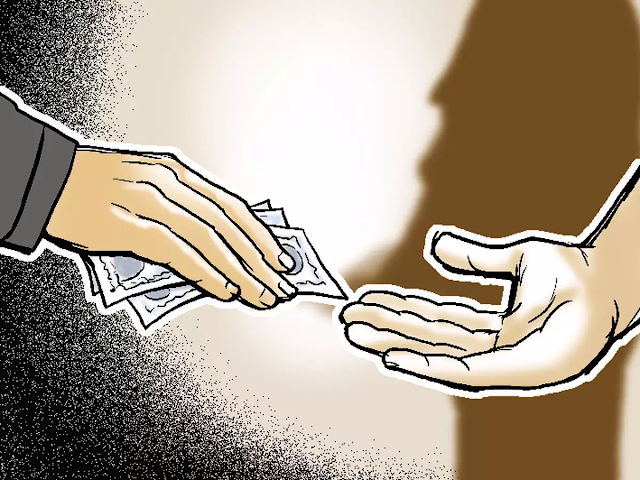
 ANYHOW, HAVE AN ENVELOPE      


Hardly noticed except by corporate lawyers and this website comes a shake-up of Australia's crime laws to try and crush corruption overseas. Flaws in the old law meant  only seven individuals and three corporations in Australia have been convicted of foreign bribery in the past 25 years.

The new law has taken seven years’ debate and delay. One legal firm claimed it “represents a fundamental shift in how corporations can be prosecuted for bribery in Australia.”

The change comes with a big stick - a fine of up to $27.5 million.  Attorney General Mark Dreyfus called foreign bribery  a “serious and insidious problem across the world… that  impedes economic development, corrodes good governance and undermines the rule of law.”

According to the Berlin-based organisation Transparency International (TI), there's more to graft than just losing money: It also helps "serious crimes like human trafficking and money laundering."

Good move, poor timing. The get-tough message clashed with yet another plea by Canberra for investors to drop their cash in Indonesia, a country where graft is like eating sticky rice with fingers - messy but the only way to get replete.

Red-bloodied investors in Indonesia thrived last century when corporates were casual and laws slack while President Soeharto - the Republic’s king of corruption - was in total control.

The few savvy and adventurous Australian hustlers who found trusty partners and left envelopes in the right hands did OK - some even better.  The rest turned to tombstones.

When Joko ‘Jokowi’ Widodo became president in 2014, TI’s  Corruption Perception Index (CPI) ranked Indonesia 107 out of 175 nations surveyed.

The new leader, not openly linked to the military, religious or the oligarchs, was seen as Mr Clean.  He promised to back the Komisi Pemberantasan Korupsi (KPK- Corruption Eradication Commission.)

Brewed during the  2003 reformist zeal of starting afresh after the 1998 fall of dictator Soeharto, the independent KPK rapidly made an impact.  It was so efficient it became the nation's most popular bureau applauded in the kampongs though not in the hillside villas squinting down on Jakarta's pollution and overcrowding.  

Within four years the KPK was struggling with a backlog of 16,200 reported cases. Its few well-publicised prosecutions had a 100 per cent success rate, guaranteeing the agency’s downfall.

In 2019 the Parliament withered KPK’s muscle and made staff civil servants. Protests were widespread but went nowhere.

KPK Version Two continued until late last year when chair Firli Bahuri was found guilty of violating ethics by "engaging with a prominent suspect under investigation".

 In the past decade, President Jokowi has had the power and public support to honour his pledge.  Six ministers have faced corruption charges and been sacked. The Wikipedia entry Indonesian politicians convicted of corruption has 44 entries.

Despite these actions, last year the nation’s Republic's CPI rank tumbled from 96 to 110 out of 180 countries surveyed by Transparency International. Commented  The Jakarta Post:

“Unless Jokowi makes a bold move in the coming months, the downward trend will continue in the next few years. While his administration is not seen as corrupt, his policies have facilitated the return of Indonesia’s corrupt ways of the past, or he has turned a blind eye to corruption by people in his inner circle.”

During Soeharto's 32-year autocracy, the unwritten rule was two-thirds investment in a project, though this didn’t preclude ticket-clipping. The other third went to the politicians and bureaucrats to get the show going with the right permits - or scuttle the project.

At the ASEAN Summit in Melbourne this month Canberra found $2 billion  to “provide loans, guarantees and other financial help to investors expanding into Asia.” Does business need such inducements?  In the capitalist ethos, if the project stacks up it does so alone.  Or did.

Australia’s contribution is minuscule. The late kleptocrat Soeharto set the standard for his followers by allegedly stealing up to US$35 billion from the public purse during his 32 years in power. He was never charged.

Ethical investors were wary of Indonesia then and now. Coordinating Minister for Economic Affairs, Airlangga Hartarto, said that Australia's total foreign direct investment in Indonesia had reached US$545.2 million in 2023.

Big?  Not much - the US $1.1 trillion and the UK at $836 billion top the list for Australian investment. Keep it in the family.

Our tiny trade with the archipelago is not in the whiz-bang, high-tech, education and health sectors we like to trumpet.  It's mostly in mining, metals, agriculture, hotels and restaurants, according to  Ambassador Kristiarto Legowo. 

In Melbourne, President Jokowi urged Australians to invest in his country, help society and reap great dividends.  There was no great rush for the fund transfer forms.

The South China Morning Post asked “What’s behind Australian investors’ reluctance to venture into Southeast Asia?” then found John Walker, a former executive at Macquarie Bank, to give answers.

He reportedly said Ozzies with the wherewithal  “just did not understand” Asia and other emerging markets.  They suffered  “fear of the unknown” and preferred “neatly packaged opportunities in jurisdictions with familiar regulatory and financial and political systems”.

He’s right. Boards charged with handling investors’ money wisely are rightly wary of countries with flawed legal systems - and the smarter heads will have done their research.

An infamous casualty of  Indonesia's capricious system was Churchill Mining, a British company with Australian links (Planet Mining) that in 2008 claimed to have found "Indonesia's second largest and the world's seventh largest undeveloped coal resource" - an estimated deposit of 2.8 billion tonnes in the province of East Kalimantan.

All seemed to be going well until Isran Noor, the Regent of East Kutai where the coal was to be mined, revoked Churchill's permits alleging licence forgery and illegal logging.  An Indonesian company then seized the project.

Churchill appealed, lost and was ordered to pay almost US $9.5 million in costs and arbitration fees. David Quinlivan the former executive chairman of Churchill Mining hasn't responded to a request for comment.

Now consider nepotism and the justice system. Last year the Constitutional Court allowed Jokowi's eldest son Gibran Rakabuming, 36,  the right to run as Prabowo Subianto's vice-presidential candidate when the law says the minimum age is 40.  

Chief Justice Anwar Usman, Jokowi’s brother-in-law and Gibran’s uncle sat in on the case. He was found to have committed serious ethics violations. But the sanction didn’t change the situation.

Despite this blatant example of favouritism the decision was allowed to stand. Anwar, though demoted remains on the bench.

If Indonesia and its neighbours in ASEAN want money from credible Western investors they have to clean up their act - in part by following Australia's aggressive lead

Otherwise, they'll have to shake their can in Saudi Arabia and China- but even these big lenders who don't care too much about ethical issues seek security.

If Indonesia wants our money, Jakarta needs to ensure it's safe. Jokowi's successor Prabowo Subianto, a disgraced former general and former son-in-law of Soeharto, takes over the world's fourth-largest nation in October.  He's unlikely to fire on the corrupt - they're his mates.

Australian investors - beware.

##

 First published in Michael West Media, 7 April 2024: https://michaelwest.com.au/how-will-criminal-code-foreign-bribery-amendments-affect-indonesia/


Friday, April 05, 2024

THE MAN WHO BLEW IN SOEHARTO'S EARS

 CLIVE OF INDONESIA KEEPS MUM


First a confession:  I’d heard of Australian Clive Williams the late President Soeharto’s enigmatic intermediary and started searching.  But the tale was too hard to unearth - it was also unbelievable.

Fortunately Australian academic Dr Shannon Smith had more time, tenacity and certitude. So now we have tidbits of the remarkable secret story and its significance to Indonesian relations with the West for three critical decades last century.  

 ‘Occidental Preacher, Accidental Teacher’ is a little of the life and much of the times of Williams who remains elusive despite solid research.  It’s academically bomb-proof with 68 pages of notes, an index and references for every assertion, but the target remains largely untouched.

There's a lot about Jehovah's Witnesses, the 1965 Jakarta coup and Javanese culture, entertaining but padding because Smith had problems finding facts to write up a man who left few paper trails.

Born in 1921 into a struggling Geelong family, Williams became a Witness missionary and eventually ended up in Indonesia.  He quit the church when aged 34 - or maybe was forced out because he was gay.  

He settled in Semarang in Central Java, where he “emerged with a new identity” as a chiropractor and English teacher with “a number of rich eccentricities” according to one Australian diplomat - presumably a euphemism for his sexual preferences.

Williams' pupils included the wife and children of an army colonel stationed nearby, a man little known to Western intelligence. That soon changed:  The soldier was Soeharto, destined to become the authoritarian kleptocrat second President of Indonesia, a job he held for 32 years.


President Suharto and his wife Siti Hartinah (Tien) with their children in 1967. Front row: Hutomo Mandala Putra (born 12 August 1962), President Suharto, Siti Hutami Endang Adiningsih (born 23 August 1964), Siti Hartinah, and Siti Hediati Hariyadi (born 14 April 1959). Back row: Bambang Trihatmodjo (born 23 July 1953), Siti Hardiyanti Hastuti (born 23 January 1949), and Sigit Harjojudanto (born 1 May 1951) / National Library of Indonesia

Away from preaching and into business Williams did well, bought a house and car but was rarely noticed by visitors.  An exception was journalist Frank Palmos who remembered a “clever, confident Australian” who dodged questions about his past.

Others remember his size (fat) and “plastic teeth”, so not an inviting character - except for who and what he knew.

Because a most unusual friendship had developed between Williams and Soeharto;  one was a well-travelled homosexual with relationships, a former Christian tub-thumper from an individualistic Western culture. The other was an unsophisticated, ambitious and corrupt career officer with (eventually) six kids, born in a Central Javanese village and suspicious of foreigners.

 Alongside for much of that time was Williams, a conduit for Soeharto's messages to the fact and gossip-hungry Americans who found the President inaccessible.  To them, the guy from Geelong was a "straight shooter and reliable interpreter of Soeharto's thinking."

Though not to the Australians.  Ambassador Max Loveday ("a pompous little prick," said one journo) only wanted news through approved diplomatic lines, and that excluded Williams.

Loveday’s successors were more astute and keen to get wisdoms from a normally closed palace. For the few journalists aware of Williams’ role he was scoop central helping make sense of the intrigues and villainy.

How much did Williams know of the 1965-66 genocide when militias and the army killed maybe half a million real or imagined Communists in a nationwide purge after the coup that brought Soeharto to power?  

Williams also hated the Reds and war, but it seems he said nothing as the blood flowed making him morally complicit. Comments Smith: "Did he help rescue individuals from death or incarceration?  We will probably never know."  

 In Jakarta Williams lived in a home adjacent to the President’s compound with side-gate access, often dining with the family. The two men were almost the same age.

In politics trust is rare, but Soeharto had total faith in ‘Om Clive’ to broker business deals, fix problems that foxed diplomats, interpret foreign news and be a high-level messenger.

Smith concluded Williams kept Soeharto “grounded” and was “a source of unfettered common sense.”  But not a moral compass.

The outsider mastered Indonesian and Javanese, absorbing the culture to become inscrutable and enigmatic. Author Blanche D'Alpuget who worked in the Embassy  recalled that Williams shunned parties and seemed to have adopted “a kind of Javanese ingratiating submissiveness.”

Unlike Soeharto's official advisers, the Australian was not in it for money or fame. His and Soeharto’s interests were mysticism - explored with ABC journalist Tim Bowden in 1966 - the only time Williams talked on radio.

Few photos exist.  The cropped pic used on the book cover shows a seemingly indifferent bystander in batik having a smoke, hardly a puppeteer.  There’s no sense of importance or authority.

Smith has given too much space to Witness history and speculation about why Williams joined the controversial sect that believed in Armageddon;  he never spoke of his religious past, yet had been a powerful orator and an “energetic adherent and proselytiser”.

Soeharto passed away in 2008  and was grandly entombed in Solo after a state funeral.

His  “Australian whisperer”  had already died seven years earlier aged 80 but apparently we don’t know where he rests.  Fitting - much of his past still stays buried.

The next volume of Smith’s scholarship due later this year will need to be more revealing of the Australian - if that’s possible.

First published in Inside Indonesia, 5 April 2024: 

https://www.insideindonesia.org/archive/articles/book-review-clive-of-indonesia

##


COURTING PRABOWO

 UNALIGNED - OR UNDECIDED?  PRABOWO,  CHINA AND US


The pic that should stir Washington.  The pious general and the godless leader


This week Prabowo Subianto has been in Beijing at the  invitation of President Xi Jinping.  It’s the Indonesian president-elect’s first major overseas trip after winning the 14 February election.  No come-soon card yet from Washington, so China’s getting in first.  Should we be worried?  Duncan Graham reports:

China already has our near neighbour in a debt headlock having lent more than US $27 billion and invested US $8 billion.

Last month a “new wave” of Chinese investments into Indonesia was announced, including for an e-car factory - though no $ signs. In the race for influence, there’s little we can do but whinge from the sofa.

Key question: Will Indonesia driven by new President Prabowo Subianto cruise the fast lane with Beijing, the archipelago’s largest trading partner,  or tailgate Washington and its weaponry?

Racism v royalties

In Indonesia, there are two China issues - nation and people.

Citizens are ambivalent about the PRC - its business dealings,  philosophy and nine-dash line claims in the South China Sea.  Confrontations have created waves of jingoism, but the Natuna Sea (Indonesia’s name) has recently stayed calm.

If a storm erupts expect Prabowo to indulge in chest-thumping on a warship's foredeck in front of missile launchers, though little else.  His nation doesn't have the muscle; its population is eleven times bigger than Australia's, but five times smaller than China's.

In a pious society, the deep hate of godless Communism adds to the wariness, but even fanaticism must yield to finance: Selling gold, (the Grasberg deposit in West Papua is the world’s third largest producer), coal, nickel and other resources keeps Southeast Asia's biggest economy buoyant, while local stores are stuffed with goods marked Made in China.

The archipelago is home to about three million ethnic Chinese.  Although often lumped together because of features and values, differences thrive. They are full citizens but race is visceral, an ever-present factor in relationships.

Sinophobia has been rife for centuries. Some families have been in the archipelago since the 13th century, married locals, fought for independence and only speak Indonesian.  That hasn’t stopped the persecution.

Only since 2000 can citizens follow Confucius, use hanzi (Chinese characters) on shop signs and have faith festivals recognised.   The minority was banned by second president Soeharto (1966 -98) from the military and public service so turned to banking and soon had the government in thrall.

 Outbreaks of mass slaughter have occurred across the generations. In 1965 a purge of real or imagined Communists took an estimated 500,000 lives.

The latest killings erupted in  1998 when more than a thousand bled and burned in Jakarta riots.  Shopping malls were firebombed, and Chinese women were allegedly raped though no one was charged.

Exceptions abound but the pribumi (native Javanese) generally dislike and distrust the Orang Cina who have a street reputation for being sly, greedy and insular.  These odiums have never been encountered by your footloose correspondent.

They're also known as the Jews of Asia, smart, entrepreneurial and hard-working.  Some have become powerful oligarchs. A few flaunt their wealth adding resentment to the aversion.

Wanted workforce

Separate are the skilled Chinese who work on Beijing-funded projects, toll roads and mining plants.  Locals accuse them of stealing jobs - more friction.

When the work’s done some head home. Not all: Late last year an industrial accident killed 21 workers (eight were Chinese) at a nickel smelter angering all employees who claimed safety was sidelined in the race for profit.

Like Australia, Indonesia supports the One-China Policy; it has a trade office in Taipei while Taiwan has one in Jakarta. Last year business between the two states nudged $ 10 billion, mostly favouring Indonesia.

Despite the covert racism the average  member of the nation’s 1,331 ethnic groups interacts with Chinese neighbours, shopkeepers and congregations, but contact with Americans is rare as there are less than 12,000.  Hollywood images fill the gap.

The US sells weapons having neutered a deal with Russia. Last year Jakarta ordered 24 F-15EX fighter jets from Boeing.  

Research by the Pew Institute suggests Indonesians are twitchy about Trump but think positively of the US and Barack Obama in particular. As a child, he lived in Indonesia for a while and was schooled in Jakarta.

Prabowo is more cosmopolitan than Jokowi and relaxed using English. He was taught in Indonesia and London and educated militarily in Georgia. He was later banned from the US and Australia for alleged human rights abuses.

The security game

 As Defence Minister Prabowo claimed to be turning a security relationship with the US into a “comprehensive strategic partnership” whatever that’s supposed to mean.

“Indonesia always takes the position of trying to maintain the best of relationships with all nations, especially all major powers. We consider China to be a friendly nation ... (disagreements) resolved through dialogue".

These cliches were conceived in 1948.

 Then Vice President Mohammad Hatta (1902 - 80) asked rhetorically: "Do we, Indonesians, in the struggle for the freedom of our people and our country, only have to choose between Russia and America? Is there any other stand that we can take in the pursuit of our ideals? ... the best policy to adopt is one which does not make us the object of an international conflict."

 Non-alignment has its metaphor - mendayung antara dua karang (rowing between two reefs), a line used regularly as the nation's foreign policy position.  In a UN debate condemning Russia's aggression in Ukraine, Jakarta backed the motion plus a Chinese armistice proposal.

Before becoming the overwhelmingly successful candidate in February’s Presidential election Prabowo restated his country’s non-aligned stance, then tipped his baseball cap to the PRC.

“I do admire and acknowledge the success of the Chinese leaders in nearly eradicating poverty,” Prabowo reportedly said at a Washington forum in November.

 "It behoves us to try to learn how they did it, but it doesn’t mean that we can copy their methods. Maybe their methods [are] not in tune with our culture so we have to adjust.”

He then tossed in a storing-and-consuming line: “On the other hand we cannot copy what works for the West.”

If all this seems vague and contradictory, it is.  So try the  Australian Strategic Policy Institute’s explanation:  “What will make a Prabowo foreign policy unique may come less from his understanding of the world and more from his personality and interests.

“He’s known to be impatient, prone to anger, and deeply emotional. He’s also unpredictable—often disregarding the counsel of his advisers. Despite being surrounded by a praetorian guard of former defence and military officials, Prabowo is largely his own foreign policy and defence adviser.”

Attempts to better mould our own view have failed: Requests to interview Prabowo have been ignored.

In a for-or-against global crisis following a blockade or invasion of Taiwan, Indonesia will splash around rowboats and reefs, spruik non-alignment and try to be all things to all people. Japan and the Philippines (which clashed with a Chinese coastguard last month) have already shown they’re cosy in the US camp.  They’ve got less to lose.

Prabowo knows Washington's Southern Hemisphere branch office has airfields and an armory close by, so will ultimately, nervously and with many caveats and time limits subtly side with Amerika Serikat.  

For the moment, anyway.

First published in Pearls & Irritations, 5 April 2024: https://johnmenadue.com/unaligned-or-undecided-prabowo-china-and-us/

Monday, March 25, 2024

 PLAYING THE HUNGER GAMES


The nightmare sprung to life: A gang.  Worse, an Asian teen gang. An hour before dawn.  I’m alone.  With a bike.

A dozen or more boys fired up with freedom, yahooing down the lampless highway, bashing bushes, tossing fire crackers, chiacking.

Strife seems likely.  There are no side roads for a speedy escape. Maybe a bashing, a cycle theft?  I'm  less fit, well outnumbered, someone quite different, an easy target. No one else from my tribe’s around ready to rescue.

In an Australian suburb or town, particularly one like Alice Springs if reports of rampant lawlessness are right, the sweat would be stoked by fear.

Curses, too, for straying into a bad area like bond trader Sherman McCoy taking a wrong turn into the Bronx in Tom Wolfe's novel and film The Bonfire of the Vanities. Yet this street is leafy and normally empty.  

Turn and run or push on? The second decision is right, flavoured with a bit of local  slang that sets them laughing as they dash away.

Nothing happens because this is Malang in Central East Java not an Oz city. Though the kids are hyped up they’re not dosed with drugs or grog, just the buzz of being young and fresh and on their own.

This is a yearly event whatever the suburb, even the uni campuses at the start of Ramadan.  Sometimes called Ramadhan it’s the holy fasting month leading to the great Muslim celebration of Idul Fitri on 10 April.

The adults wake around 3.30 am and fill themselves with plates overflowing like those wanted by Palestinians in Gaza.   Then Dad and Mum go back to bed and kick the feisty sons out to roam as they won’t head to school till 9 am, two hours later than usual. Daughters also wander - though seldom with the boys. That age has yet to come.

Around 4 pm queues gather  around the street stalls.  It's takjil (speed up snacks) till the food can be hogged on kerb stones or taken home  once the siren shrieks that the day’s pangs are at an end.

It's a time of communion, the bond being hunger and the belief that all are suffering together while showing devotion. The atmosphere is positive, expectant of pleasures to come, the rewards of religious discipline.

As the four weeks progress the hungry get testy.  Those who give up along the way, offer excuses - they’re sick, spiritually lame.

Restaurants generally shut during daylight hours but joints like KFC and McDonald’s stay open.  Window blinds are closed  so passers-by don't get tempted to abandon their beliefs.

The fast-fooders feed the non-Muslims (about ten per cent of society is Christian - the population of Australia), and those excused for health reasons, pregnancy and menopause.  An astonishing number of young women wearing jilbab (headscarves) have periods at this time.

The pious are also expected to abandon sex and other pleasures, including nicotine.  About 63 million men are hooked so smoke wafting from behind walls where Allah can’t see is a regular sight.  Women seldom use as the noxious  habit is supposed to be a sign of prostitution.

Westerners are advised not to eat in public and women should dress modestly.  Java is not Hindu Bali but visitors should feel untroubled.  The worst is to be called bule, which means a white-skinned European, a Belanda-Dutchman.

Whatever our beliefs or non-beliefs, we get invitations to Buka Bersama (the shared feast at the end of a day's fasting).  The meals are so big that weight gains result.

The worrying message comes from the Australian media creating images of fear. Like a headline this month: Islamists in UK, Australia spreading anti-Semitism, destroying democracy

A few years ago religious thugs enjoyed bursting into restaurants on “sweeping” missions to find fasting  Muslims  feasting. Reports of such outrages are now rare.

Surveys show growing distrust by Australians towards Indonesians.  The Jakarta Post quoted an adage: Tak kenal maka tak sayang - if you don't know you can't love -  in an editorial commenting on  Lowy Institute research.  

This showed we “still lack trust in Indonesia to do good in the world, largely due to a lack of understanding.”  That was in 2020; later annual reports reveal the situation ain’t much better..

That’s sad - and wrong. Here’s the anecdotal takeaway: Better to encounter a mob of Indonesian adolescents on a dark street than their counterparts Down Under.

##

First published in Pearls & Irritations, 25 March 2024: https://johnmenadue.com/playing-the-hunger-games/

Sunday, March 17, 2024

WHAT'S NOT TO LIKE? EVERYTHING

 THE KRAKEN WAKES - CLOSE BY  

O Judgment ! Thou art fled to brutish beasts, and men have lost their reason. ― William Shakespeare, Julius Caesar

The cross-eyed sidekick in Jokowi's eldest son, Gibran Rakabuming


To lead their nation for the next five years Indonesians have picked a sinister military autocrat with a hideous past masquerading as a comic character.

 Through a series of cuddly cartoons, untested promises and silly claims electors were seduced into believing Prabowo Subianto, 72, a cashiered general with a dirty history was really a gemoy,  an adorable and funny guy, fit and proper to run the world’s fourth-largest nation.

Though the two failed candidates (an academic and an administrator) plus 48 civil society watchdogs have alleged  malfeasance, overall the 14 February electoral process seems  likely to withstand challenges.

The campaign had buckets of ballyhoo and thimbles of quality.  The focus was on personalities, not policy.  Avowed piety eclipsed proven merit.

Just as US Republicans backing Donald Trump ignore his gross transgressions and court convictions, so the Indonesian oligarchs, military and big business who run the nation have stamped down a grim past to lift their man into office.

In 2019 President Joko 'Jokowi' Widodo invited his once bitter rival to become Defence Minister, ensuring a platform.  Last month he promoted Prabowo to four-star honorary general giving the disgraced soldier more status and bestowing forgiveness.

That's a gesture not all respect, particularly those who believe electors have been sold more than a pup.  They fear discovering their rights and freedoms have been savaged as Indonesia once again becomes a hard-line military dictatorship.

For 32 years (1966-1998) the country was controlled by General Soeharto, Prabowo’s former father-in-law.  Prabowo and his wife divorced 25 years ago and neither has  remarried.

So who is our neighbour's choice? Is the leader-to-be a fascist, a dictator or a reformed bully?  He's certainly a poor reader claiming a sci-fi novel was a research document predicting the end of Indonesia this decade as rapacious foreigners plundered the archipelago’s riches.

Defence Minister Richard Marles has called him  ‘very much a friend of Australia’.

Not all see him so benignly. One-time UN advisor Pat Walsh doubts Prabowo has the  temperament and skill to govern - or the history.  He’s assembled a backgrounder of Prabowo’s East Timor tours with soldiers and militias under his command allegedly committing murders of unarmed civilians and gross human rights abuses.

Former Australian Senator Rex Patrick and journalist Dr  Philip Dorling have summarised what happened in 1998:  ‘Troops under Prabowo's command kidnapped and tortured democracy activists and the General was implicated in orchestrating mob violence in Jakarta against Indonesians of Chinese descent’.

That same year Prabowo was dishonourably discharged from the army and fled to exile in Jordan. He was banned from the US and Australia till 2014. He eventually returned to his homeland and with family help became a business tycoon and political aspirant.  He has never been charged.

Although it put him in power Prabowo isn’t keen on democracy. He joined the military as a teen. Though he’s been educated in the US, UK, briefly at Duntroon and is a polyglot, these are his Trump-style repetitions  according to The Jakarta Post:

 "I’ve participated in five general elections and let me attest, let me testify, that democracy is really, very, very tiring …very, very messy and costly."

He said much the same a decade ago though better expressed during his first shot at the top job. Two Australian experts on Indonesian politics wrote then that he’d asserted “direct elections were not compatible with the Indonesian cultural character.”

The academics commented: “This is an extraordinary state of affairs. It is very rare in the modern world for would-be autocrats to openly state that they want to destroy the electoral system through which they seek to achieve power.

“They mostly mask such intentions before they’re elected.”

Nor is Prabowo fond of a feisty free media, castigating journalists for allegedly “manipulating democracy”. He’s declined interviews with Western writers (including this correspondent), probably concerned they’d ask about his past and highlight transgressions.  Human Rights Watch said he did not respond to questions.


The real thing

Although his unsubstantiated xenophobia was widely rubbished, the hidden message is that thugs are Christians (the second largest faith group though only ten per cent of the citizenry) or the hated atheists - an even smaller minority. Religion can be an explosive issue.

Western governments have to deal with whoever is delivered by voters. Indonesians have picked Prabowo and Canberra must accept their choice.  That doesn't mean they're right.

## 

First published in Independent Australia, 17 March 2024: https://independentaustralia.net/politics/politics-display/indonesia-elected-former-military-officer-with-autocratic-streak,18429