FAITH IN INDONESIA

FAITH IN INDONESIA
The shape of the world a generation from now will be influenced far more by how we communicate the values of our society to others than by military or diplomatic superiority. William Fulbright, 1964
Showing posts with label Ganjar. Show all posts

Thursday, May 18, 2023

SERVING COUNTRY - OR SERVING SELF?

 INDONESIANS EMBRACE DEMOCRACY - BUT DO ITS LEADERS?   


Prabowo, Anies, Ganjar.   Source: Straits Times


More Indonesians than Americans are likely to vote in key presidential elections next year. But Australia is focusing on distant North America, not adjacent Southeast Asia, the zone where the Titans could clash.


India is the world’s largest democracy - population 1.3 billion. It’s growing so fast that it will soon overtake one-party China. Far down in second place comes the US with 332 million and heading for ‘demographic shrinkage’.


 In the 2020 election, 160 million Americans voted - that’s under 67 per cent of the eligible. The US sees itself as a champion of democracy, starting in the 1630s.


The Republic of Indonesia (RI) with 275 million is the world’s third-largest democracy since second president Soeharto quit in 1998 after 32 years of ruthless one-party rule.


In the 2019 election more than 158 million registered Indonesian voters fronted ballot boxes - that’s 82 per cent. Voting is voluntary. 


 If this participation trend continues Indonesia could overtake the US to be the second-largest democracy measured by committed voters.


There’ll be elections in the US and RI next year. The Western media is focusing on the distant race to the Washington White House, not the Jakarta Palace, though what happens next door could be critical for Australia.


Indonesian voters have embraced their rights only to be let down by leaders creating a ‘flawed democracy’ according to the Economist Intelligence Unit; nations in this group fail on pluralism, civil liberties, press freedom and political culture.


A major problem for Indonesia is ‘the stunted development of a clearly identifiable party opposition’. Small parties form strange coalitions with once bitter opponents, negating their ability to criticise.


Indonesians joke bitterly that their representatives’ principles are 5D - datang, duduk, diam, dapat duit - they come, sit down, shut up - and get paid.


Such cynicism would dissipate should members of the 575-strong  Dewan Perwakilan Rakyat Republik Indonesia, (DPR - House of Representatives) - demonstrate altruism, a hope not confined to this nation.


The present president Joko ‘Jokowi’ Widodo was elected for a five-year term in 2014 and again in 2019. Attempts to get another stay failed in the courts.


Overall he’s done a reasonable job, particularly with infrastructure, health insurance, thumping terrorism and helping the poor. Reuters reported his approval rating recently hit an all-time high of 76.2 per cent, but this has more to do with personality than policy.


Source:  Jakarta Post


Slim Jokowi (left) is the archetypal laid-back nationalistic Javanese, mildly Islamic with a mix of traditional faiths. Politically he’s socialist favouring state-owned enterprises, emotionally controlled and deliberately ambiguous in his pronouncements.


 He came from a poor riverbank family with no ties to the military or Jakarta elite but has now created a dynasty with his three children in politics. What he hasn’t done is focus on the intangibles.


A report by two Australian academics, claims that: ‘The quality of Indonesian democracy has noticeably declined as the country continues to struggle with challenges to its democratic institutions and values, with systemic corruption and discrimination and violence against minority groups.’


The big ballot will be on 14 February. At this stage, it looks like a three-way punch-up between Central Java Governor Ganjar Pranowo, former Jakarta Governor Anies Baswedan and Defence Minister Prabowo Subianto.


If there’s no overall majority, there’ll be a run-off between the top two, probably Ganjar and Prabowo. 


Australian academic Tim Lindsey writes that politicians ‘getting and maintaining power … is absolutely a domestic issue – because Indonesians look inwards.’


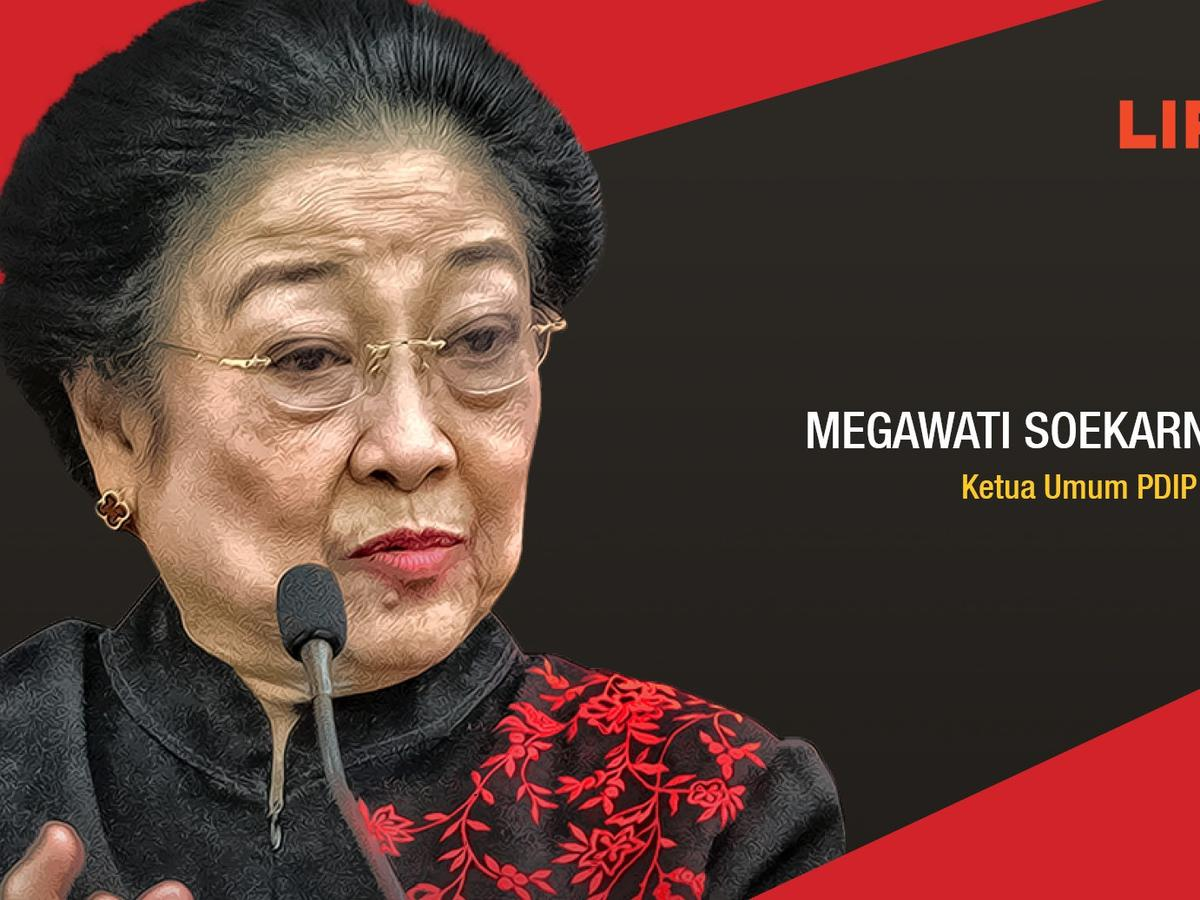
Ganjar is backed by the centre-left Democratic Party of Struggle (PDI-P). The name is a misnomer. It’s the fiefdom of Megawati Soekarnoputri, 76, daughter of founding president Soekarno who died in 1971.


British Council research showed 52 per cent of Indonesia’s population ‘consists of young people between ages 18 and 39 years old, spanning both Millennial and Gen Z generations; Indonesia’s youth will shape the nation’s future.’


On paper, this looks like Anies’ mob. The 54-year-old has a PhD from the US and before entering politics was a university rector. He was handpicked by Jokowi as Education Minister, a job he held for less than two years, then sacked - apparently for being incandescent among dullards and proposing reforms reckoned too radical.


Ganjar has no international profile. His politics are domestic. As only the minority elite worry about foreign affairs, he plays on being Jokowi 2.


That means maintaining plans on shifting the capital Jakarta to East Kalimantan on the island of Borneo and building more toll roads and ports.


Human rights were never in Jokowi’s bag and absent from Ganjar’s - not through ideology but indifference. Intangibles don’t win votes in Indonesia.


Certainly not with Prabowo whose record as Special Forces Commander last century crushing dissent includes allegations of kidnapping and killing that should have had him on trial.


Instead, he’s back in with a chance thanks to being given a ministry by his opponent Jokowi and bankrolled by his dollar-billionaire brother Hashim Djojohadikusumo. He chairs his political creation - Gerindra (Great Indonesia Party), with the stomp of Trump’s MAGA movement in every Mussolini-style parade.


Prabowo appeals to the hard right, relics of the Soeharto era, content for the military to fix all problems so citizens needn’t bother with complex social ills. 


 During the 1983-85 military clean-up Petrus (penembak misterius mysterious shooter) campaign, citizens woke to find the bullet-shredded corpses of real or imagined criminals left in their streets. One estimate puts the slaughter above 10,000.


No arrests, courts, defence lawyers and all that rule-of-law namby-pamby. One US academic called Petrus ‘prophylactic murder’.


Prabowo wants the army, which used to control the police, to expand its power domestically.


If Indonesia reverts to a brutal autocracy the impact on trade, investment, security and defence planning would be damaging, hastening the turn back to the Anglosphere and farewell Julia Gillard’s Asian Century. That’s if it hasn’t left Australian air space already.


First published in Pearls & Irritations, 18 May 2023:

https://johnmenadue.com/indonesians-embrace-democracy-but-do-its-leaders/

##


Friday, April 28, 2023

OFFERING SERVICE - OR LUSTING FOR POWER?

 The Jakarta Cup’s favourites train in Oz              


 It’s on - starters are lined up for the big race next door - with two using Australia to show their international form.


Footage-on-a-loop filled TV screens across Indonesia as the Muslim holy fasting month ended. Homes groaned with rellies and neighbours bringing pressies and goodwill.


But all also wanted to see the grand Idul Fitri nosh-up in Joko ‘Jokowi’ Widodo’s Central Java hometown of Solo. Who’d be there? 


The President shuffling, uncertain, a ghost of the carefree character who took Malcolm Turnbull on a jolly meet-the-people market tour in 2015.


Nearby forcing smiles and failing, the plump Prabowo Subianto, 71, a former general who’d be an embarrassment in any war room but still wants to lead the nation. 


Also in wide-shot hobbling with a cane was Megawati Soekarnoputri, 76, the de-facto Queen of the Republic who had just whacked down Prabowo’s hopes by anointing her party’s candidate for the presidency.


The white-haired lawyer and Central Java Governor Ganjar Pranowo, 54, is the man who could be running the show in 2024.


 He was the only figure in this parade of ageing oligarchs looking fit and ready for the task of leading a nation of 273 million.


He got the nod six weeks ahead of the promised grand reveal. The scuttlebutt is that Mega was forced to choose early because while she dithered other runners were already training, locally and in Australia.


Apart from Prabowo, the man to fear was absent at the Solo bash. The latest polls show Dr Anies Baswedan, 53, the NasDem (National Democrat) Party’s pick for the Presidency a nose behind Ganjar, 54, a moderate with no international profile. 


He’s in the most popular PDI-P (the Indonesian Democratic Party of Struggle) the fiefdom of Megawati, daughter of founding president Soekarno. 


 Ganjar cultivates an accessible all-folks image, cycling through markets to listen and yarn. It’s the blusukan (impromptu meeting) tactic used a decade ago by Jokowi in his successful upwards journey before a fear of assassins put him behind bodyguards. (In 2019 senior minister Wiranto was stabbed at an official function. He survived.)


Baswedan’s environment is education so he was in happy land last month speaking at the ANU, meeting Foreign Minister Penny Wong, Reserve Bank Governor Dr Philip Lowe and chatting to expats in Sydney.


There aren’t too many. About 90,000 permanent residents plus 20,000 students are scattered across the wide brown. But they’re the smart influentials who’ll tweet views to friends and families back home.


Baswedan’s visit helped polish his profile as a candidate taking foreign affairs, the economy and the environment seriously and at ease with the Western media.


Prabowo, the Gerindra (Great Indonesia Movement) boss and self-appointed candidate has also done the dash Down Under as Defence Minister for formal meetings. 


To ensure exposure back home he took his personal ‘media team’ that taped him patronising about 40 post-grads (‘work hard’) in Canberra. See, I’m a statesman.


Had he fronted the Australian press the questions would have set his backers squirming. Why was he dishonourably discharged from the Army in 1998, and banned from the US for alleged human rights abuses in East Timor and West Papua?


What happened to the pro-democracy student activists allegedly tortured by troops under his command? Thirteen ‘disappeared’. With this background how can he hope to find the West’s respect?


A former Jakarta-based Australian diplomat wrote: ‘Those who know Prabowo say he has more faces than Sybil. One is never sure which Prabowo is on show, from charming and urbane to raving and irrational.’


Anies spent a dozen minutes looking relaxed on the overseas service ABC Australia. Watch the programme here.


The toughest question concerned weaponising religion in the 2017 Jakarta Governorship campaign against the ethnic Chinese Christian incumbent Basuki Tjahaja Purnama aka Ahok.


Anies’ matter-of-fact response ran: ‘When there’s a Muslim candidate and a Christian candidate, religious issues come into the equation.’


In his homeland, Anies’ ethnicity is being used to demonise because he has Hadhrami Arab ancestry from Southern Yemen.


This gives him cachet with rigid-stare Muslims though not with the majority abangan pribumi - the native Javanese who take a relaxed approach to their faith and put it second to nationalism. Jokowi is an exemplar.


Although NasDem looks middle-road it can’t be measured by the left/right gauge of the Westminster system. An ANU study found Indonesian politics ‘dominated by a cartel of parties characterised by their common desire to share the spoils of office, rather than by ideological or policy differentiation.’ 


The minors form what Melbourne University researchers awkwardly call a 'rainbow coalition (nothing to do with gays) of multiple parties without any coherent ideology or clear policy platform’. 


The result: No Parliamentary opposition, an essential for a functioning democracy.  

Turnouts are high - 83 per cent of the 191 million registered in 2019. All get a direct vote by pushing a nail through a photo on the ballot paper. 


What doesn’t get nailed is corruption which has worsened under Jokowi’s watch. Indonesia is the world’s third largest democracy, though ranked ‘flawed’ because of graft. Whoever becomes the next pres, that needle is unlikely to move, for no candidates seem serious about curbing the national curse.


NasDem’s published platform includes a seven-point collection of trite. Example: ‘Build a democracy based on strong people who are called on to bring about a bright future.’ 


In 2019 NasDem won just over nine per cent of the vote, but in Indonesian politics voters go for personalities, not parties or policies which rarely get detailed and are soon ignored.


About a quarter of the population is aged between 18 and 30,   They want the rule of law to apply to all, less religion in state and private affairs, and a more egalitarian society. 


In his two five-year terms Jokowi has focused on infrastructure and health care, but in the human-rights areas which don’t bother the rich, he’s thrown the race.  His successor will probably do the same.  This track’s too heavy.


##

 First published in Michael West Media, 28 April 2023: https://michaelwest.com.au/the-race-is-on-the-line-up-to-replace-joko-widodo-as-indonesias-next-president-is-revealed/