Wanted: Smart can-do grads with dirty hands
Indonesia is facing a perfect storm on the education front
now roaring in from all compass points.
According to a lengthy report this year from Australia’s
well-respected Lowy Institute:
Indonesia’s education system has
been a high-volume, low-quality enterprise that has fallen well short of the
country’s ambitions for andinternationally competitive’ system.
This outcome has reflected
inadequate funding, human resource deficits, perverse incentive structures, and
poor management, but has most fundamentally been a matter of politics and
power.
Not just in schools but also universities
where just 16 make Asia’s top 400 campuses on the international Quacquarelli Symonds
(QS) ranking. Adjacent Malaysia,
population around 32 million, or 12 per cent of Indonesia’s, has 27 on the
list.
There are around
3,000 tertiary institutes in Indonesia; just 122 are state-run. Most are teaching, not research. Wealthy students head for labs and lecture
rooms overseas – UNESCO cites around 42,000. The world’s fourth largest country
has yet to win a Nobel Prize in any discipline.
But the real crisis is in vocational education. From
numerous speeches and statements it’s clear President Joko ‘Jokowi’ Widodo -
along with the nation’s more thoughtful politicians and academics - fear the
economy will slump if it can’t rapidly train enough youngsters to match demands
for high-level skills.
In this dystopia the Republic won’t come within a country
kilometer to meet the upbeat forecasts being delivered by silver-tongue
international financiers urging investments in Indonesia.
The figures they spray are impressive - World Bank
statistics show a growth rate last year of 5.07 per cent, way above Singapore’s
3.62 and Australia’s 1.96.
The Pollyannas chorus that with an expanding middle class
hungry for new goods and services, and with almost half the population under
30, Indonesia is on track to be the world’s seventh largest economy by 2030.
Realistic? Only if these youngsters can fill the positions
being posted by worker-famished factories; however few bosses are seeking
barrow-pushers and component sorters who need time off to eat and rest.
This century’s uncomplaining round-the-clock laborers are
the restless robots; they’re already marching into modern manufacturers to keep
their products jumping off the shelves ahead of competitors.
The work will be for those with the know-how to design,
develop, assemble, adapt and repair the high-tech equipment displacing routine
tasks. This challenge is international.
As Australian economists Andrew Charlton and Jim Chalmers have written:
Future governments will have to
deal with a world in which artificial intelligence and automation will creep
into every occupation, from bricklayer to teacher. We, in turn, will need to
prepare for a working life that even a few years ago was unthinkable.
Widodo says 58 million skilled workers will be needed within
12 years; he should know a bit about this having run a furniture factory in
Solo (Central Java) before carving out a career in politics.
He’s been badgering his increasingly fretful officials to
conjure up solutions. They’re colliding with barriers so stoutly built the
bureaucrats are risking reputations by looking abroad for ideas at a time when
national pride tinged with xenophobia is a powerful driver of policy.
So far the searchers have scoured Sweden, the UK, the
Netherlands, Germany, Canada, the US, Taiwan, China, NZ and Australia for
ideas. Educators in the Great South
Land are hoping to help (for a fee) by using the Indonesia Australia
Comprehensive Economic Partnership Agreement (IA-CEPA).
After almost six years of stop-start discussions this Free
Trade Deal is reportedly close to settlement.
It’s believed to include clauses allowing Australian universities to
open branch campuses in the Archipelago – but Indonesia wants vocational
colleges.
Sounds simple: First
clean up the schools so they deliver keen, well-taught kids. Sort out the
budget. Copy an overseas curriculum with proven results. Download the steps to success. Implement. Get all on the bus. Accelerate.
Then comes the jolt.
Culture, politics and distrust gather to roll out the concrete barrel
roadblocks and barbed wire. Border
controls drop booms. Progress shudders
to a halt.
Which is where Indonesia is currently stranded.
Will the post-millennials prosper?
Ambitious parents often pray their children will get a
university education.
If the Pops and Moms earned by heaving and sweating they
don’t want their issue to tread the same track. Some men let a fingernail grow
long. Explanations go from fashion fad to showing they’re above manual work.
Few want a technical certificate on the guestroom wall;
neighbors wouldn’t be impressed. What’s
needed is a cap-and-gown photo, the image to snare a desk in an air-con office.
Once: Not now.
The 30 per cent of high school leavers who go to unis favor
the so-called ‘soft options’ like social sciences and religious studies – areas
where jobs are scarce. Instead the work and money is for people wearing hard
hats and carrying hi-tech tool kits, according to Professor Ainun Na’im. (below)
He’s Secretary General in the Ministry
of Research, Technology and Higher Education, squashed into the ugly acronym Ristekdikti.
His department is
separate from Education, which handles schools, and Religious Affairs, which
supervises Islamic teaching institutions.
Having three ministries with competing interests leads to overlapping
responsibilities and much confusion, say public servants in these areas.
The US-educated former
Professor of Accounting at Yogyakarta’s Gadjah Mada University (ranked 85 in
the Asian top 400) is the man getting earfuls from an increasingly vexed
President and his Minister, Dr Muhammad Nadir;
He was formerly rector
(chancellor) of Diponegoro University in Semarang, Central Java, and also
trained as an accountant.
“We don’t find
students from wealthy families taking up vocational education,” Na’im told Strategic
Review. “The mindset of Indonesians
is against learning practical skills.
This is something we have to change.”
How? Shift thinking and expectations – old ways
no longer suit. This is the advice
given by his department warning students and parents of the onrushing tsunami
of workplace change. In the new economic climate this year’s tasks will be
washed away as technology surges ahead of plodding bureaucrats and their
cumbersome regulations.
Handling the quandary
also needs big bucks: Do the public servants recommend their masters spend on
technical college workshop gear to teach trades, only to find that the
factories have retooled with faster and fancier machines?
Policy planning is
further tangled because business and bureaucracy have different backgrounds and
worldviews. Should schools form partnerships with industry so the youngsters
can learn on the job?
In Surabaya, the
capital of East Java, the US heavy earth-moving corporation Caterpillar trains
its own mechanics, but their skills may not fit a miner using Japanese Komatsu
bulldozers.
Business tycoon
Sandiaga Uno, a vice-presidential contestant in the 2019 election, told the A
Dangerous Drift? foreign policy conference in Jakarta about his
experience commissioning a power
station in Sumatra.
“We selected a Chinese
contractor because the price was good,” he said. “The plant was built within two years with imported staff.
“Most impressive – but it’s a decision I
regret; we should have used Indonesians.
When maintenance started we found all manuals written in Chinese – so
had to go back to them for help.”
Overseas workers are a
hot issue heading towards the April poll; opponents of the present government
claim ten million illegal laborers are on the government’s massive nation-wide
infrastructure projects.
President Widodo reportedly responded that there are only
23,000 Chinese on short-term contracts:
“Those workers install turbines. They build smelters. I’ve checked
it myself. That’s because we are not ready yet
… to do those jobs.”
At household level
casual Indonesian contractors are often multi-skilled, one person seamlessly
moving from carpentry to metal fabrication to power reticulation – all without
certification.
Not elsewhere. In
advance economies even floor cleaners must have passed a training course. This is for health and safety reasons as
moppers sometimes use toxic chemicals.
Over the top? No, risks are real. In January more than 70
were injured when a mezzanine floor at the stock exchange building in Jakarta
collapsed into the lobby. Poor maintenance
and wrong construction materials were alleged to have been responsible.
However there’s a
downside. The US educated Na’im probably had a close shave when studying in
Philadelphia, as he uses barbers to show how regulations lead to higher costs
and a defiance of authority:
“If I want a haircut
overseas I pay twenty dollars (Rp 304,000) or more because the hairdresser has
a diploma and the shop is licensed.
“In Indonesia I can
find someone competent but unqualified. They’ll cut my hair for the equivalent
of a dollar. So who’ll use the expensive shop?
“OK, we make it
illegal. But in this country we’ll
never get a situation where such rules can be effectively policed.”
A Westerner who cables
his new den with a couple of mates won’t get to play with his vices without a
written guarantee, signed by an authorized expert, that the handymen didn’t get
their wires crossed.
It’s the same with
other trades leading to the old joke that parents wanting their offspring to
get rich should steer them towards medicine and fixing perforated bowels, or
plumbing and unblocking toilets.
The cost of taking a
practical or academic course in an Indonesian state college depends on the
quality of the institution; charges at the lower end are much the same. About 90,000 talented kids from poor
families get Rp 650,000 (US $43) a month government scholarships for tuition
fees and Rp 400,000 (US $26) for living costs.
Indonesia has tried
offering student loans similar to those available in the UK, the US and
Australasia; now the banks won’t participate.
They used to hold graduates’ original certificates as collateral but
found few repaid.
“That’s because the
borrowers photocopied the documents and used these to get work,” said Patdono Suwignjo, Director General for Science,
Technology, and Higher Education. (left)
The veteran educator will retire in 2019 so feels
less constrained to be diplomatic. His
favorite words are ‘neglect’ when referring to past governments’ interest in
vocational education, and ‘stupid’ for regulations. Later he added ‘distrust’.
Unlike many of his colleagues he knows about
technology close-up from his days as a vocational lecturer – though not close
enough. “I can tell you how to weld and what equipment settings to apply and
filaments to use,” he confessed. “But
if I handle a torch the metal and flame tip will get stuck.”
He also has a droll sense of humor: “Do the maths:
If we continue building vocational colleges at the present rate of three a year
we might meet the demand in 1,350 years.”
His responsibilities include analyzing all factors
crimping Indonesia’s ambitions to get internationally competitive. First what economists call the human capital
- the learners flowing into the system along with their attitudes, values and
expectations.
The
Indonesian Constitution requires a massive 20 per cent of the national budget
be assigned to education. Yet the government allocates less than US $1,200 per
primary student; that’s around 14 per cent of spending by nation-members of the
Organisation for Economic Co-operation and Development (OECD).
Suwignjo blamed the gap on the education component in the
budget being bundled with other items and sent to the regions to disburse. He
estimates the actual proportion delivered to education is around eight per
cent.
Nine years of
schooling are mandatory and supposed to be free. However school
administrations thrust their hands deep into parents’ pockets with a range of
charges from building new classrooms to funding teachers’ retirements, making
school retention tough for low-income parents.
Angers about
the education system are the second largest issue (after land certificates)
among the 10,000 complaints received annually by the office of Ombudsman
Professor Amzulian Rifai.
“We’re not like the KPK (Komisi Pemberantasan Korupsi
- Corruption Eradication Commission),” he said. “My powers are limited to
mediation and recommending departments change their practices. Most do – some
don’t.”
Indonesia has 170,000 state
primary schools and 40,000 junior highs called SMP (Sekolah Menengah Pertama). There are also
thousands of private and religious colleges; many are boarding schools.
SMP leavers, aged around 15
and who stay in the system, have the choice of an academic high school Sekolah
Menengah Atas SMA, or the vocational Sekolah Menengah Kejuruan
SMK.
The most talented SMK graduates
wanting further qualifications head to university, a polytechnic or
diploma-awarding college; these are confined to the big cities so students have
to leave home adding to costs. As they
progress theory expands and practice shrinks.
Although
apprenticeships haven’t taken root in Indonesia, they still operate in parts of
Europe, the Anglosphere, Turkey, India and Pakistan so could be adapted to
suit.
The current entrance ratio
favors SMAs above SMKs seven to three. Ristekdikti
wants these figures reversed, but
there’s one tough question : What will graduates get in their wallets?.
“Consider
salary structures in Pertamina (the state-owned oil company),” Suwignjo said.
“They recruit a top polytechnic student with a diploma and an ordinary
university graduate with a degree.
“When both get permanency after two years, the
academically trained employee will earn Rp 12 million (US $790) a month and the
other Rp 8.5 million (US $560). That’s
even if they’re doing the same job.
“The company ranks a four year diploma below a basic
degree. They should be equal. This would encourage bright kids to take on
practical work, but I can’t get the Ministry for State-Owned Enterprises (SOE)
to agree.”
Another difficulty is settling educators and
employers on the same page headed JOB DESCRIPTIONS. Is a health worker a nurse if they’re the only professional in a
clinic? Is a bank clerk an economic
adviser if she or he suggests deposit accounts to customers?
“After two years discussion we couldn’t get
agreement,” said Suwignjo. “Why? Kadin (Kamar Dagang dan Industri Indonesia (the Indonesian
Chamber of Commerce and Industry)
doesn’t trust the government.”
The SOEs are part of the reason.
There are 118 and 800 subsidiaries.
Although socialism is on the nose in Indonesia because it carries a
whiff of banned Communism, the number of government-controlled businesses is
growing to the annoyance of private industry.
Entrepreneurs reckon this
swimming pool is so tilted by constantly changing regulations their team has no
water to compete in the race for contracts.
Unsurprisingly Indonesia ranks
72 in the World Bank Group’s Ease of Doing Business list of 190 economies.
Then there are subsidies for
inefficient operators delivering price-sensitive essentials. In mid 2018 Finance Minister Sri Mulyani
said Pertamina had been handed Rp 26 trillion (US $1.5 billion) to keep
gasoline prices stable when world oil costs surged.
The State electricity company
PLN (Perusahaan Listrik Negara)
is another recipient of government largesse. It has a monopoly on power
distribution and most generators. Those privately owned struggle to stay
solvent when dealing with a behemoth buyer.
An exasperated Suwignjo threw up
his hands: “Where else in the world is there such a crazy system?”
To get around the bog of job descriptions Indonesia
is toying with using the ANZSCO (Australia and New Zealand Standard
Classification of Occupations) searchable list. However the Australian Bureau of Statistics warns that it isn’t
exhaustive and some titles still contested.
In a bid to boost teaching quality, Suwignjo’s
section shut down 243 diploma mills in 2016, and then hit what he calls the
“practical reality of Indonesian culture.”
Politicians or their friends owned many of the
shonky institutions. “Pressure was
applied to reverse the rulings,” said Suwignjo. “We resisted, but now try to make them more professional.
“That means lifting teaching abilities. Good buildings are the easy part. Getting quality staff is far more
difficult.”
Here’s another zone where culture conspires to trip
the unwary. The idea of life-long
learning is an alien notion. Students
are expected to make an unbroken journey from school to higher education – then
rarely grace a campus after graduating.
Few take what Americans call a ‘gap year’ and
Australasians ‘OE’ (overseas experience), to get their hands dirty and minds
enlarged before settling to serious learning.
The result is that Indonesian teaching halls are
filled with a one-age cohort. Academics returning to classrooms to update
qualifications fear their social standing will take a tumble.
Ristekdikti Secretary-General Ainun Na’im said he recognized the need to expand the
education catchments and help students who don’t fit the standard mold. “We’ll be introducing a multi-entry,
multi-exit policy taken from Taiwan to build some flexibility into the system,”
he said. Then came a list of ‘musts’.
“We also stress health and safety practices must be totally
accepted. We must improve the quality of vocational teachers. Fifty per cent
must come from industry. If they’re reluctant to get retrained they’ll be
fired.
“Our priorities are manufacturing, medicine, tourism, the
digital economy energy and agribusiness.
We must get business on side. The need is pressing.”
The Cirebon Reality
Discussions about a vocational education crisis in
an armchair circle of senior government officials atop a shiny Jakarta
high-rise feel divorced from reality. The pie-chart figures are unpalatable,
but abstract. Down in the concrete
classrooms the concerns are tangible.
Cirebon is a port city about 220 kilometers east of
Jakarta. A polytechnic is being built
but won’t be ready till 2020.
SMK1 is the biggest vocational high school with
2,500 students. Only one in four is
female. It was selected at random for
this story and visited with no prior notice.
There are six departments – construction, electrics,
electronics, automotive, computing and mechanical engineering.
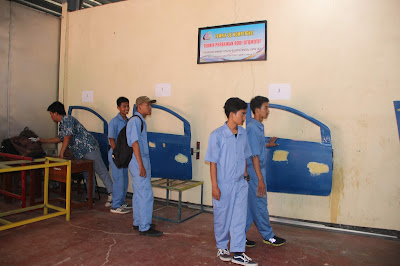
Here the deficiencies were stark with students
learning on lathes installed almost 40 years ago. No CAD (computer-aided design) controls, standard in
industry. The carpentry workshop had no
nail guns or a gang-nail press common in timber construction.
One small panel in a glass-top display represented
solar energy. The lecturer said battery
costs deterred development. He knew
nothing about the technology commonplace elsewhere where solar-powered
households sell excess electricity to the utility during the day then
repurchase at night.
Students were not wearing eye or ear protection,
steel-capped boots or other safety gear, mandatory on most worksites. Fire
extinguishers and first-aid kits were well hidden.
Retired staff have been pulled back because
replacements can’t be found.
“Frustrated?
Absolutely,” said Abdul Ghofir head of mechanical engineering. “We were promised new equipment, but it
never arrived. Imagine how our
graduates feel when their bosses tell them to handle equipment and tools
they’ve never used.
“How can we train them properly?”
Mila
Merliyanti, 17, (left) a lone female in a workshop of boisterous boys, had an answer
to her lecturer’s question:
“I’m starting to learn mechanics here because I want
to study further in Japan. It’s my mother’s idea but I think it will lead to a
better job.”
Cirebon’s SMK1 has a long-standing agreement with a
Japanese corporate which might be worth copying.
The Japan Indonesia Association For Economic Cooperation runs
what it calls a Human Resource Development through Apprenticeship Program. Students are selected from SMKs, sent to
Japan and placed with companies for work experience and further training for up
to three years.
On their return they get jobs in Japanese companies based in
Indonesia having learnt new skills and work practices which suit the
employer. The scheme has been operating
since 2005 and taken about 10,000 trainees.
A program other countries might consider offering as they
probe the Indonesian vocational education system for opportunities. First they’ll need to understand the
issues. Ristekdikti
staff, students, lecturers - all will oblige.
(First published in Strategic Review, January 2019, Vol 9, No 1)
##
.


