FAITH IN INDONESIA

FAITH IN INDONESIA
The shape of the world a generation from now will be influenced far more by how we communicate the values of our society to others than by military or diplomatic superiority. William Fulbright, 1964

Saturday, July 10, 2021

KOREA'S DANCING DIPLOMATS


                        Pop goes Korea, plop goes Australia  

 

No WA BTS Asli yang Sering Banget Dicari oleh Para Penggemar - Fakta.id


From afar it looked like a demo, though the location was wrong.  An Indonesian McDonald’s restaurant, not the town hall or government office where placard-wavers usually gather.  And much of the tight-packed crowd spilling into the street wore the green gear of GoJek motorcycle carriers. Maybe a pay dispute?

Wrong on all counts. The bikers were collecting online orders of chicken nuggets packed in boxes promoting the K-pop boy band BTS.  The tsunami of customers was so pressing the police forced 32 stores to close.

The McDonald’s event was weird but Indonesian infatuation with all things Korean isn’t new.  In 2019, a Korean government portal claimed Indonesia ‘topped the global ranking of K-pop content viewership on YouTube with 2.62 billion views.’


The genre is addictive, the choreography simple, production values faultless, the pimple-free performers more like sci-fi androids.  Most songs are in senseless English, the lyrics probably written by AI. Sample: ‘Word up, talk the talk, just move like we off the wall.’ The sound is the swish of swiped credit cards.

Marketing agency head Michael Patent told The Jakarta Post K-pop appealed to youngsters seeking escapism and a sense of belonging to an international community:

 ‘K-pop is an art, but it’s also business. The management companies have created a system in which a product that gets delivered to consumers is of really high quality. It’s been produced to specifically appeal to a certain taste.’  In brief, creating a need and coining tons of won.


The ROK makes earth movers, smartphones and cars.  Also in its catalogue are K-pop soft sells, music, videos, pictures, make-up, food, fashion and more.


Australia feeds Indonesia grains and meats.  Its add-ons tend to be cerebral, scholarships, elite exhibitions and on-campus film festivals.  Worthy stuff, though no match for sashaying beardless boys and cutesy girl groups sending the fandom frothing.


Indonesia’s mean age is 29.7 – Australia’s 38. The UN Population Fund puts 28 per cent of Indonesian citizens in the 10-24 age bracket.  Suits spread-sheeting tariffs may not be the best way to snare Gen Z’s attention.

The last time Australian popular culture elated Indonesians was in the late 1980s with the TV series Return to Eden.  In 1992 the show’s star Rebecca Gilling was mobbed when she visited Jakarta, with the Australian Financial Review reporting the then 40-year old actress ‘may for a time have been more popular in Indonesia than she was in Australia.’

Bemused Australian Embassy staff in Jakarta might ponder this simple question:  How come South Korea’s youth excites Indonesians who only know of the East Asian nation on smartphone screens - while the folks next door rarely raise a yawn? 

Maybe it’s all too tough.  In Strangers Next Door?  Melbourne University’s Tim Lindsey and David McRae write bluntly: ‘There are no two neighbouring countries anywhere in the world that are more different than Indonesia and Australia. They differ hugely in religion, language, culture, history, geography, race, economics, worldview and population.

‘In fact, Indonesia and Australia have almost nothing in common other than the accident of geographic proximity.’

That disheartening list isn’t contested, with the mismatches aggravated by distance.  The peninsula nation’s heritage and values bear little resemblance to the islands where 350 years of Dutch colonialism implanted many aspects of Western thinking.


So why the lack of love?  We Australians tell ourselves we’re matey but rarely relate beyond backslaps with foreigners who don’t drink beer or play cricket. As long as the bulk containers keep sailing with full holds it seems they’re not going to tackle the tough stuff.

In 2017 the Department of Foreign Affairs and Trade started reviewing policies on soft power, defined ‘as the ability to influence the behaviour or thinking of others through the power of attraction and ideas.’

After 130 concerned individuals and organisations had lodged submissions the show was ditched. DFAT blamed the pandemic making the project ‘no longer as relevant to the significantly changed global environment.’  The Koreans think otherwise, churning out their products and currently running a TV sport drama series Racket Boys with an Indonesian storyline.

As reported in Australian Outlook in May, a survey by Singapore’s ISEAS – Yusof Ishak Institute showed an awkward reality: Indonesians think Australia has little influence and its aid is too tiny to be felt. 

Now we have the other side’s feelings.  Last month the Lowy Institute released its annual poll on Australian attitudes to those across the Arafura Sea.  Yet again it showed what the director of LI’s Southeast Asia Program Ben Bland called in The Interpreter website “a dispiriting exercise”.


 ‘Whether asked about their warmth toward Indonesia, confidence in its leaders, or even their level of basic knowledge about their biggest neighbour, Australians tend to show a combination of disinterest and distrust.’

Reasons include the gutting of Indonesian language courses in schools and unis and the shallow media coverage of archipelagic affairs. 

President Joko Widodo focuses on domestic matters.  His more worldly predecessor Dr Susilo Bambang Yudhoyono, told the Australian parliament in 2010 the issues were improving mutual public understanding, managing diplomatic differences, boosting economic ties and adapting to emerging regional problems.


Commented Bland, who is also Widodo’s biographer: ‘More than a decade later, both countries have made steady progress on the last three challenges. However (the Lowy poll) shows that there is still much work to do on the first.’


In 1994 the then PM Paul Keating said: ‘No country is more important to Australia than Indonesia - If we fail to get this relationship right, and nurture and develop it, the whole web of our foreign relations is incomplete.’

In the 27 years since every Australian leader has said much the same, often with the enthusiasm of making a dental appointment.  None have asked Aussie kids how to connect with their maybe-friends next door.

As all parents eventually and gladly discover, adolescence doesn’t last. The brightest of Jakarta’s K-poppers are set to remain movers and shakers when they graduate from dance floor to boardroom.  Canberra wants them tapping policies to the rhythm of Oz, but the beat is set by Seoul.

Buttoned-down diplomats face a new reality: Gyrating teens flaunting flesh can also be a tool of statecraft.


First published in Australian Outlook, 9 July 2021:  https://www.internationalaffairs.org.au/australianoutlook/pop-goes-korea-plop-goes-australia/

Wednesday, July 07, 2021

LOCKDOWN LITE

               Lockdown’s compulsory – if you like


Luhut Binsar Panjaitan doesn’t read Pearls & Irritations.  That’s obvious because the former general and Indonesian President Joko Widodo’s Mr Fixit alleged he was blindsided by the latest tsunami of Covid 19.

This column claims no exclusive insights by earlier predicting the plague would surge after Mudik (exodus).  Millions defied instructions to stay put, instead heading to hometowns to mark the Idul Fitri end of the Ramadan fasting month. University of Indonesia epidemiologist Dr Pandu Rionos described this behaviour as ‘herd stupidity’. 

Every credible publication was quoting named experts repeating the same warning.  Common sense also shouted a clear message: Unconstrained crowds transmit infections.

 Panjaitan’s claim for unknowing was rapidly dismissed. Griffith University doctoral candidate Dicky Budiman has 22 years experience with Indonesia’s Health Department and UN agencies. He told the nation’s premier broadsheet Kompas he’d repeatedly forewarned through mainstream and social media of an upcoming surge.

‘Right from the start, I said that 2021 could be far worse than 2020 even though there was a vaccine.  The government's strategic response to the pandemic failed to address fundamental issues such as early detection, testing and tracing, isolation and quarantine.  Who was supplying information to him (Panjaitan)?’

On one day last week, almost 22,000 new cases and 467 deaths were recorded. The tally of tragedy so far is around 2.2 million positives and more than 58,000 deaths, the highest toll in Asia.  (China, with a population five times larger, has reported 91,847 cases and 4,636 fatalities.)

Indonesia’s numbers are considered conservative.  Ordinary Indonesian fear seeing doctors lest they’re told to take a test they can’t afford. Reuters reports Indonesia has jabbed more than 45 million arms. As all need two shots, 8.4 per cent of the country’s population has been vaccinated.  The target now is two million a day.

Throughout 2020 and half of this year, Widodo resisted medical experts’ advice to lockdown the population of 273 million so hospitals can handle admissions and doctors get a grip on treating those at most risk.

The president’s consistent line has been the need to prioritise care for the poor by keeping the economy open.  His reasoning has been the opposite of Australia’s –the economy must be closed to protect all. But workers and businesses Down Under have been underpinned by Job Seeker and Job Keeper while Indonesia offers limited welfare. Funds for the poor have allegedly been stolen by a minister and bureaucrats.

Widodo’s desultory approach has been Pemberlakuan Pembatasan Kegiatan Masyarakat, 
(Restrictions on Community Activities).  These have been left to regions to enforce and widely ignored. 
 As in Australia communication of government decisions has been chaotic. 
 The PPKM has had no measurable effect on the spread of the pandemic.
 

The scientists’ push has been relentless and eventually successful. Widodo has now agreed to shut down Java and Bali for the first half of July. But getting the law obeyed is another matter in a society that treats the road code as a set of suggestions rather than rules to be obeyed.

Panjaitan is no dunce. Apart from being Indonesia’s version of Canberra’s vaccination task force supremo Lieutenant General John Frewen, the US-educated former Special Forces soldier is one of four Coordinating Ministers and regarded as a sane voice in Cabinet.  So why play the startled hare?

To shield his boss from the shame of showing weakness by wavering. In Javanese culture, power is not just a political win but a mystical gift that only favours the resolute.  As a Protestant from Sumatra, Panjaitan can play the fall guy.

What happens now to the wee workers Widodo said he was trying to protect? The International Labour Organisation estimates the nation’s small and medium enterprises contribute 27 per cent to the GDP; they also keep millions of families alive.

Like others, Malang micro-trader Sapatun said she’ll be ignoring Widodo’s order and continue selling bananas from her two-wheel pushcart. She makes between Rp 30,000 to Rp 50,000 (AUD 3 – 5) a day, depending on whether others have been poaching on her round.  After expenses, she usually scores  a dollar-fifty a day profit.

Sapatun doesn’t use Indonesian, so the widow who thinks she may be in her late 60s relies on Javanese-speaking customers to explain the news from Jakarta.  Their source is Facebook gossip spiced with tales of hospitals killing patients. The reality reinforces the myths with stories of 60 dying in Yogyakarta because oxygen supplies failed, and tents in car parks used as ICU wards.

‘I have enough rice to last for about a week, but no vegetables or chicken,’ Saputan said.  ‘If I can’t work I’ll have to go without. Where will I get money to eat?’

It would be warming to think Widodo’s reluctance to lockdown comes from being raised in a riverside shack in the Central Java city of Solo. The story goes that his everyman background helps him relate to the plight of people like Saputan and the close to 30 million earning below AUD 30 a month.  That’s the Asian Development Bank’s poverty line.

The lockdown officially started on 3 July.  At daybreak, residents peered nervously around to check for enforcers – army, police or local volunteers?  Not a uniform in sight except at a closed top-end boulevard. 

There are NO ENTRY signs on public parks and restaurants, but street eateries keep busy with sit-down customers. The markets remain as crowded as always. Mask wearing has been mandated, which is being interpreted as optional.  Shops stay open. No rush on toilet rolls as Indonesians wash, not wipe.

Otherwise, the central East Java city of Malang with close to a million residents went about its business as usual. Reports suggest it’s much the same across the archipelago, though Jakarta hospitals are said to be in crisis. 

Sapatun and her fellow mini traders have little to fear breaking the rules.  However Widodo and Panjaitan will have much to worry about if their desultory containment plans don’t work, the health systems turn turtle and the populace turns riotous.

First published in Pearls & Irritations, 7 July 2021:  https://johnmenadue.com/lockdowns-compulsory-in-indonesia-if-you-like/

Saturday, July 03, 2021

KEEP THE OLD STANDING - AND EARNING


Preserving the past to pay for the present                  


It all happened long before Lily Jessica Tjokrosetio (right) was born, so her wishes are fantasies, things she might have done had she been there.

Although raised in Surabaya, foremost would have been buying and preserving a particular house in Jakarta. 

Jalan Pegangsaan Timur 56 was President Soekarno’s home and nothing grand, disappointing those who think significant events should take place in castles and palaces and remembered in soaring statuary.  But this was where he proclaimed the Republic on 17 August 1945, starting a revolutionary war that shattered the Hollanders’ hopes of hanging onto their colony.

“It was the birthplace of our nation,” said Lily.  “Elsewhere it would be a memorial.  If I’d been able to buy it would still be there.  We need to respect our past.”  Yet the place where the Proclamator’s words rocked the world was demolished in August 1950.

It’s different elsewhere. The 1755 cottage of Captain James Cook’s parents was brought to Melbourne to recognise the first Briton known to have explored Australia’s East Coast in 1770.  The house has become a major tourist attraction.

The 18th-century residence of first US President George Washington in Virginia is now a museum and a national monument, along with the homes of other founding fathers. Who’d dare suggest wreckers dash down such treasures and deny citizens the chance to feel their past?


‘It wasn’t till I was sent from Surabaya to Europe in 1998 and started high-school that I realised how important history is in other parts of the world,” said Lily.  She spent 12 years in the Netherlands before returning to become a director with the family’s edible oil business. She’s also the honorary Dutch consul in Surabaya.


Thwarted in her desire to preserve the Proclamator’s house Lily turned to Malang and another building with links to the nation’s founder.  In the hands of more mercenary owners, it might well have ended up as high-rise apartments.  Instead, it’s a hotel though it started life in 1933 as a Freemason’s lodge.


Freemasonry has faded this century but used to be an ancient secretive charitable Christian fraternity of leading men in the community.  There can’t have been too many in Malang because the flat-roof art deco landmark soon became a Societeit Concordia, where elite Europeans gathered to dine, dance and do business.


That lifestyle crumpled in early 1942 with the Japanese invasion. After the war, it became Gedung Rakyat (the People’s House) and used by the Komite Nasional Indonesia Pusat (Central Indonesian National Committee (KNIP) in March 1947.

There are reports that Soekarno, Vice President Mohammad Hatta, the Dutch-Indonesian nationalist Eugène Douwes Dekker and other prominent independence leaders were present, talking tactics to consolidate the revolution and expel the colonialists.

Then disaster struck.  The Koninklijk Nederlands Indisch Leger (Royal Netherlands East Indies Army) launched Operation Product in a bid to clear Malang of guerrillas harassing the administration. Armoured vehicles and trucks of soldiers roared down the road from Surabaya.

In the face of overwhelming forces, the ill-equipped partisans retreated to the city starting a scorched earth campaign hoping to stop the colonialists from re-establishing themselves.  On 31 July 1947 the sky above the ancient East Java hilltown was black with smoke from up to 1,000 burning buildings, including schools, offices, the town hall – and Gedung Rakyat.

Fortunately, it had been solidly constructed and fit for repair. When the war ended in 1949 it became local HQ Radio Republik Indonesia (RRI) though soon outgrew the site.


Lily’s father Harjanto bought the site in 1993 and turned it into the Malang Inn.  A new law banned foreign names so it became Graha Cakra Hotel.

Two decades later it was time for a rethink about purpose and direction. Lily was as close as she’d ever get to owning a building associated with Soekarno in Malang.  In 2014 The Graha Cakra closed to be renovated into a five-star boutique hotel of 44 rooms called Shalimar.  This is supposed to mean ‘abode of love’ in Sanskrit, though it’s also the name of gardens in Lahore, Pakistan.

But what style?  Lily chose what she calls “modern colonial” trying to keep the original feel of the place in its early innocence.  That was going to cost, but she says preserving the past is more than doing a service to the community:  “I’m not a charity and the hotel has to pay.  That doesn’t mean abandoning quality and good design.

“Of course it will never be the same, but it would be wrong to try and wipe out history.  It’s a gorgeous building, blessed with light, and that’s what we’ve preserved with white walls and generous use of space.”

Was it a good design?  The frill-free, sliced-bread Nieuwe bouwen (new building) look beloved by Dutch architects almost a century ago is still seen in Malang, though many buildings lack care.


Shalimar could have become a museum of rusting radio gear though that would have only electrified techno-buffs.  In the digital era, hot valves and fridge-size transmitters are not turn-ons.  In any case, broadcasting was an aberration in the building’s life.  It was created as a place where people would meet.

The other local five-star is the Tugu (“we have an excellent relationship”) with a completely different design, walls of murals, rooms furnished with Javanese antiques, a subdued atmosphere in keeping with pre-colonial times.

Tugu is close to the city centre while the Shalimar is more than a kilometre away in Dempo.  The prestigious suburb is famous for its wide tree-lined streets, schools and the splendid Ijen Boulevard. 

Ensuring Shalimar blended with the surroundings was also important.  The profile is low enough to allow views of the surrounding mountain ranges. Residents keen on relaxed strolls will find a world dramatically different from the gangs (alleys) around the alun-alun (town square).


Opposite the hotel, gardens feature the statue of a gramophone, a reminder of the building’s radio past. It’s the sort of uncluttered uncommercial environment that would draw foreigners seeking quietude, but Lily thinks this species of tourist won’t be filling the streets anytime soon.

“It will take maybe three years before the international trade returns.  Flights will be more expensive, there’ll be few cheap promos and restrictions on travel.  We’ll have to rely on the domestic market.

“Malang is doing well with the government improving roads and focussing on creating a green city.  But more has to be done.  We have to think outside the box to attract tourists, offer authenticity.  I hope that’s what we’re doing with Shalimar.”


 First published in Indonesian Expat, 1 July 2021: https://issuu.com/indonesiaexpat/docs/indonesiaexpat_edition_274

Friday, July 02, 2021

FASTEN SEAT BELTS, FISCAL TURBULENCE AHEAD


                        The spirit of Indonesia takes a dive


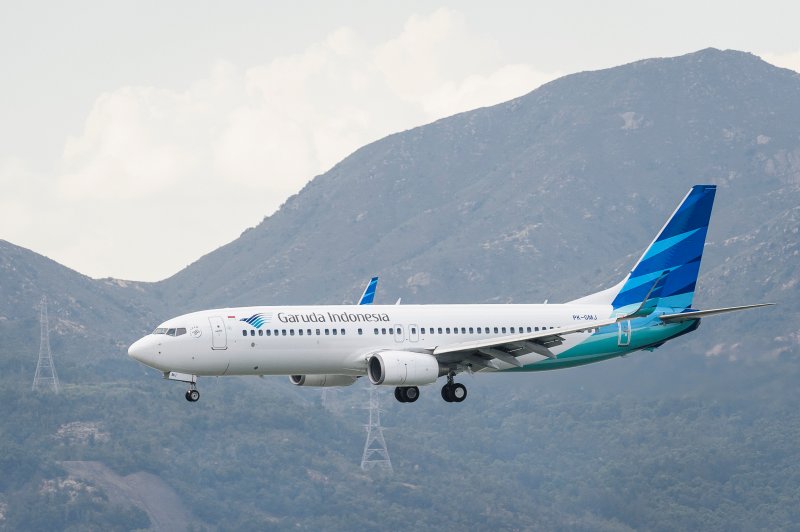
A Boeing 737-8U3 passenger plane belonging to the Garuda Indonesia lands at Hong Kong International Airport. Garuda plans to cancel its 737 MAX contract.

 The financial deck warning lights had been flashing furiously when Indonesia’s Garuda airline welshed on its AUD 660 million sukuk repayments this month after a 14-day grace.

The company, which is more than 60 per cent owned by the government, had already extended the loan’s maturity by three years. A sukuk is a financial certificate which complies with Islamic law prohibiting the receipt of interest while allowing acceptance of profits.

Most big flyers are facing financial headwinds in the wake of Covid-19 but Garuda is particularly airsick and not just through Australia shutting its arrival and departure gates.  The other problem is management. The company has got through eight CEOs so far this century.  Qantas is with its second.

Hundreds of thousands of Australians will have flown Garuda mainly to holiday in Bali.  Other airlines helped carry an estimated 1.4 million visitors in 2019, but when and if the borders reopen they’ll have to find other services.

Garuda CEO Irfan Setiaputra told the Indonesian legislature the Melbourne and Perth flights will end in July, while the Sydney-Jakarta route mainly used by business people and bureaucrats is ‘under evaluation’. 

Other Jakarta-origin Garuda routes likely to be grounded are Amsterdam and Kuala Lumpur. The company’s restructure includes retrenching many of its 20,000 staff (around 1,000 have already been through departures) and cutting the largely leased fleet to around 66 planes. Twenty aircraft are back with lessors.

This is hitting the Indonesian psyche and if minds weren’t focused on surviving the pandemic there’d be outrage at the damage to national pride, with the world’s fourth most populous country having to rely on foreigners to get airborne.


The idea of a civilian airline as an aerial ambassador is ridiculous unless the state which flies the jets makes the machines.  That limits the range to the US, the four-member European Airbus consortium, China and Russia.


Other nations buy or lease, add a logo and parade on airport aprons as though they represent a triumph of their engineering rather than a paint job (livery in PR jargon), and call them flag-carriers. Qantas claims to be the ‘Spirit of Australia’, which sounds like a duty-free purchase.

Garuda is Indonesia’s Qantas minus the Australian’s clean accident record.  It’s named after a mythical bird that appears in Hindu and Buddhist culture carrying the god Vishnu, a curious choice for the world’s largest Islamic country.

A garuda looking more like the US heraldic bald eagle is the national emblem, so much jingoism is embedded in the name. Despite the Republic’s economy bogged in a fiscal quagmire reported in an earlier column, a government rescue of the ailing airline is most likely.

It would be a courageous decision (as in a Yes Minister definition) for President Joko Widodo to let the company, overweight with an AUD 8.6 billion debt, crash and trash the Republic’s place among the world’s high-flyers, even though Garuda is not the biggest in the country. That spot on the runway is held by private Lion Air with a fleet of 140, two more than Garuda pre-pandemic.

Other options are to focus on the domestic market meaning the Garuda name will no longer appear on international departure lounge flight screens further diminishing the nation’s status.

Garuda has been nervous passengers’ no-fly zone with a record of 13 major accidents since 1950.  In-flight service has also been hazardous. In 2004 human rights activist Munir Said Thalib, 38, was heading to Amsterdam via Singapore on a Garuda flight when off-duty pilot Pollycarpus Priyanto slipped arsenic into his drink.  An autopsy showed the dose was three times the fatal level. 

Priyanto, who has since died, was allegedly aided by staff supplying false travel documents.  He was jailed along with Indra Setiawan, former CEO of Garuda. The suspicion continues that the men were fall guys in a plot to silence Thalib’s criticism of the State Intelligence Agency.

 In June 2007 the EU banned Garuda landing rights for two years to improve safety standards.  The order followed a domestic passenger flight over-running the Yogyakarta runway killing 21, including five Australians when it caught fire.  Five years earlier at the same airport, a Boeing suffered a flameout in both engines and ditched in the River Solo, killing one and injuring 13.

In 2009 the company started a five-year expansion plan called ‘Quantum Leap’ which involved more uniform and logo redesigns, though less attention to staffing. Some flight attendants went public alleging sexual harassment and a prostitution ring.

In 2019 the company earned world ridicule when it tried to ban in-flight photography after a passenger uploaded a video of a handwritten menu for business class.

In 2020 CEO Emirsyah Satar was jailed for three months and fined AUD 100,000 for accepting bribes of AUD 4.1 million in deals involving planes and parts from Airbus and Rolls Royce.

After a long investigation one of Satar’s successors, Ari Askhara was jailed for a year for using the delivery of a new Airbus to smuggle a classic Harley Davidson motorcycle and two Brompton folding bicycles.

Garuda’s Independent Commissioner Yenny Wahid was quoted saying the company was carrying a burden ‘because corruption cases in the past have had an impact on Garuda's management.’  Wahid is a human rights activist and anti-graft campaigner. She’s the second daughter of the late Abdurrahman Wahid, aka Gus Dur, the fourth president of Indonesia.  At one stage she worked as a journalist in Australia with The Age and SMH.

Between 2008 and 2010 the Australian Competition and Consumer Commission took legal action against 15 airlines, including Garuda, alleging price-fixing on air freight. This year the Indonesian copped an AUD 14.7 million fine after dropping an appeal to an earlier Federal Court decision.   Most of the other defendants settled out of court.

In the mythology, Vishnu, the god of preservation, rides on the back of Garuda.  If the real Garuda stays aloft it will be shouldered by taxpayers. 

 First published in Pearls & Irritations, 30 June 2021: https://johnmenadue.com/garuda-the-spirit-of-indonesia-takes-a-dive/