FAITH IN INDONESIA

FAITH IN INDONESIA
The shape of the world a generation from now will be influenced far more by how we communicate the values of our society to others than by military or diplomatic superiority. William Fulbright, 1964

Wednesday, December 12, 2012

MARTIN NEWBERY


Laughing up business                                              

Hollering into a handphone in a restaurant or openly reading e-mails during an important presentation seem to be required skills for businessmen in Indonesia.  

Women generally find brashness unnecessary to polish their credentials.  So does Western Australia’s outgoing (in both senses) Jakarta-based Trade Director.

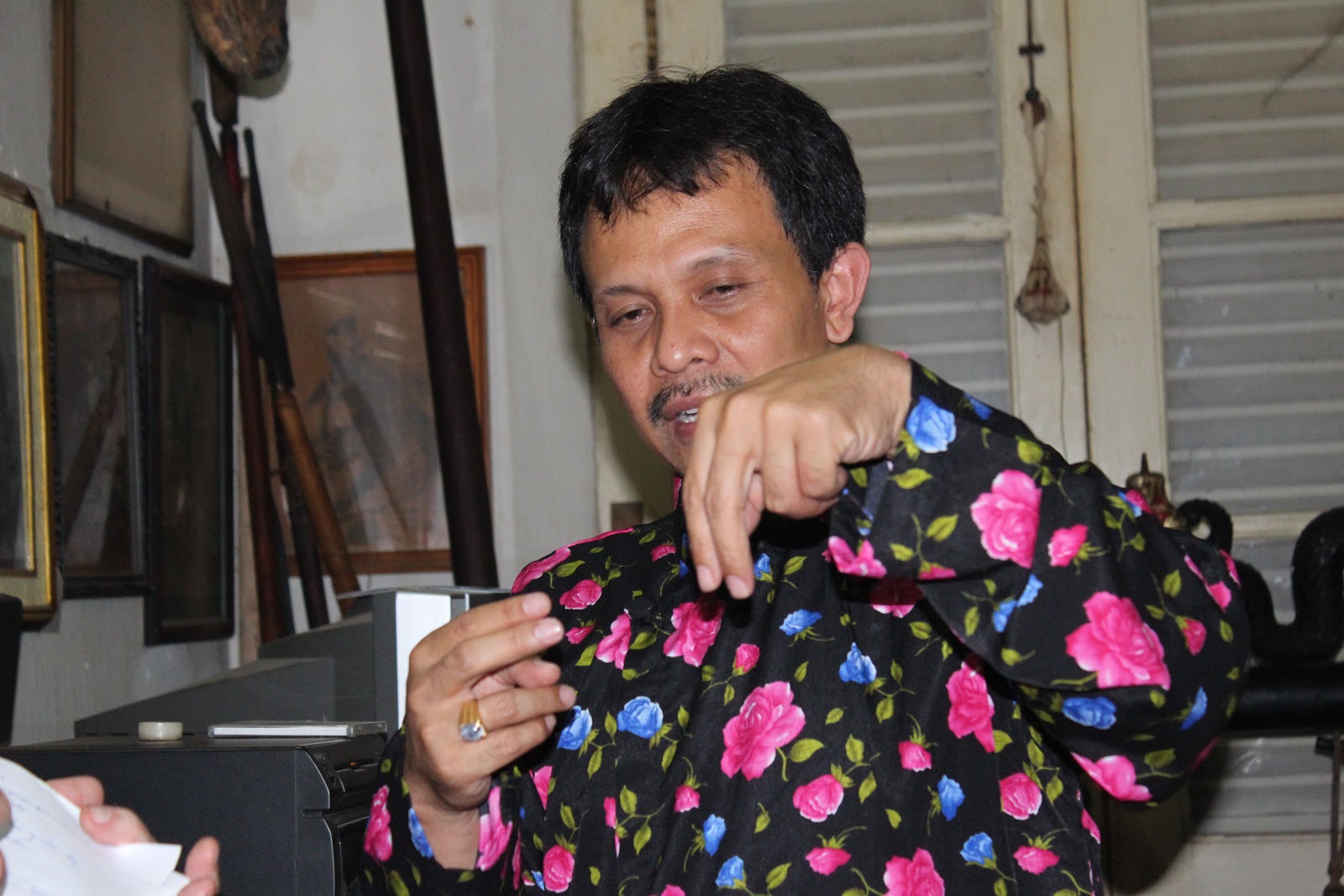
“It’s behavior I really dislike,” he said.  “I don’t own an iPad or a BlackBerry.  That’s a fruit. I’m a Newbery.”

If Martin Newbery had used that corny one-liner when he walked out of Soekarno-Hatta seven years ago he’d have risked ridicule as an eccentric wonder from Down Under.

Whoever prefers graciousness above gadgetry?  Add the bleached thatch indicating a preference for beach over fairway, and a suspect image might have set.

But his eclectic CV embraced bureaucracy and business, a rare combo. He’d learned the language and felt at ease in kampong and corporate tower.

As a young Australian public servant he’d surfed Bali.  Then he tried Java and found heaven. He switched to air-freighting fresh fruit into Indonesia, then ran seven prawn trawlers crewed by Indonesians, a job that required tact and toughness.

While talking to The Jakarta Post he politely but firmly flicked away a major Indonesian government department wanting to attend a seminar, but dictating terms. “My show, my rules,” he said.

Staying upright on a twisting board, speed skimming just ahead of towering waves yet having fun, is an apt metaphor for surfing the rips of Indonesian business culture where getting dumped is an everyday hazard.

“Investors should consider my five P principles,” Newbery said.  “Be Patient, be Present and Persevere.

“It’s no good trying to trade using e-mails from a distance.  Establish trust. That means personal contact.  It takes time.

“Then there’s Payment.  It’s important to understand and accept the way Indonesians do business and run their accounts.  Sometimes people agree too fast without understanding the detail.”

And the final P?  Newbery’s colorful phrase risks misinterpretation by those stumped by Australian slang.  Best translate as ‘having a good time’.

“Never get down to business without first having a laugh,” he said.  “Indonesians have a great sense of humor.  It’s one of many factors that make this country and its people such a delight.

“I don’t accept we’re clumsy when dealing with other cultures. That’s not the right word. Sometimes ill-prepared and vulnerable, too fearful and hung up on things like drinking and eating pork. We should just be ourselves.

“I’m a proud Australian (he has convict ancestors) and very proud that we’re friendly, respectful and keen to learn.  We have so much in common with Indonesians and can work together to improve people’s lives. 

“There are still misconceptions and an element that has a poor attitude, but that’s diminishing.  I take a positive view.”

At the end of November and days before he left, Newbery was in Surabaya witnessing re-endorsement of the 23-year old sister-state agreement between East Java and Western Australia, the only State that maintains a continuous full-time presence in Indonesia.

Earlier Prime Minister Julia Gillard announced a new Asian Century policy to reposition Australian culture and business in their real geographical location, far from Europe.

“This is what I’ve been saying all along,” said Newbery who’s been involved with Indonesia for more than three decades.  “For too long we’ve been overflying this country to concentrate on trade elsewhere.

“Investors have taken the view that the Indonesian market is a little bit too difficult, or tricky. It has its characteristics, but it’s not too hard to adjust.”
  
Newbery, turning 60 and still surfing, said he’s quitting to spend more time with his three children in New South Wales, and because “I’m growing tired and need a year off.

“I might start the day talking milk, then move to beef, followed by mining services, shift to oil and gas and finish the day discussing seed potatoes. In future I’ll be working as an independent advisor on single issues.”

Foremost will be attempts to get Indonesians eating tempe (soy bean cake) using lupins.  He’ll be helping the 115,000 strong cottage industries adjust to the new resource and improve processing techniques.

“Overall I’m pleased with what’s been achieved,” Newbery said. “The low point was banning live cattle exports. That should have been handled better, though the Embassy team did a great job.”

Last year the Australian media exposed cruel practices in Indonesian abattoirs.  Canberra responded to public outrage by banning exports. When they resumed Jakarta imposed quotas.

Newbery suggested a crisis could have been avoided through both sides agreeing to improve facilities and techniques.

 “It was a matter of bad practices that had gone unchecked, not different attitudes towards animal welfare,” he said. “No ban, just a firm action plan.

“Indonesia has become too self-protective.  Food security is good, but the way it’s being done is too tough and complex. 

“We’re the most efficient cattle breeders and Indonesia the most efficient cattle feeders – we can work together and create a meat export industry.  We’re not stealing customers; we’re supplementing your production to meet demand.”

Newbery’s role hasn’t been confined to boardrooms.  He’s helped premier soccer squad Perth Glory and several basket ball teams play in the Republic.

Going the other way have been santri (religious students) looking at agricultural colleges.  “When people meet people, business falls out of the encounter,” he said.

The WA government closed its Surabaya office after it was trashed during the East Timor 1999 referendum protests and moved it to Kuningan.

Newbery said it should shift back to Surabaya “if for no other reason than it’s so time wasting trying to mover around Jakarta.”  His position will be temporarily filled by agri-business advisor Kellie-Jane Pritchard.

Deputy Premier Dr Kim Hames said Newbery had been a “fantastic representative” for the State. NGO special needs schools activist Trisha Henderson praised Newbery for holding governments to their aid commitments.

“I’ll be back, particularly during southern winters,” said the phone phobic who prefers eye contact to iPad.   “Indonesia’s my second home.”

(First published in The Jakarta Post, 10 December 2012)

##  


.


Sunday, December 09, 2012

RUBBISHING RAFFLES


Still standing tall: Raffles' statue in Singapore

Knocking a reputation


Felling tall timbers takes more skill than whacking away with a blunt blade. 

Tim Hannigan, Cornish chef turned travel writer and one-time Surabaya chalkie has used an old trick to seek fame:  If you can’t find an unknown needing elevation and your own tale’s not worth telling, try iconoclasm.

Sir Stamford Raffles, Lieutenant Governor of Java between 1811 and 1816 is the target.  How could one ill-educated young man (he arrived in Java aged 30) from a lowly background and with no military experience have achieved so much?

There have to be explanations beyond ability, leadership, foresight and intellect.  So said the curmudgeons trampled or ignored by this high achiever – and Hannigan has helped give these belittlers the chance to hack away at the image in the provocatively titled Raffles and the British Invasion of Java. 

However the man, like his imposing statue in Singapore, is not easily toppled.  Not because some evidence against Raffles lacks substance, but because the author strains to hate when he should have let the facts damn.

Raffles made mistakes deserving exposure and analysis. He quit Java in near disgrace having failed to make the colony pay; perhaps because he wasn’t ruthless enough. He died in debt; a careless accountant – or a man driven by concerns other than profit?

Blind hero worship serves no one well. Objective scholarship that re-examines a famous life is a valid exercise.

To do it well requires an open mind.  Hannigan says the idea for the book came when Indonesian students claimed all would have been well with their nation had the British, not the Dutch, been the colonizers. 

Hollanders have a different view, particularly over the Palembang massacre when 86 settlers and their servants were murdered after Raffles provoked the local sultan to ‘dismiss (the Dutch) from his territories.’

Less well known, and Hannigan has done a service with this revelation, is that in 1811 the British didn’t want Java. Instructions from the East India Company were to evict the Dutch, destroy their forts and ‘hand the island over to the Javanese.’  They reasoned administrative costs would drown profits.  They were right.

Holland had been occupied by the French during the Napoleonic Wars. The wash-up included the British taking over the Dutch colony of Java.

The colonials resisted but were no match for British resolve and the courage of the extraordinary Colonel Rollo Gillespie. 

Raffles, the administrator, and his boss Lord Minto had other ideas about the future of Java.  They rationalized that the Europeans and Chinese would be slaughtered if the British quit – a justified fear as events proved.

Instead, according to Hannigan, Raffles and his friends ‘fantasised over … an empire of the mind as much as a political entity … a playground for their intellects and imaginations, a historical trove of which they – orientalists to their very socks – could take possession.’

So instructions were ignored and a great moment to change the destiny of the future Indonesia passed.  The British Interregnum ran for five years until another shift in European politics allowed the Dutch to return and vilify the caretakers.

The locals learned to keep left on the roads and were treated to some other benefits of British rule.  Torture a favorite tool of the Dutch – was stopped, but slavery was apparently continued despite being outlawed elsewhere in the Empire. (Raffles kept eight slaves, says Hannigan.) Land reforms were introduced, but never finalised.

History is always written by the victors and Raffles made sure his version was recorded in triplicate.  Here he was helped by his hagiographer in chief and aide-de-camp, the ‘snivelling sycophant’ Thomas Travers.

Along with the writings of Raffles’ second wife Sophia, Travers has been the source of past favorable histories of Raffles’ rule.  Hannigan labels them ‘mythomaniacs’ and claims to have by-passed their accounts for original materials such as the India Office Archives in London.

But then he doesn’t give the reader references.  There are no endnotes to back his assertions, no index to assist navigation and only 24 footnotes. 

Who, for example, were the clichéd ‘old Asia hands who still sneered at the very mention of Raffles’ name’ - jealous underlings, the bitter Dutch or impartial scholars? 

Instead we get slabs of embroidered prose better suited to travel puffs by a writer in love with the perpendicular pronoun and deaf to Mark Twain’s advice on employing adjectives: When in doubt, strike out.

There are too many gratuitous comments like Raffles’ signature style being ‘bombastic’, his first wife Olivia’s fondness for brandy (‘a little rosy of cheek, perhaps’) and his ‘insecure egoism’.

Are these observations grounded on facts or the progeny of an over-worked imagination? What’s the purpose? Snide asides from the pens of Raffle’s contemporaries dipped in bile can be judged as relevant or otherwise only if we know the writers’ pedigrees.

Raffles may not have personally torn down the jungle strangling Borobudur but he did approve the work that led to its conservation.  Perhaps he plagiarised to produce The History of Java – but it was published. Others might have spent the money on armaments and fortresses.

Hannigan writes well in his accounts of battles where the reader gets a feel for the terrain, but fails elsewhere by inserting his loathing of a ‘jumped-up clerk with a ghastly wife’ into the narrative. Others might have found them a loving and fun couple.

What drove Raffles, later to become the ‘Father of Singapore’? Did he want to do good but got defeated by scheming rivals and his own failings?  Curiously this book came out just days ahead of another revision of Raffles – this time by the established biographer Victoria Glendinning.  Reports suggest it’s more sympathetic.

In the epilogue Hannigan admits enjoying a ‘sense of iconoclastic outrage’. It’s never wise to gloat.  A smarter writer would have honed his axe before tackling a giant.

(First published in The Sunday Post 9 December 2012)
##


Wednesday, December 05, 2012

KEEP REMOVING BARRIERS


A stroke of ill fortune


There nothing quite like a family tragedy to put the plight of the disabled into perspective.

If you and your loved ones have escaped misfortune consider yourself lucky – and pause to ponder the situation of others.

If that’s too onerous a task for everyday, just set time aside tomorrow (Mon 3 Dec) for the International Day of People with Disabilities. 

This year’s theme is Removing Barriers.  There’s no shortage.

Like millions of others, my brother-in-law and his immediate family wish they could squash a year of distress into just one day.

My BIL only partially fitted the profile of a stroke victim:  No spare flesh, under 55, not diabetic, doesn’t smoke (but used to), eats frugally, though not always well.  He’s been a stranger to doctors and a splendid armchair sportsman.

One morning last year he was ambushed and felled by a tiny arterial obstruction.  Had he got to a modern hospital within four hours and been injected with the new wonder clot-busting drugs he might now be fully active.

Instead his recovery has been incomplete.  That he’s now out of a wheelchair and can shuffle down the street almost unaided is a tribute to his determination and the perseverance of close family and friends.

The disabled share their suffering. Stroke victims aren’t easy to handle.  They often get uncontrollably emotional over the smallest issues, losing temper, straining relationships.  Arm and leg lifting exercises tax patient and helper because progress is measured in hair widths and never guaranteed.

At times like these families should demand hospitals give therapists and nurses the sort of salaries reserved for directors.

Tried pushing a wheelchair along an Indonesian sidewalk?  Civic authorities clearly haven’t, or there wouldn’t be steep kerbs and black holes big enough to swallow chair and carer.

Ever relied on the stability of a crutch to keep upright?  Then you’ll know about fearing fractured footpaths and curse the unthinking who park across pavements.

There are supposed to be laws insisting on disabled access to every public building. Take time tomorrow to check the ramps, lifts and door widths around your office. 

Then count the number of handicapped in your workplace.  It’s supposed to be at least one per cent.  It probably isn’t. Ask why.
Because Indonesians are curious and friendly people, convalescent exercises in public become chatterthons revealing the huge number of families in similar situations.

These encounters can be depressing if dad died, therapeutic if uncle bounced back and is now a gymnastics champ.

There are no accurate statistics for the number of stroke victims in Indonesia but the indicators show more than four million new cases in the Republic every year.

Sounds too few.  Those who’ve cared for a victim soon pick the familiar signs in the streets – the half-raised hand, the one-foot drag, the crablike movement, unwiped spittle and slurred speech. Such people seem to be everywhere – and they’re the survivors.
Strokes kill.  If they fail first time, like political candidates they often try again. At least one in four will be thumped anew, usually within five years.
Drug companies claim strokes are now the number one cause of death for all non-communicable diseases.

What does all this mean to those of us who haven’t felt our chests suddenly gripped and crushed by a giant hand and experienced the icy press of mortality competing with the sweat of terror?

Recognize the symptoms.  Rush to hospital; better to lose your dignity if it’s heartburn than your life if it’s not.

Reduce the risks. Keeping blood pressure down is vital, say doctors.  So is exercise and eating low cholesterol foods. Smoking is not an option.

Apart from wishing a speedy return to normality for victims and families, here’s an appeal to every legislator and civil engineer: Consider the handicapped in your plans.  Just a little care and forethought can make a difference in the lives of those less nimble.

But hey, wait a minute: A decent society is measured by the way the less fortunate, the distressed and disadvantaged are treated.  Do we really need a United Nations day to make us do something that should come naturally?  

(First published in The Sunday Post, 2 December 2012)

##


SEE THE PERSON, NOT THE PROBLEM


Nyoman Budiarta
Hope, chance and pride 

                                          
December 3 is the International Day of People with Disabilities. The cold official words make this Monday sound like a time for tissues and calibrated pity.
Instead it should be a freewheeling celebration of the human spirit, recognition that however extreme the plight the cause is never hopeless, and that chance encounters can change lives.  This is something Nyoman Budiarta and his siblings know well.
Their story starts more than three decades ago but we’ll pick it up in the mid 1990s and a casual evening chat in the Bali village of Ubud between a kaki lima (food cart) snack vendor and an out-of-town businessman.
“Why are you working so late?” the customer asked.  “To maintain my family,” Ketut Engong replied. “We have many problems.”
The conversation could have ended there along with the sale, but the man told his friend Sandy Harun.  Her interest led to Ketut’s house and a searing encounter.
Ketut and his wife Made Kormi did indeed have problems. Three of their adolescent sons had an appalling genetic disorder, severe enough to make many onlookers blanch in distress, questioning the cruelty of nature.
“Unlike many parents of handicapped kids my dad and Mum never hid us away,” said Nyoman. “We were taken everywhere.  I’m very proud of them because they were proud of us.”
The boys suffer from osteogenesis imperfecta and no Latin lexicon is needed to understand this is serious and incurable. Better known as brittle bone it strikes few, maybe one in every 20,000.
The short-legged French post-impressionist Henri de Toulouse-Lautrec is believed to have suffered a mild form.
Many lead live lives of almost constant pain as even slight movements can cause cracks. There are various levels – Nyoman and his younger brothers Ketut Budiarsa and Wayan Piadnya are at the extreme end, their limbs shortened and twisted, and in some cases with no bones.
They use wheelchairs and can propel themselves if sitting on a smooth floor.  Otherwise they depend on others for mobility.
Sandy Harun was a sinetron (television soap opera) actress who became better known for her private life than her public performances on the small screen. 
Her much reported friendship with Tommy Soeharto, the disgraced son of the late president, helped power tabloid sales.
More enduring and relevant to this story is her role as a philanthropist in the lives of Ketut Engong’s family. 
According to Nyoman, instead of backing away from the raw harshness of handicapped village boys’ lives and scuttling back to Jakarta, the actress pulled out her purse and funded their education.
The brothers, then aged 17, 15 and 12 had never been to school.  They wanted to but no public institution would accept them, though it was clear the lads were smart and artistically talented. 
Using Ms Harun’s money they were enrolled at the Suta Dharma International School in Ubud and studied alongside foreigners, much younger and taller.
“I moved rapidly as teachers assessed us,” said Nyoman.  “We could already read and write because we’d been taught by our two sisters. (They don’t have the genetic disorder.)
“The first day I was in grade one primary, next day in grade two and then straight into grade three.  It must have been a record.  None of this would have happened without Ibu Sandy – she changed our lives.
“I never suffered bullying in class or playground, but have done outside. Some drivers get intolerant of people in wheelchairs and try to push us out of the way. There’s still discrimination in the community.”
The house where the men still live with their parents in Kedewatan fronts onto a fast road, unforgivingly narrow.  They use the front room to showcase their art under the shingle 3 Brothers + 1.  but the gallery is not well positioned for casual buyers or safe wanderings by wheelchair.
The + 1 is the youngest, Kadek Budiana.  He’s not handicapped so along with Dad helps his siblings move around in a motorbike sidecar.  They’ve held exhibitions but have stockpiled a large number of canvasses.  A show in Jakarta next year is being considered.
“We’re reluctant to reveal some of our work because it gets copied,” said Nyoman. “We do the tourist stuff, but many of our paintings express our inner feelings. It’s like selling drugs – we have to keep our pictures secret until exhibited.”
One they were prepared to show was by Ketut, nominated as the brains by his brothers – a statement backed by his English abilities and prize-winning chess skills.
A cosmic eye stared at a clutch of hands, some wielding money.  “Don’t look down on us,” he said.  “We are not to be pitied, we are human beings just like you.”
Nyoman’s art tends to feature hands and other disembodied parts sprouting wings, offering rich pickings for psychiatrists. Complex, but not dark.
Attempts to get art training ran into the same obstacles as their search for schooling.  Eventually they got support from artists including portraitist Kartika Affandi-Koberi.
Their different handicaps make the physical exercise of painting difficult and tiring.  Nyoman works on smaller collages positioned vertically – his siblings favor big canvases on the floor.
When he’s not handling brushes Nyoman, 35, works as a volunteer for the Yayasan Senang Hati (Happy Heart Foundation) in Denpasar where he is training to be an accountant.  The charity works to ‘bring people with physical challenges out of isolation and into society.’
“Í can’t count the number of times I’ve had broken bones, though I’m OK now,” said Nyoman.   “The only medicines I take are traditional Balinese.
“I want to be independent - we all do.  We’re adults but we all have to live together, six people in three small rooms, when we should be running our own lives. 
“Get to know us.  Look at our achievements. We just want to be treated like everyone else.  Abilities, not disabilities.”

(First published in The Jakarta Post 5 December 2012)
##

Monday, November 19, 2012

CARNIVAL IN KEDIRI


Welcoming the Islamic New Year 


It was a morning for outrageous masks, spectacular costumes, whip-cracking strongmen, rocking horse jousts, lovely ladies and regal romeos dancing in the streets and fun everywhere as Kediri celebrated  Muharram, the Islamic New Year’s Day on Thursday (15 Nov)

Kirab Kediri, the annual carnival of the central East Java town, ran for two hours and covered five kilometres.  It began about seven years ago to help maintain local culture through a secular NGO called Garuda Mukha.

From a small start the event has grown to embrace hundreds of performers and attract thousands of onlookers delighted by the performers, many using gongs and other ancient instruments they claimed were from the Majapahit era, more than 600 years ago.

The previous evening about 200 people from all faiths gathered to commemorate Satu Suro, the first day of the month of Sura in the old Javanese calendar.  Rituals included the purification of kris, the Javanese wavy-blade daggers.  Duncan Graham

JAKA LELANA


Reimagining Majapahit                                        


It’s late on the eve of Satu Suro, the first day of the Javanese month of Sura, and a sweaty night in the central East Java town of Kediri. 
 
Tucked behind a café on Jalan Airlangga, named after the 11th century king, is a courtyard roofed by a splendid pleated canopy

People gather quietly.  Soon hundreds are present, men, women, and children.  There’s no gender inequality or dress discrimination. 

Some wear black waistcoats and blangkon (batik headdress) the formal attire of Javanese nobility – others are casual in jeans and T-shirts. The atmosphere is relaxed, not reverential.

To one side is a small Dutch-era house.  Its high ceiling rooms are already full.

On a wall above portraits of brides and sages long past hangs a commonplace kitchen clock ticking away the minutes to midnight.  The crowd seated cross-legged on a red carpet falls silent, though no instructions have been given.
 
The lights click off. Corner shadows rush to fill the space along with the smoke of burning incense.

 A lone bat, its sonar recalibrated, finds an exit and flaps away into the darkness. Maybe this is where it hangs out, only to be disturbed on this once a year ceremony. An omen? No-one seems disturbed.

A gong is struck.  Hard.  The walls thump in sympathy.  A hand bell starts ringing ting, ting, ting, ting.  It’s joined by a statement, a song, a chant – only the wise knew for the words are first in kawi (old Javanese) then kromo (high class Javanese.)

The voice is baritone but the singer is a woman, dressed in priestly white, with rare vocal talents, one moment high pitched, the next ululating.  But this story is not about
Wenny Setyo Jayawardhani.

Sitting alongside is her brother, Jaka Lelana (above) the man who has done much to make this extraordinary event come to pass.  He wears a gaudy shirt that would be acceptable on a Pacific cruise liner, but seems to jar in a celebration of an ancient culture.

He insists it’s the real thing, a predecessor of the more sober intricately patterned batik.  He should know.  As an initiator of Kediri’s cultural revival he’s hot wired into the lore of the ancient East Java kingdom of Majapahit.

To hold such a position would normally require a wrinkled brow under a grey thatch, a slight stoop and cautious step.

But Jaka is no wizened rustic.  He’s a cosmopolitan 45-year old engineer and director of a major chemical plant at Gresik on the north coast.  Eight years ago he miraculously survived a major factory blast that killed three colleagues and injured scores.

After the explosion he meditated and then started Garuda Mukha (the face of the mythical eagle that’s the symbol of Indonesia) with a few friends and relatives.  Now hundreds come.

When the organization isn’t planning ceremony it campaigns to preserve ancient buildings.  But the core concern is harmony.

Jaka wants to eradicate fundamentalism through a return to old values – starting in his hometown. “Kediri was an important kingdom, more than 1,100 years old,” he said. “I want us to rediscover our cultural past. 

“We never had terrorism, this is something new and unwelcome. It’s from the Middle East, not Indonesia. We all want safety and security, to respect each other.

“I’m Muslim – like most people here, but I have a brother and sister who are Hindu. Your religion is your business.  If you don’t believe in my God then I’m sorry, but that’s all.

“The objective is to celebrate one culture, different religions.  The Majapahit kingdom was the real Indonesia.”


If so it must surely be in this sanctum, throbbing with mystery, rather than the nation’s lifeless museums.  There’s a modern ochre portrait of Gajah Mada (1290 – 1364) the famed Prime Minister and military tactician believed responsible for extending the kingdom throughout Southeast Asia.

He raises his kris with rippling biceps, peers from his frame through racks of flags including the Red and White. Others feature the eight-pointed star of the Majapahit and curious jawless skulls.

This is a Javanese historian’s heaven. Every nook holds an artefact and relic, from tiger heads to wayang kulit puppets said to be made from human skin.

A heavily bound box contains scores of kris, the sacred daggers, reputedly charged with magic.  When the chanting and gonging stops, the lights flick on and everyone gets stuck into the donated cones of rice, hardboiled eggs and chicken thighs.

Then Jaka’s eldest brother Tono Setyo Bimosemo gets to purify the kris.

He does this slowly in a fug of incense smoke, treating each weapon with care, touching its hungry blade with potions and wrapping the handle in a white garland.

The task continues till dawn before a table heavy with the food and flower offerings usually seen in Bali.

But this is Java, separated by a narrow channel and a religious gulf.

 “There are no problems with Nahdlatul Ulama (the huge Islamic organisation centered in East Java),” Jaka said.  “They were suspicious at first but now join in.  (Many in the crowd wore headscarves.)

“Muhammadiyah (the more urban-based movement) is another issue, but this isn’t syirik (an event to be avoided on religious grounds). In the morning we celebrate Muharram (Islamic New Year)

“We can’t bring back the golden years of Majapahit.  They’re gone, but the spirit remains.  We must remember our historical roots.”

Jaka and his nine siblings were raised by their soldier father who took his children to watch the wayang kulit and nurtured a love of ancient Javanese culture.

Dad’s remains now rest in a heroes’ cemetery.  His portrait, alongside his stately wife, peers down approvingly on the strange proceedings below – or maybe that’s the atmosphere intoxicating the imagination.

“A great nation is one that respects its cultural history,” said Jaka.  The yellowing portraits seem to nod.

In the street outside Honda hoons scream ahead, careless of danger and disturbance, never looking sideways or behind.  The culture custodians still have some distance to travel.

(First published in The Jakarta Post 19 November 2012)

##


Tuesday, November 13, 2012

NI NENGAH WIDIASIH


Lifting the nation’s reputation        


The prognosis was grim. Nengah Widiasih, a four-year old in the isolated Balinese village of Karangasem, was so badly crippled she could only crawl. 

That was 1998.  She was a victim of polio.  She seemed doomed to live out a short life in penury and pain, illiterate, unemployable, a burden on her family, getting no government help.

This year she was the only woman representing Indonesia at the 20th Paralympics in London. Next year she plans to enter university.

Her extraordinary turnaround is the result of determination – her own and those of assertive advocates for the disabled working outside government.

So far Nengah has won medals in China, Thailand and Malaysia. At the 2011 ASEAN ParaGames she collected gold, lifting 87 kilograms. In four years time she hopes to be at the Paralympics in Rio de Janeiro.  

Nengah competes in the 40-kilogram class, meaning she has to clock in under that weight and be as ruthless about her diet as any fashion model.

Powerlifting looks like a Star Chamber procedure for persuading sinners to recant. Athletes lie on their backs under a rack holding a horizontal bar.  Weights are added at each end; the bar has to be raised with arms fully extended. It’s a lone sport competing against a number. The preparation is psychological and physical.

Competing as a disabled athlete is no soft option. According to Paralympics International “winning is determined by skill, fitness, power, endurance, tactical ability and mental focus.”

 Despite her impressive achievements no business has offered sponsorship. While other athletes train in gear blossoming with the logos of local and multinational companies Nengah wears a simple red and white top emblazoned with one word – Indonesia.

“Paralympians don’t attract the same attention as other athletes,” she said.  “It shouldn’t be so. Nobody asks to be disabled. We train just as hard to achieve excellence on top of having a handicap.”

Indonesia doesn’t take the Paralympics seriously. Only four athletes (and 11 officials) went to London. This was the first year a team returned with a medal, David Jacobs’ bronze in table tennis.  The other contestants were swimmer Agus Ngaimin and long jumper Setiyo Budi Hartono.

Singapore, with just two per cent of the Archipelago’s population, sent eight athletes, Malaysia 23.

While the athletes were training in Solo, Indonesian Olympic Committee chairwoman Rita Subowo was reported as saying the small number was due to “a lack of preparation and poor facilities.

“In the future we must improve training facilities,” she said. “We must change our vision and make Olympics and Paralympics our highest targets.”

Nengah believes she contracted polio when a doctor used a dirty syringe, though the highly infectious disease is usually transmitted through contaminated food. 

Also known as infantile paralysis, polio was once a major threat to young children, particularly those in the tropics and poverty.  However aggressive international immunisation programs have almost eliminated the disease.

The last big outbreak in Indonesia was in 2005 when more than 200 children were paralysed. 

Nengah wasn’t the only member of her family stricken.  Her older brother Gede Suartaha was also infected.  The karmic view prevailed - that the commission of sins had caused the family’s distress.

The crippled kids were kept out of sight and school.  Their lives lurched into a new orbit only when discovered by Latra Nengah, working for the Yakkum rehabilitation center in Yogya, on a quest to winkle out the handicapped for help.

At first Nengah’s stonemason father refused fearing his daughter might disappear. Eventually he yielded for Latra had credibility and a silver tongue. Originally from the Balinese backblocks he’d been burned in an accident, treated by Yakkum and returned.  Later he started a rehab centre in Bali.

Nengah bussed to Yogya, got callipers, had an operation to help correct her twisted leg and spent two months in hospital.  After physiotherapy and so many injections she can no longer bear another needle she returned home upright, started school and took up powerlifting, a sport her brother had also entered.

She uses equipment supplied by Paralympics Indonesia and stored at the Yayasan Pembinaan Anak Cacat (Institute for the handicapped) where she boards and trains four times a week.

On a recent trip to New Zealand funded by Kiwi philanthropist Dr Gareth Morgan she saw world class facilities for the disabled, including purpose-built classrooms, special sports grounds and horse riding for the disabled.

Four wheel electric scooters, widely used by the disabled, also attracted.  However heavy traffic and potholed roads in Bali would make their use impractical, she said.

“We have laws in Indonesia ensuring wheelchair access to public buildings, but they don’t seem to get implemented,” she said.  “”My school has two stories and no lift.”

Nengah can walk for about 300 meters on level ground using a single crutch, but getting up stairs is difficult.  She strives to be independent, resisting help even when she takes a tumble.

Her overseas tours and successes have given her status and responsibility.  “I know that I’ve now become someone others look up to, and that means having to speak in public” she said. 

“People keep asking me questions.  They hear what I say but can never experience what I feel. So I prefer telling about myself through Facebook, communicating with everyone.”

Her entries include passionate poems like the following:

Mother, your noble teachings have settled my life.
My surroundings have changed, I have seen so much.
Sometimes I get washed away,
Sometimes I stand straight to challenge its heavy flow.

“If you have a dream you must work hard to achieve it,” she said. “I want all handicapped people to have the opportunities that I’ve had, and to follow me if that’s what they wish.  I hope to study at university – maybe computing – and keep competing.

“I want to bring back more medals for my country.”

(First published in The Jakarta Post, 9 November 2012)

##